
Can Roof Repairs Be Done in the Rain in Bellevue, WA
Roof repairs in the rain depend on the job: emergency covers can be fitted in wet weather, but a permanent shingle repair needs a dry roof so the seal can set. This guide explains what can be fixed in the rain in 98006, around Somerset, and what must wait.
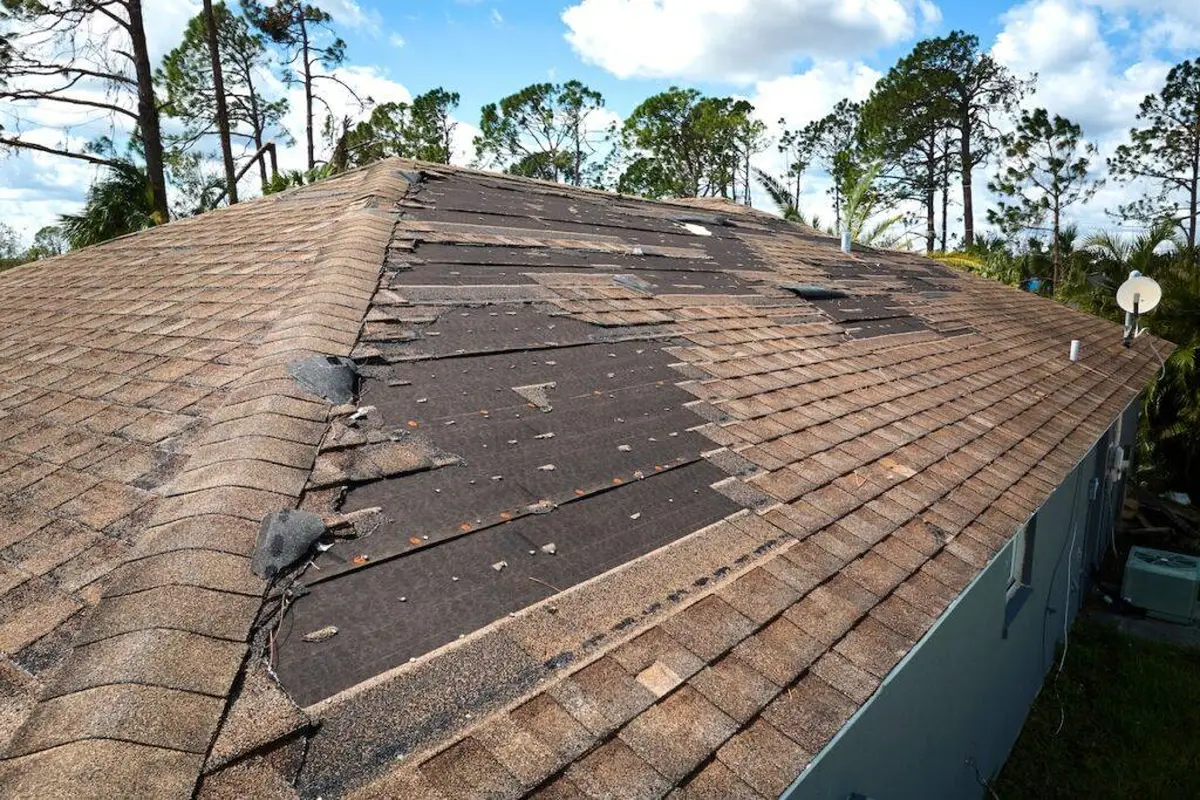
Can roof repairs be done in the rain? Yes, some of it can. A roofer can fit an emergency tarp and a temporary seal in the rain, because stopping the water matters more. A shingle repair is different: the shingles and deck must be dry for the adhesive strips and sealant to bond, so it waits for a dry day.
Roof leaking in the rain? Call (425) 738-3670.
What Rain Does to a Shingle Repair
Rain changes a repair in three ways, and all three come down to water getting where it should not be. First, the roof deck and the underlayment underneath the shingles need to be dry before new shingles go on: a shingle laid over wet decking traps moisture underneath it, and the damp surface stops the adhesive from bonding the way it should. Second, the adhesive strip on the back of each shingle — the seal that holds one course to the next — needs warmth and a dry surface to set. In rain it stays unsealed, so a newly fitted shingle can lift in the next gust before it has ever bonded. Third, a wet roof is slippery. A roofer working on wet shingles is working on a surface that gives no grip, and a repair done in a hurry on a slick roof is a repair done badly — or not finished at all.
None of that means rain stops all roofing work. It means the job has to be split into two parts: the part that stops the water now, and the part that fixes the roof properly. The first part can often be done in the rain. The second part needs the roof to be dry, and pretending otherwise is how a quick repair turns into a second leak a few weeks later. Our guide to why roofs leak during heavy rain explains how wind-driven rain finds its way in through the same weak points — flashing, valleys and worn seals — that a repair has to address once the weather clears.
What Can Be Done in the Rain
The most useful rainy-day job is a temporary cover. A tarp fitted over the damaged area and fixed down so it sheds water will keep the inside of the house dry until a permanent repair can be done, and it can be fitted in the rain if it is safe to get on the roof. Our emergency roof repair service covers exactly this: an active leak, a large section of missing shingles, or decking left open to the rain all count as emergencies, and the first step is stopping the water, not waiting for sunshine.
A temporary seal is sometimes possible too. A small lifted shingle or a cracked piece of flashing can be held down with roofing cement as a stopgap, and some roofing cements are made to be applied to a damp surface. That is a patch, not a repair: it buys time, and it still needs a proper fix on a dry day. What also works in the rain is the inspection itself — from inside. A leak that is active during rain can be traced from the attic, because the water is moving while you watch, and the stain, the drip and the path it takes all point back to the entry point. Our guide to how to find a roof leak sets out the tracing steps, and the attic is the best place to do them while it is still raining.
What Has to Wait for Dry Weather
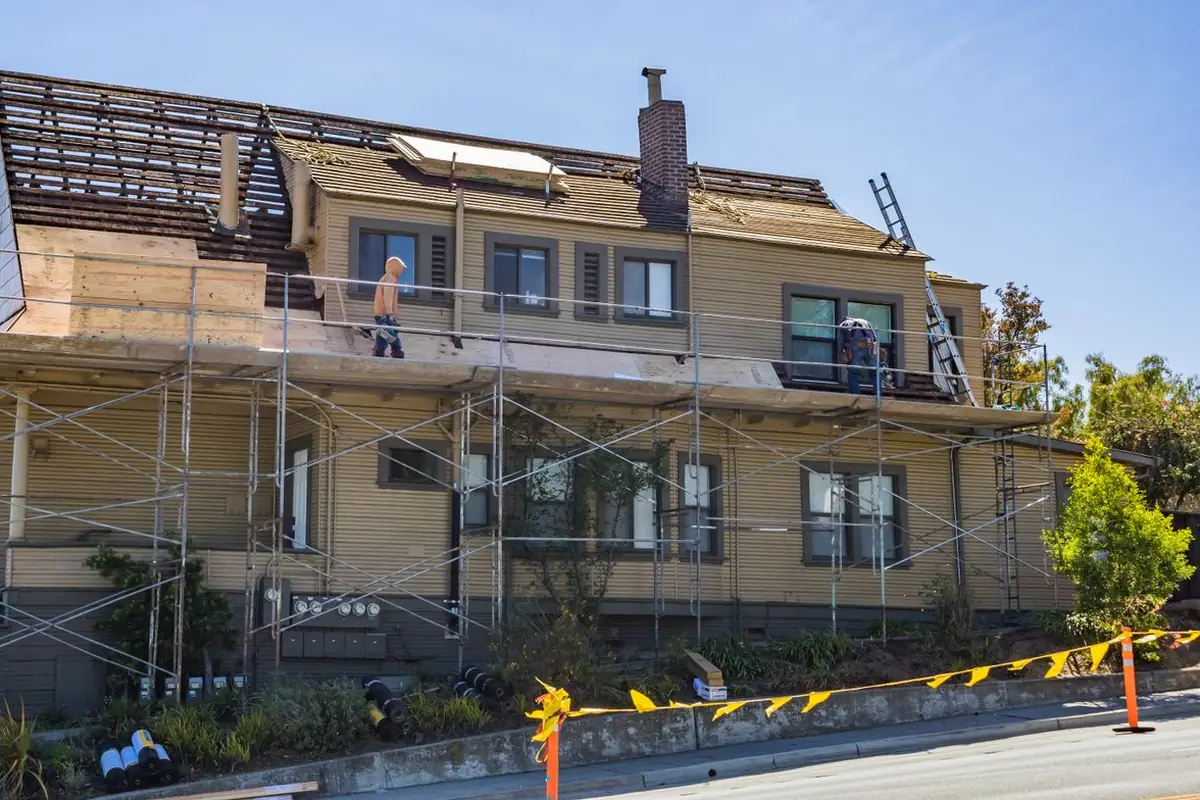
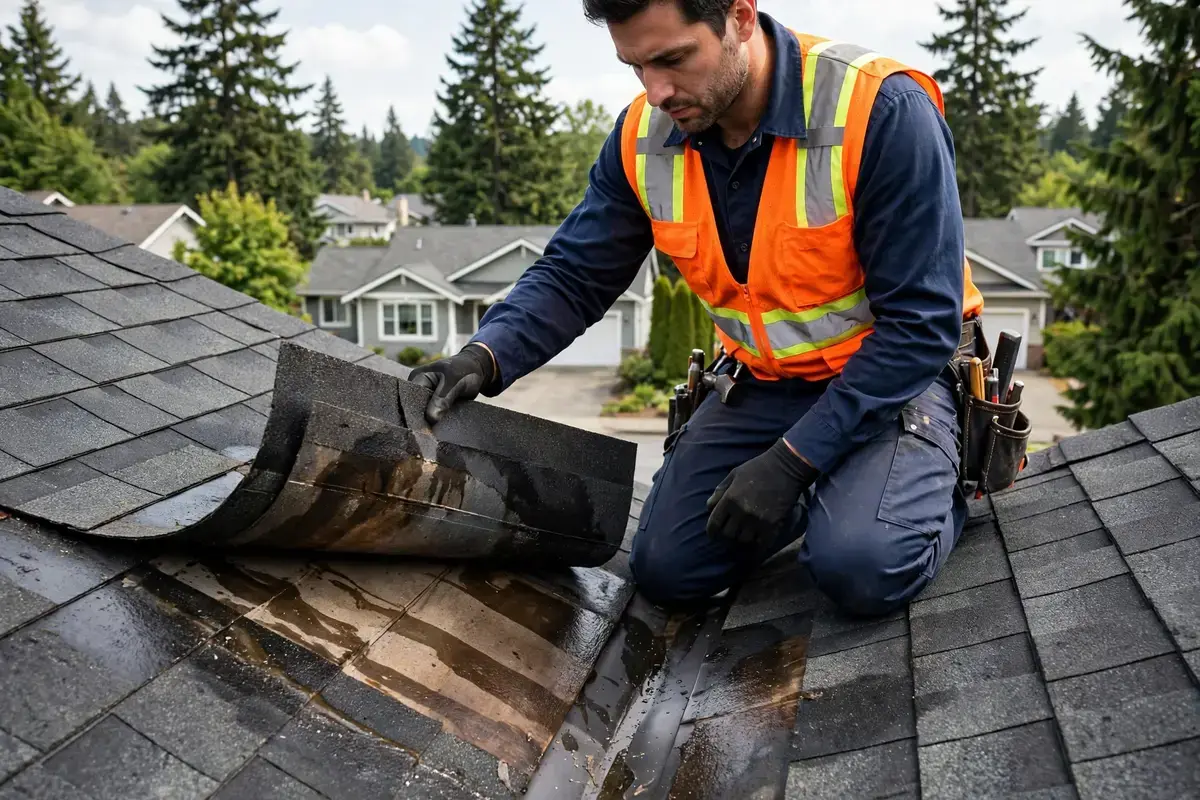
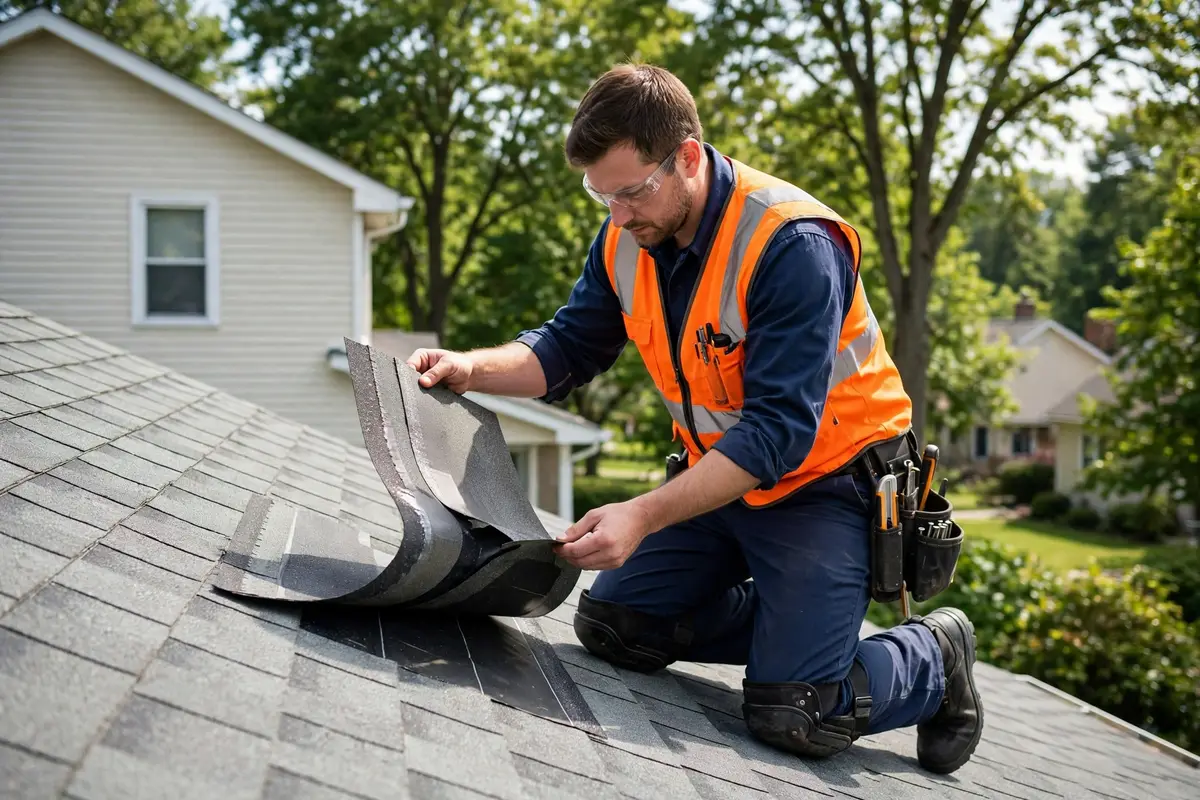
A permanent shingle repair has to wait. Fitting new shingles, re-sealing lifted courses, replacing underlayment, or fixing the decking underneath all need a dry surface: the adhesive strips will not bond to a wet shingle, sealant will not stick to wet flashing, and wet decking cannot be properly dried out and covered in the same visit. A roofer who fits shingles in the rain is fitting shingles that will not seal, and the first wind after the storm will lift them again.
The same applies to anything under the shingles. Underlayment — the layer between the shingles and the deck — has to go down dry, and any decking that has been soaked through needs time to dry before it is covered again, or the moisture is sealed in with it. Valleys and flashing are the same story: the sealant and the metal need a dry surface to bond and sit flat. So when a roofer says a job has to wait for a dry day, it is not a scheduling excuse — it is the difference between a repair that holds and one that has to be done twice.
Why Cold Rain Makes Sealing Harder
Bellevue's rain usually comes with cold, and cold makes the sealing problem worse. The adhesive strip on an asphalt shingle is heat-activated: it needs sun and warmth to soften and bond one course to the next. On a cold, wet day there is no warmth to do that work, so a new shingle fitted in those conditions can sit unsealed for days, held only by its nails, until the weather turns.
The answer is hand-sealing. A roofer can put a small dab of roofing cement under each new shingle so it holds until the sun warms the adhesive strip and the seal sets properly. That is standard practice in cold weather, and it is the same step our guide to 3-tab vs architectural shingles mentions for cold-weather repairs. It does not change the rule, though: hand-sealing holds a shingle in place, but the permanent bond still needs warmth and dry conditions, and a repair fitted in cold rain should be checked again once the weather clears.
How Bellevue's Rainy Season Changes Scheduling
Rain is a fact of life in Bellevue for much of the year, and the wet months are when roofs are tested hardest — which is also when roofers are busiest. A leak that shows up in the first heavy rain of the season is usually a problem that was already there: a lifted shingle, a worn flashing, a seal that had already failed, and the rain simply found it. That is why the best time to book an inspection is before the heavy rain arrives, while the roof is still dry enough to work on and sealant can still set properly — the same timing our guide to preparing your roof for winter recommends.
After a big storm, the queue is the problem. Every roofer in the area gets the same calls on the same day, and the jobs are done in order of urgency: active leaks and open roofs first, then everything else. If your repair is not an emergency, booking it early — before the next storm, not after it — is the difference between a repair done this week and one done after a wait. And if the forecast shows a run of wet days ahead, a roofer may fit a temporary cover first and book the permanent repair for the first dry day, rather than leaving the roof open while the queue clears.
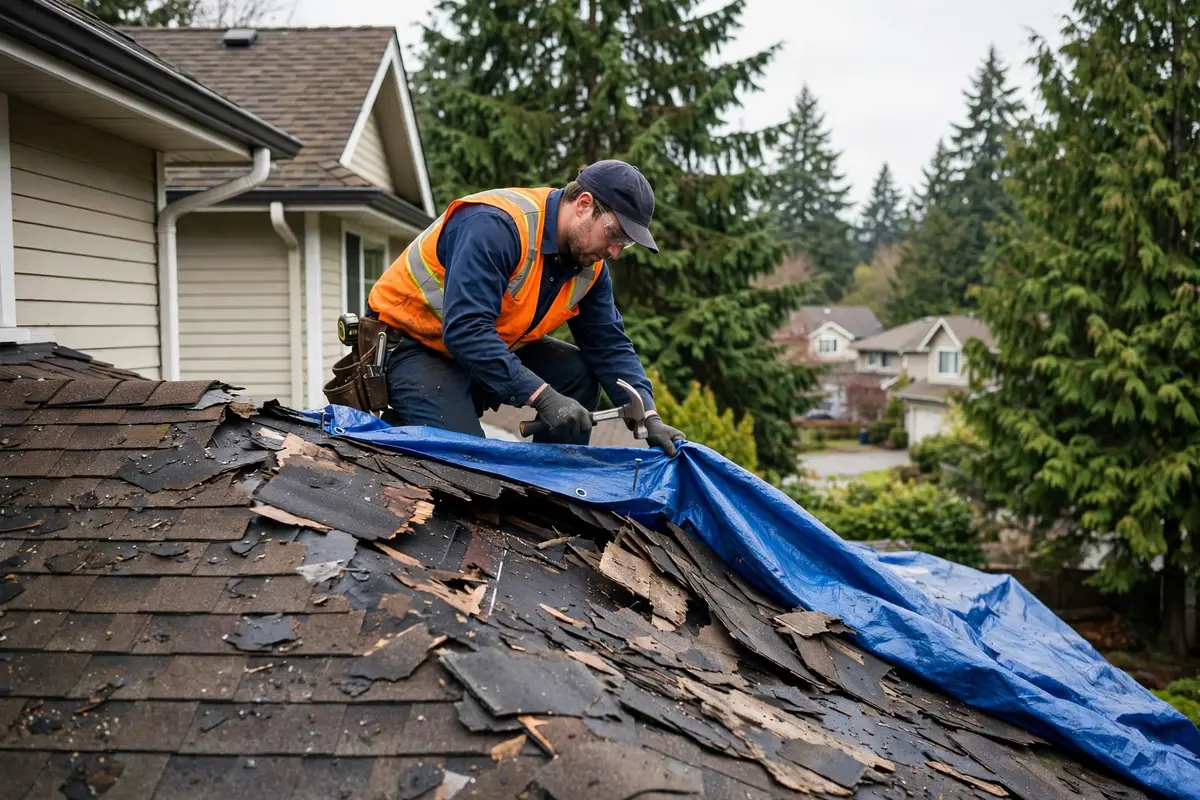
Need a temporary cover before the next rain? Call (425) 738-3670.
What to Do When Your Roof Leaks in the Rain
Start inside. Put a bucket under the drip, move anything the water can damage, and take photographs of the stain and the drip — the photos help the roofer find the entry point, and they are the record to keep if the leak is an insurance matter. Then call a roofer and describe what is happening: where the water is coming in, how fast, and whether it is getting worse. If water is coming into a living space or the roof is open to the rain, say so — that is an emergency, and it goes to the front of the queue.
Do not climb on the roof yourself. A wet roof is slippery, and a leak you can see from inside does not tell you where the entry point is — water travels along the deck and the rafters before it shows up as a stain, so the place it drips is rarely the place it gets in. Our guide to roof repair after a storm sets out the same steps in order: safety first, photographs, temporary cover, then inspection. If you can get into the attic safely, look for the drip and follow it upward while the rain is still falling — that is the one useful thing rain lets you do that dry weather does not.
How We Handle a Rainy-Day Repair
When you call us on a rainy day, the first question is whether water is getting in. If it is, we come out to stop it: a tarp over the damaged area, fitted and fixed down so it sheds water, and an inspection of the damage from inside the attic while the leak is active. You get photographs of what we find and a written estimate for the permanent repair before any of that work starts.
The permanent repair is then booked for the first dry day that allows it, and the temporary cover stays on until then. When we come back, the damaged shingles are replaced, the seal is checked around them, and in cold weather the new shingles are hand-sealed so they hold until the sun sets the bond. Call (425) 738-3670 or request an estimate to book an inspection — and if it is raining when you call, tell us: a leak that is active is easier to trace than one that has already dried.
Need professional help? So can roof repairs be done in the rain? Some of the job, yes — and the rest waits for a dry day. If your roof is leaking in Bellevue, our emergency roof repair service covers inspection, temporary cover, and the permanent repair once the roof is dry. Call (425) 738-3670.
Key takeaways
- Emergency covers and temporary seals can be done in the rain, but a permanent shingle repair needs a dry roof so the adhesive strips and sealant can bond.
- Cold rain makes sealing harder: new shingles may need hand-sealing until the sun warms the adhesive strip and the seal sets.
- If your roof leaks in the rain, contain the water inside, photograph the stain, call a roofer — and stay off the wet roof.
Roof leaking in the rain? Call (425) 738-3670.
Frequently Asked Questions
Can roof repairs be done in the rain?
Some of them can. A roofer can fit a tarp over the damaged area and make a temporary seal in the rain, because stopping the water matters more than perfect conditions. A permanent shingle repair cannot be done properly in the rain: the shingles and the deck need to be dry so the adhesive strips and sealant can bond. That part waits for a dry day.
What can a roofer do in the rain, and what must wait?
In the rain a roofer can fit an emergency tarp, make a temporary seal, and inspect the leak from the attic while the water is still moving. What must wait is the permanent fix: fitting new shingles, re-sealing lifted courses, replacing underlayment, and any work on the decking underneath. Those need a dry surface, so the roofer fits the temporary cover first and books the permanent repair for the first dry day.
Will new shingles seal properly if it rains right after a repair?
Yes, if the repair was done on a dry day and the shingles had time to set before the rain arrived. The adhesive strip needs sun and warmth to bond, so a repair done in dry weather will seal as the weather warms, and a shower after that does not undo it. The risk is a repair fitted in the rain or in cold weather, when the seal never sets and the next wind can lift the new shingles.
Is it safe to climb on a wet roof to look at the damage?
No. A wet roof is slippery, and a fall from a roof can cause serious injury. Water also travels along the deck and the rafters before it shows up as a stain inside, so the place it drips is rarely the place it gets in — looking from the roof will not find the entry point anyway. Stay off the roof, take photographs of the stain and the drip from inside, and let the roofer inspect it.
What should I do first if my roof starts leaking during a rainstorm?
Start inside: put a bucket under the drip, move anything the water can damage, and take photographs of the stain and the drip. Then call a roofer and describe what is happening — where the water is coming in, how fast, and whether it is getting worse. If water is coming into a living space or the roof is open to the rain, say so: that is an emergency and it goes to the front of the queue.
How long does a roof need to dry before a permanent repair?
It depends on how wet the roof is and on the weather after the rain stops. A roof surface can be dry enough to work on within a day of dry weather, but decking and underlayment that have been soaked through take longer, and a roofer will check that the surface is dry before fitting new shingles. The answer is that the roofer decides on the day, by looking at the roof — not by a fixed number of hours.
What if it rains on the day my repair is scheduled?
The roofer will still come out, fit a temporary cover if the roof is open to the rain, and check the damage from inside while the leak is active. The permanent repair is then moved to the first dry day. That is not a delay for its own sake — fitting shingles in the rain means they will not seal, and the job would have to be done twice. Call (425) 738-3670 to confirm the plan.
Call Now to Speak to a Specialist
Last updated: November 23, 2026. Author: Bellevue Shingle Masters.