
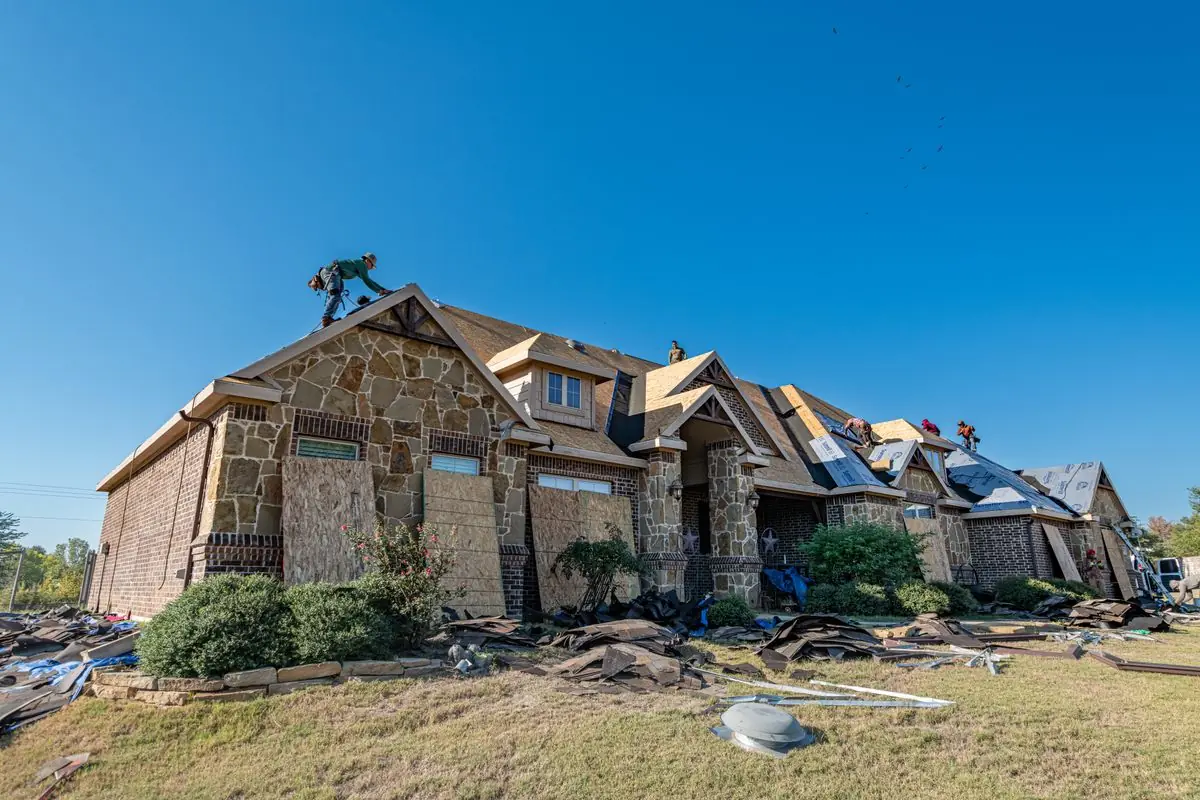
Storm Damage Roof Repair in Bellevue, WA
Storm damage roof repair in Bellevue, WA — inspection, temporary cover and permanent repair after wind, rain and fallen branches. Serving Bridle Trails and Lake Hills (98005, 98008). Call (425) 738-3670.
After a storm, the first job is to stop water getting in. The second is to document the damage properly. The third is the permanent repair. We do all three in that order: temporary cover where needed, a documented inspection with photos, then a written estimate for the permanent repair. We do not give insurance advice — we give you the records your insurer will ask for.
The Problem: Storm, Wind and Hail Damage
Storms damage Bellevue roofs in several ways at once: wind lifts and creases shingles, rain is driven under them, branches strike and tear shingles, and hail can leave a hail bruise — a soft spot where the granules are crushed — that only shows on close inspection. Missing shingles after storm winds are the most visible sign, and the storm-damaged shingles Bellevue homeowners most often report are lifted or creased tabs. Hidden damage — failed seals, bruised shingles, a damaged valley — is common after a storm that looks minor from the ground. In a cold snap, an ice dam at the eaves can back water under shingles that look undamaged from the ground.
Signs You Need Storm Damage Roof Repair
- Missing or torn shingles after a storm
- Branches or debris on the roof
- granule loss or hail marks
- A roof leak after windstorm, or a new stain that appeared after the storm
- A tarp or temporary cover already in place
Storm damage? Call (425) 738-3670.
Our Inspection and Repair Approach
A storm roof inspection in Bellevue should cover the whole roof, not just the slope you can see from the street. We inspect the whole roof, photograph damage, note the storm date, and provide a written report — the records you need to document roof damage for insurance. Wind damage roof repair starts with that inspection, because creased tabs and failed seal strips are easy to miss from the ground. Where water is still entering, emergency storm roof repair in Bellevue starts with temporary tarping, arranged first, before the permanent repair is estimated in writing, with materials matched to the existing roof.
Storm Damage Roof Repair Methods
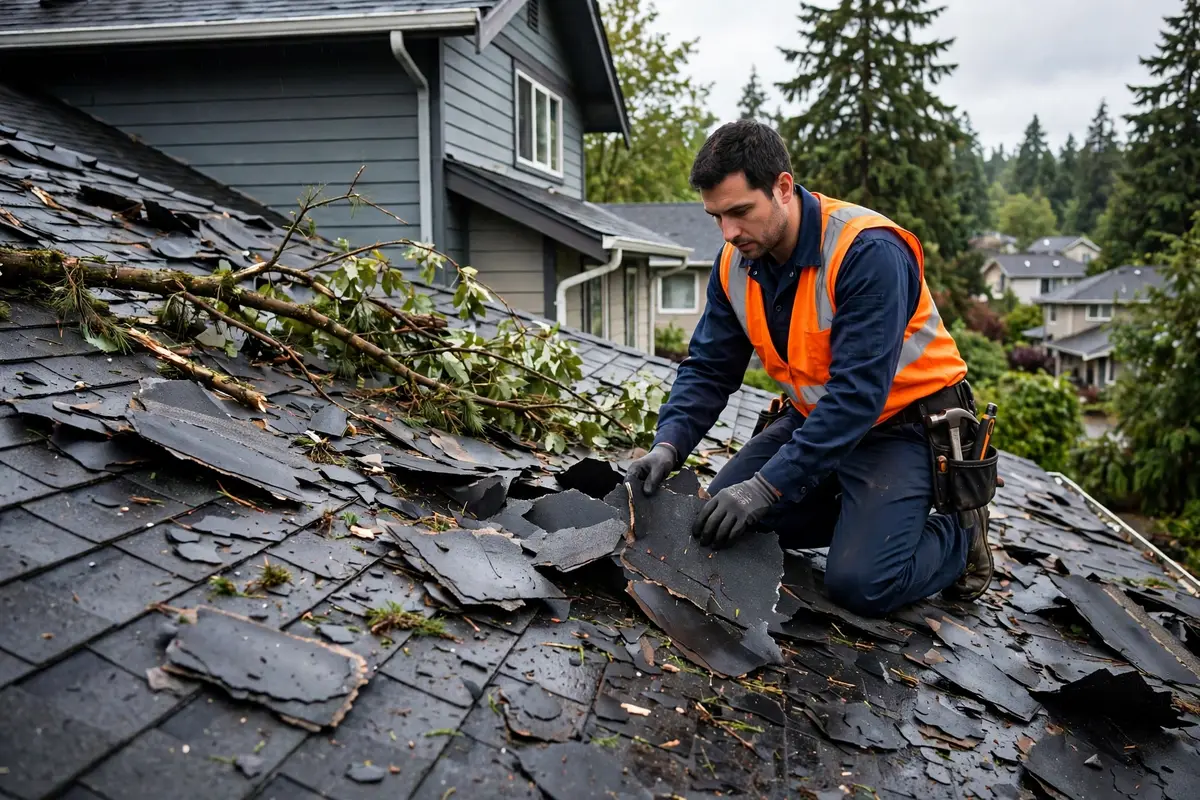
A temporary roof tarp after storm damage uses heavy-duty tarps secured over the damaged area, keeping water out until the permanent repair. Permanent repair replaces damaged shingles, flashing and underlayment as needed, and addresses decking only where inspection shows it is wet or soft.
Damage after a storm? Call (425) 738-3670.
What to Expect During Storm Damage Roof Repair
Roof repair after a storm in Bellevue starts with temporary cover, arranged as quickly as the weather allows. Permanent repair timing depends on the extent of damage and material availability, and is confirmed in writing. Keep all photos, reports and invoices — they are your record.
What Should You Do After Storm Damage to Your Roof?
After a storm, the order you act in matters. The steps below protect your home and your records while storm damage roof repair in Bellevue, WA is arranged, and they give your insurer and your roofer the information each one needs.
1. Photograph visible damage from the ground
Walk around the house and photograph everything you can see from the ground: missing or torn shingles, branches on the roof, bent flashing, and granules washed into the gutters. Take wide shots of each slope and close-ups of the worst spots, and keep the originals — do not delete or edit them. These photographs are the record of what the storm did, taken before anything is moved or repaired.
2. Protect belongings inside the property
If water is coming in, move furniture, electronics and anything that can be damaged by water away from the drip, and put buckets or towels underneath it. Cover anything you cannot move with plastic sheeting. Do not wait for the roof to be fixed before protecting what is underneath it — a small leak can ruin a ceiling, flooring and stored belongings while the repair is being arranged.
3. Avoid climbing onto the roof
Do not climb onto a wet or damaged roof. Shingles are slippery when wet, damaged sections can give way underfoot, and a fall from a roof is serious. Stay on the ground and leave the roof to someone with the right safety equipment and experience.
4. Arrange a professional inspection
Call a roofing professional and arrange an inspection of the whole roof, not just the slope you can see from the street. The inspection should cover shingles, flashing, valleys and vents, and it should include photographs of every problem spot. Ask for the findings in writing, with a written estimate for the repair, before any work begins.
5. Keep inspection photographs
Keep every photograph from the inspection alongside your own photographs from the ground. Store them in one place — a folder on your phone or computer, or printed copies — with the date of the storm noted. If a question comes up later about what was damaged and when, dated photographs answer it.
6. Retain repair estimates and invoices
Keep every written estimate, the final invoice, and any receipts for temporary protection such as tarping. These documents show what the repair cost and what was done, and they are the record to refer to if the repair or its cost is ever questioned. Do not throw them away once the work is finished.
7. Contact the insurance company where appropriate
If the damage looks significant, contact your insurance company and tell them what happened. Have your photographs, the inspection report and the estimates ready when you call. Whether the damage is covered, and how much is paid, depends on your own policy terms and circumstances — your insurer decides that, not the roofer.
How Wind, Hail, Tree, Water and Pre-Existing Damage Differ
Not all storm damage is the same, and the type of damage changes what the repair involves. The five types below look different, happen for different reasons, and are treated differently when a roof is inspected.
Wind damage
Wind lifts shingles at the edges, breaks the seal strips that hold them down, and can tear tabs off altogether. It usually shows as lifted, creased or missing shingles, often on the windward slope or the ridge, and the damage is worst where the seal has already aged. Wind-driven rain often follows, getting under the lifted shingles and wetting the underlayment — see wind-damaged shingle repair for how that damage is fixed.
Hail damage
Hail strikes shingles directly and crushes the granules, leaving soft spots — hail bruises — that may not be visible from the ground. A bruised shingle loses its protective surface and wears out faster, even though it may still be in place. Hail damage is confirmed by close inspection, feeling for soft spots and checking for granule loss, not by looking at the roof from the street.
Fallen tree damage
A fallen branch or tree hits the roof with force, tearing shingles, denting or splitting flashing, and sometimes breaking through the decking. The damage is usually localised to the impact area, but it is often the most severe of the five types because the impact can open a large hole in one strike. Fallen branches should be left where they are until the roof has been inspected, so the damage is not made worse by moving them.
Water intrusion
Water intrusion is the result, not the cause — it is what happens when wind, hail or a fallen branch has already opened a path into the roof. Water travels along rafters and insulation before it shows inside, so the stain on a ceiling is often some distance from where the water actually entered. Finding the entry point, not just the stain, is what a roof leak inspection is for.
Pre-existing deterioration
Pre-existing deterioration is wear that was already there before the storm: aged shingles, failed seal strips, moss damage, or flashing that had already corroded. A storm can make it worse, but it did not cause it. An inspection separates storm damage from wear that was already present, because the two have different causes and different repairs.
Whether any of these types of damage is covered by insurance depends on the individual policy terms and the circumstances of the damage. No type of damage is automatically covered, and no type is automatically excluded.
Please note: the insurance content on this page is general information only, not insurance advice. Homeowners should check their own policy and speak to their insurer about what is covered.
Why Homeowners Choose Us
Fallen tree branch roof damage is most common in tree-covered areas such as Bridle Trails, Lake Hills and Cougar Mountain, where a fallen branch can tear shingles and dent flashing in one strike. Hillside homes in Somerset and West Bellevue see the most wind damage. Rain damage roof repair is often needed even where the shingles look intact, because wind-driven rain gets under lifted tabs and soaks the underlayment. We inspect for all of these after every major Bellevue storm.
Cost: Replacing a few damaged asphalt shingles usually costs about $100 to $700 throughout Bellevue, WA. Our small repairs usually run $300-800. You get an exact price in writing after the inspection.
Related Shingle Repair Services
- Wind-Damaged Shingle Repair in Bellevue, WA
- Emergency Roof Repair in Bellevue, WA
- Roof Leak Repair in Bellevue, WA
- Roof Inspection in Bellevue, WA
Storm Damage Roof Repair FAQs
What does hail do to asphalt shingles?
Hail bruises the shingle mat and knocks granules off, leaving soft spots you can feel and bare patches where the asphalt shows through. A hard hit can crack a shingle. Hail damage often does not leak right away, which is why a roof can look fine after a hailstorm while the shingles are already weakened.
How can you tell hail damage from normal wear?
Hail damage is random and localised: bruises and granule loss scattered across slopes, often on one side, with soft spots where the hail hit. Normal wear is even and gradual, with granule loss and curling spread across the whole roof. An inspection tells the two apart, because the pattern is different even when the roof looks similar from the ground.
Can storm damage be hidden?
Yes. Hail can bruise shingles without breaking them, wind can break seal strips that settle back down, and a cracked shingle can sit under the course above. None of that shows from the ground, and the roof may not leak until the next heavy rain. A full inspection after a major storm is the only way to know what the storm actually did.
What should I do with fallen branches on my roof after a storm?
Leave heavy branches where they are and photograph them from the ground. Do not drag a branch across the roof, because it can tear shingles and break seals. If a branch has punctured the roof, cover the area if you can do so safely. We remove storm debris as part of the inspection and check the shingles underneath for punctures and cracks.
How long after a storm can damage still be repaired?
There is no fixed deadline for the repair itself, but the damage should be documented promptly and the roof fixed before the next rain. A missing shingle or a cracked flashing will let water in at the next storm, and the longer water gets in, the more the decking and insulation are damaged. Call us as soon as it is safe to go up.
Does storm damage usually hit the whole roof or one area?
It is usually one area or one slope. Wind hits the windward side hardest, hail falls hardest on the slopes facing the storm, and a falling branch damages one spot. A full inspection shows the extent, because storm damage can also be scattered: a few missing shingles here, a bruised patch there, and a lifted ridge cap on top.
Do you need to replace shingles after every storm?
No. Many storms only lift a few tabs or scuff some granules, and a small repair is enough. Replacement only makes sense when the damage is widespread, the decking is soft, or the roof is old and the same spots keep failing. An inspection after a major storm shows whether the damage is real or cosmetic, and we tell you plainly.
Can you repair storm damage in stages?
Yes. The first stage is stopping the water: a temporary cover over exposed areas and a repair for any active leak. The second stage is the permanent repair of the damaged shingles, flashing and valleys. We prioritise leaks and exposed decking first, then work through the rest, and you get a written quote for each stage before we start.
What does a storm damage inspection report include?
It includes dated photos of every damaged area, a list of what needs repair now and what can wait, and a written assessment of the roof's condition. We note missing, creased and bruised shingles, flashing and valley damage, and any soft decking. The report is yours to keep, and it is the record you need if you talk to your insurer.
How do I know if a storm caused my leak?
A storm-caused leak usually appears during or just after the storm, and the damage is fresh: clean breaks, missing shingles, or a flashing that has just lifted. If the roof was dry before the storm and the leak started with it, the link is strong. An inspection confirms it by matching the leak to the fresh damage on the roof.