
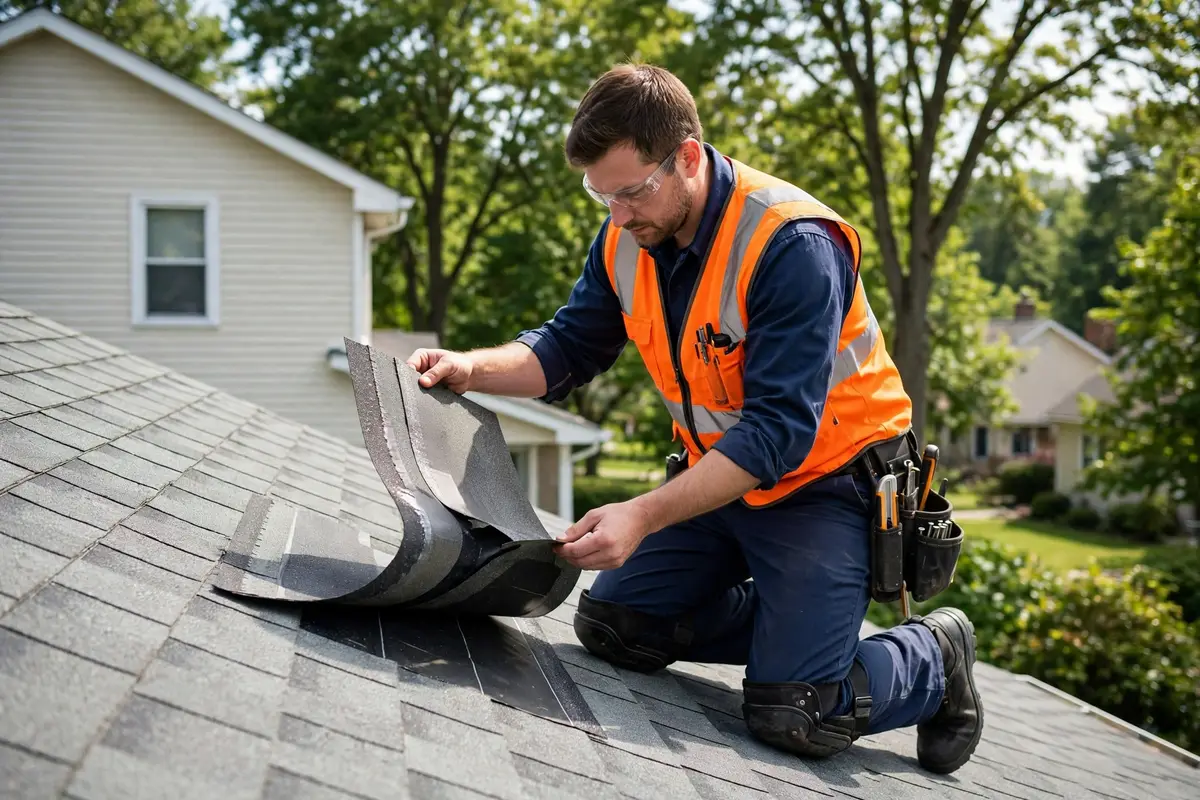
Emergency Roof Repair in Bellevue, WA
Emergency roof repair in Bellevue, WA — active leaks, storm damage and exposed roofs. Call and we'll tell you what to do first and how soon we can come. Serving Bellevue (98004–98008). Call (425) 738-3670 now.
An active leak cannot wait for a convenient appointment. Water travels through insulation and along rafters, so a small stain can hide larger damage within days. If your roof is leaking now — including if water is coming in tonight — call us. We will tell you what to do first, arrange temporary cover where needed, and then plan the permanent repair. We do not claim round-the-clock availability, but we will give you an honest response time.
Water coming in? Call (425) 738-3670.
The Problem: Active Leaks and Storm Damage
Emergency roof leak repair Bellevue homeowners need most is for an active leak during heavy rain, shingles torn off in a windstorm, a branch through the roof, or a valley or flashing failure that has suddenly let water in. The common factor is water entering the home now, and every hour of delay adds to the interior damage.
What qualifies as an emergency roof repair?
An emergency roof repair in Bellevue, WA is a roof problem that is letting water in now, or has left the roof open to the next rain. If water is coming in or the roof is exposed, it qualifies — and the longer it waits, the more the interior damage grows.
Active roof leaks
Water dripping or running into a living space or attic during rain is the most common emergency. The leak is active, so the damage grows with every hour of rain — wet decking, soaked insulation and stained ceilings get worse, not better.
Storm-related roof openings
A section of roof torn open by wind, where shingles, underlayment or decking are gone and the roof is exposed to the rain. An open roof cannot wait for the next storm, because the next rain goes straight into the home.
Tree impact
A fallen tree or large branch through the roof. The opening lets water in, and the tree can hide broken rafters or live wires. Stay out of the damaged rooms, photograph the damage from the ground, and do not climb on the roof.
Missing shingles during heavy rain
Shingles torn off in a storm while rain is falling or expected. With the underlayment exposed, wind-driven rain can reach the decking, so temporary cover is needed before the next rain.
Signs You Need Emergency Roof Repair
- Water dripping from a ceiling
- A spreading stain during rain
- Shingles torn off in a storm — an urgent repair for missing roof shingles before the next rain
- A fallen tree or branch through the roof
- Water in the attic after a storm
Our Inspection and Repair Approach
A roof leaking during heavy rain is the most common emergency we see. First, we stop the water — emergency shingle repair Bellevue homeowners call for starts with advice on the phone, then a temporary patch or tarp where it can be done safely. Second, we inspect and document the damage. Third, we give a written estimate for the permanent repair. Temporary cover buys time; it is not a substitute for the repair.
Emergency Roof Repair Methods
An emergency tarp for damaged roof sections uses heavy-duty tarps secured over the damaged area. Permanent repair replaces the damaged shingles, flashing, underlayment or decking as inspection shows. We do not rush a permanent repair in unsafe weather.
Temporary roof protection
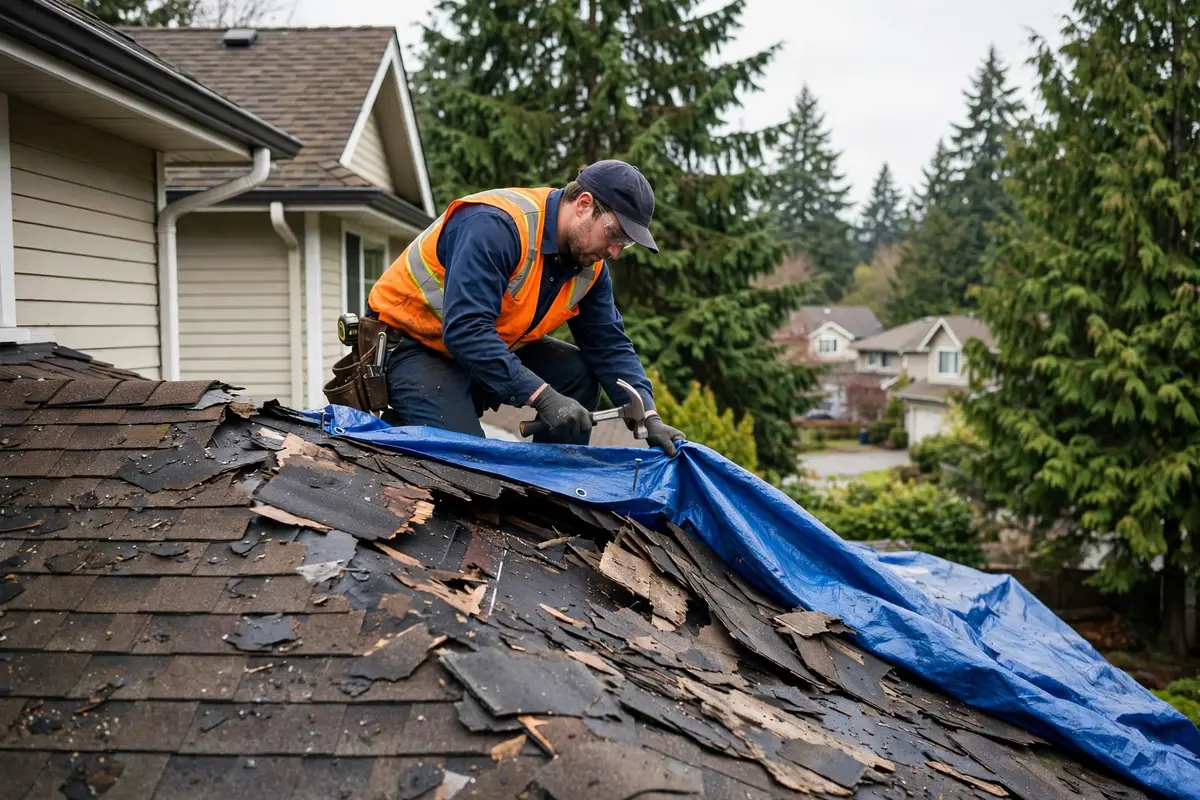
Temporary roof protection is a cover — usually a heavy-duty tarp or sheeting — fitted over the damaged area so water cannot get in while the permanent repair is planned. It buys time; it is not the repair itself.
What temporary protection is
A heavy-duty tarp secured over the damaged area and fixed down so it sheds water. It is fitted only where it can be done safely — not in unsafe weather, and not on a roof that cannot be reached safely. Once the cover is on, the roof is inspected properly and the permanent repair is priced in writing.
What it is not
It is not a fix. The damaged shingles, flashing, underlayment or decking underneath are still broken, and wet decking does not dry out under a tarp. It is not a long-term cover either — a tarp can loosen in wind and needs checking. The permanent repair replaces the damaged materials properly, so the roof sheds water the way it was built to.
Need help tonight? Call (425) 738-3670.
Emergency inspection process
The inspection is what turns an emergency call into a written repair plan. It starts only when the roof can be reached safely — a wet, dark or damaged roof is not climbed on.
- Safe access first. The roofer checks the weather and the roof’s condition before getting on it.
- Find the entry point. The roofer traces where the water is getting in — usually a missing shingle, a failed flashing detail or a cracked pipe boot.
- Photograph the damage. The damage is photographed so there is a record of what was found.
- Walk the whole roof. Storm damage is often wider than the spot you can see, so the roofer checks the decking, flashing and valleys across the roof.
- Written estimate. The permanent repair is priced in writing, with the materials and scope the inspection showed.
For a fuller picture of what a roof inspection covers, see our roof inspection in Bellevue, WA.
What homeowners should do before the roofer arrives
While you wait for the roofer, there are a few things you can safely do from inside the home.
- Move furniture, electronics and valuables away from the drip.
- Put a bucket or container under the drip and empty it as needed.
- Photograph the damage from the ground and inside — the stain, the water, and the roof if it can be seen safely from the ground.
- Do not climb on the roof. A wet or damaged roof is dangerous, and a fallen tree can hide broken rafters or live wires.
- Keep a clear path — move cars from the driveway and unlock gates so the roofer can reach the roof and bring equipment in.
- Note when the leak started and what the weather was doing — it helps the roofer trace the entry point.
- Keep pets inside and children away from the damaged rooms.
What to Expect During Emergency Roof Repair
For urgent roof repair Bellevue homeowners need, we give you a response time when you call, based on current workload and weather. Our storm response starts with that call: temporary cover is arranged as quickly as conditions allow, and the permanent repair is estimated in writing once the roof can be inspected safely.
Why Homeowners Choose Us
Storm emergency roof repair covers the damage heavy rain and windstorms cause across all of Bellevue, from Downtown to Cougar Mountain. If you are in a residential ZIP — 98004, 98005, 98006, 98007 or 98008 — call us and we will advise on the fastest safe next step.
Cost: Replacing a few damaged asphalt shingles usually costs about $100 to $700 throughout Bellevue, WA. Our small repairs usually run $300-800. You get an exact price in writing after the inspection.
Related Shingle Repair Services
- Storm Damage Roof Repair in Bellevue, WA
- Roof Leak Repair in Bellevue, WA
- Wind-Damaged Shingle Repair in Bellevue, WA
- Missing Shingle Repair in Bellevue, WA
Emergency Roof Repair FAQs
What counts as a roofing emergency?
An active leak into a living space, a large section of missing shingles, a fallen tree or branch through the roof, or exposed decking in the rain all count as emergencies. A few missing shingles with no water coming in is urgent but not an emergency in the same way. If water is coming in or the roof is open to the rain, call (425) 738-3670 and tell us what is happening.
What should I do if water is pouring through my ceiling?
Put a bucket under the drip, move furniture and valuables out of the way, and turn off the power to that room if water is near a light fitting or socket. Photograph the damage, then call us. Do not climb on the roof, and do not poke a hole in the ceiling yourself. We find the entry point on the roof, stop the water, and give you a written quote for the repair.
Can a roofer put a tarp on my roof in the rain?
Yes, if it is safe to get on the roof. A tarp is fitted over the damaged area and fixed down so it sheds water until a permanent repair can be done. It is a temporary cover, not a fix — the damaged shingles and any wet decking still need replacing. Once the tarp is on, we inspect the roof properly and give you a written quote for the permanent repair.
What should I do if my roof starts leaking at night?
Put a bucket under the drip, move valuables away, and photograph the stain and the water. Do not climb on the roof at night — a wet, dark roof is dangerous. If the leak is heavy, call us and tell us water is coming in; an active leak gets priority. A small drip can usually wait until morning, but do not leave it — water damage grows each time it rains.
What does an emergency roofer do first when they arrive?
First we find where the water is getting in — usually a missing shingle, a failed flashing detail, or a cracked pipe boot — then we stop the water with a temporary cover if the roof is open. After that we photograph the damage and walk the rest of the roof, because storm damage is often wider than the spot you can see. Then we give you a written quote for the permanent repair.
Do you prioritise active leaks over other repairs?
Yes. An active leak gets priority because water damage grows every time it rains — wet decking, soaked insulation and stained ceilings get worse, not better. When you call, tell us water is coming in and where it shows, and we will give you an honest response time after checking the schedule. We do not promise a same-day time until we have checked it.
What should I do if a tree falls on my roof?
Stay out of the damaged rooms and do not climb on the roof — a fallen tree can hide broken rafters and live wires. Photograph the damage from the ground, note the date, and call us. We inspect the roof, cover the opening so no more water gets in, and give you a written quote for the repair. Keep the photos and invoices for your records.
Can I stay in my home while emergency roof work is done?
Usually, yes. A repair to one section of the roof does not affect the rooms below it, and the work is done from outside. If the damage is severe — a large opening, a fallen tree, or the power turned off — we will tell you honestly whether it is better to stay elsewhere until the roof is covered. Safety comes first, and we will not start work that puts you at risk.
What is the difference between a temporary repair and a permanent repair?
A temporary repair — usually a tarp or a cover — stops water getting in until a proper repair can be done. It is not a fix: the damaged shingles, flashing or decking underneath are still broken. A permanent repair replaces the damaged materials properly, so the roof sheds water the way it was built to. The temporary cover buys time; the permanent repair is the job that lasts.
Can roof damage be worse than it looks from the ground?
Yes, often. A few missing shingles can hide wet decking, failed seal strips can look fine from the street, and water can travel inside the roof before it stains a ceiling. After a storm, the visible damage is usually only part of the story. An inspection walks the whole roof and checks the decking, flashing and valleys, so you know the full extent before you agree to any work.
How quickly can you come out for a leak?
Call (425) 738-3670 and we will tell you honestly how soon we can come. Active leaks get priority, but the exact timing depends on our current workload and the weather that day. We do not promise a fixed arrival time on the website, because it would not be true on a busy storm day. The call is how you confirm it.