
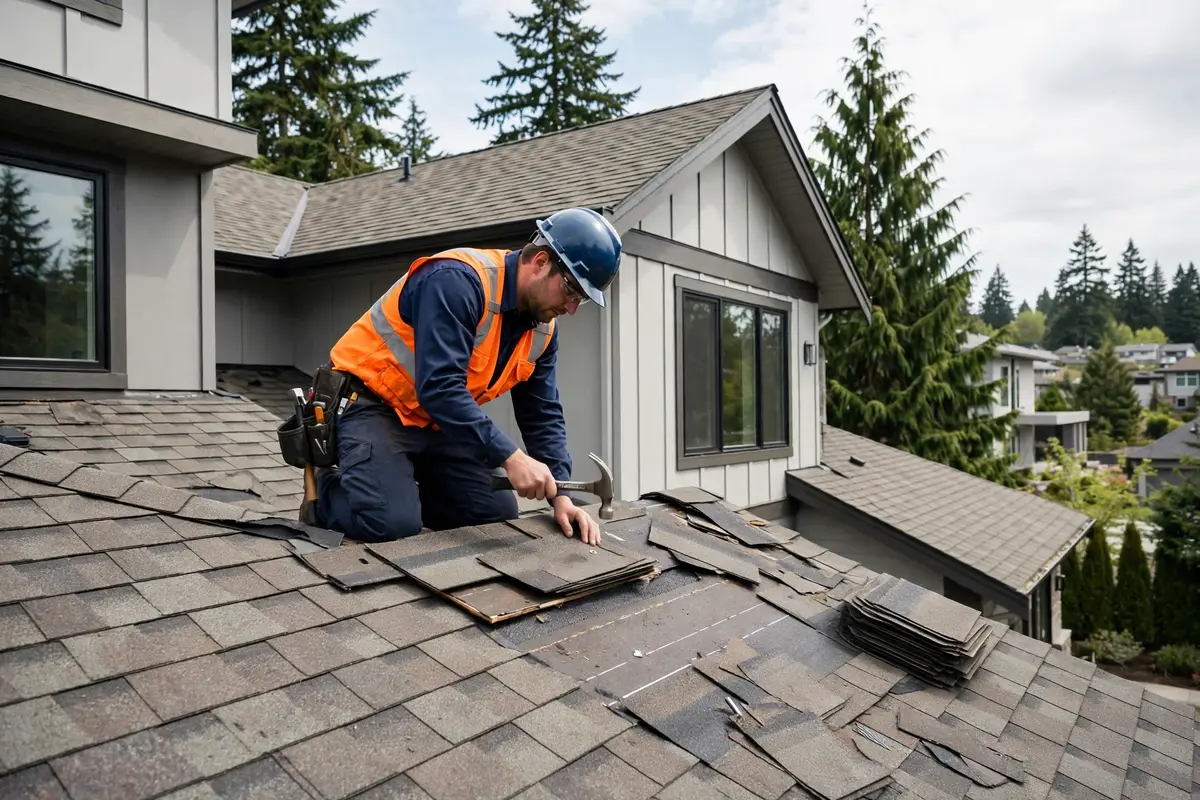
Shingle Roof Repair in Bellevue, WA
Shingle roof repair in Bellevue, WA for missing, cracked, curled and leaking asphalt shingles — serving Somerset, West Bellevue and Lake Hills (98004, 98006, 98008). Free inspection, matching shingles, and a written estimate before any work starts.
Cracked, curled, loose or worn shingles don't always mean a new roof. This page explains what shingle roof repair covers, how we do it and when replacement makes more sense.
The Problem: Missing, Cracked and Wind-Lifted Shingles
Bellevue’s wet Pacific Northwest climate is hard on asphalt shingles. Persistent rain, shade from tall conifers, wind-driven rain off Lake Washington and moss growth all shorten shingle life. Many asphalt shingle roofs last around 20 years. Shade, moisture and poor attic ventilation can shorten that. The damage we see most is missing and wind-lifted shingles, cracked and curled shingles, granule loss, and leaks that start at flashing rather than in the shingle field.
Signs You Need Shingle Roof Repair
- Missing, lifted or flapping shingles after wind
- Cracked, split, curled or cupped shingles
- Granules collecting in gutters or on the ground
- Dark streaks or green moss on shaded slopes
- A ceiling stain, or a leak that appears in heavy rain
Shingles damaged? Call (425) 738-3670.
Our Inspection and Repair Approach
We start with an inspection: we walk the roof, check shingles, flashing, valleys, ridge caps and vents, and look in the attic where we can. We photograph what we find and give you a written shingle repair estimate explaining what needs repair now, what can wait, and how to decide whether to repair or replace asphalt shingles. Then we replace damaged shingles with matching profiles and colours, fix loose shingles on the roof by re-sealing their tabs where that will hold, and fix the flashing or underlayment underneath if that is where water is getting in.
Shingle Roof Repair Methods
To repair damaged asphalt roof shingles, we use matching three-tab or architectural shingles, new sealant where needed, and replacement flashing or pipe boots where those have failed. Whether the roof is three-tab or architectural, composition roof repair in Bellevue follows the same steps: match the profile, nail through the strip, and re-seal the courses above. We do not pressure wash shingles — the Asphalt Roofing Manufacturers Association warns against it, and it strips granules. Moss and algae are treated with a low-pressure soft wash.
Not sure if it's repair or replace? Call (425) 738-3670.
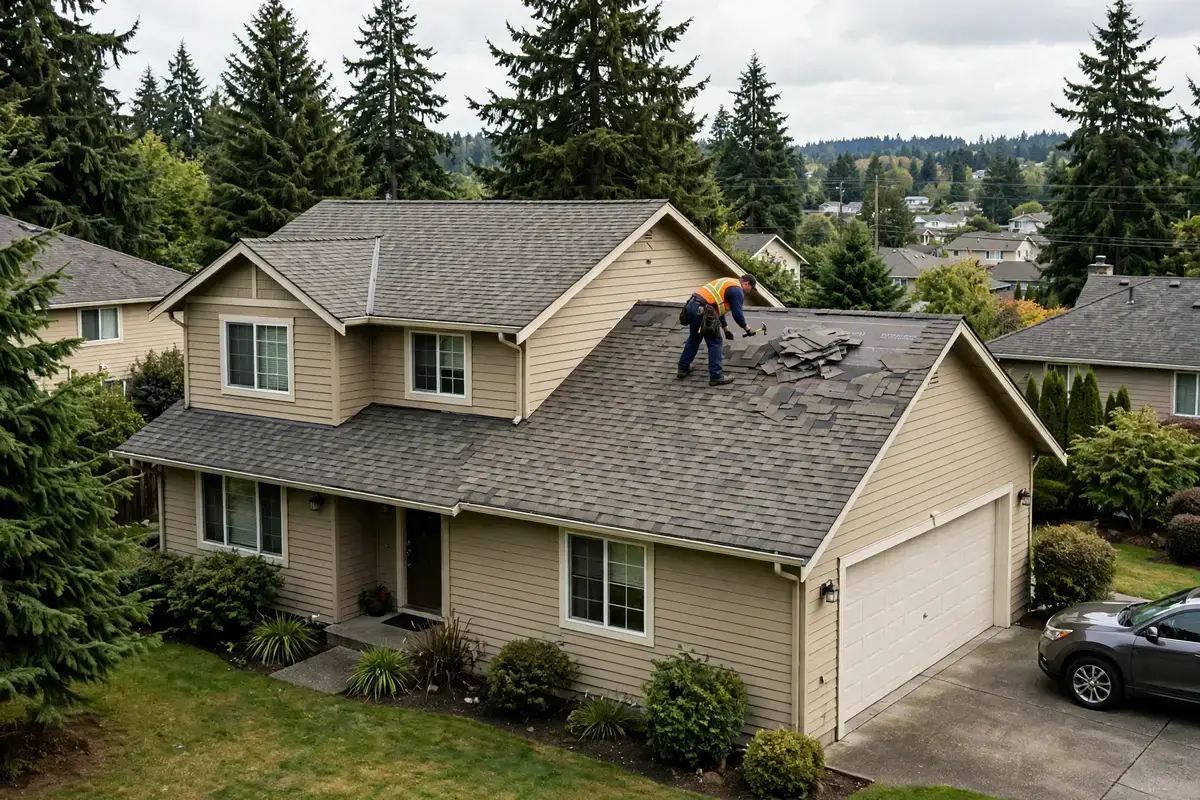
What to Expect During Shingle Roof Repair
Most small repairs are completed in a single day, whether the job is a few missing tabs or work to repair a worn shingle roof that needs several shingles replaced at once. We protect landscaping, remove old shingles and debris, and leave the roof and yard clean. You receive photos of the repaired area and a written summary of the work.
Why Homeowners Choose Us
As a shingle repair contractor in Bellevue, we do residential shingle repair in Bellevue across ZIP codes 98004, 98005, 98006, 98007 and 98008 — from hillside homes in Somerset and Cougar Mountain to wooded lots in Bridle Trails and mid-century homes in Lake Hills. Each area has its own pattern: shaded slopes grow moss, hillside homes take more wind, and tree cover brings branch damage.
Cost: Replacing a few damaged asphalt shingles usually costs about $100 to $700 throughout Bellevue, WA. Our small repairs usually run $300-800. You get an exact price in writing after the inspection.
Related Shingle Repair Services
- Missing Shingle Repair in Bellevue, WA
- Roof Leak Repair in Bellevue, WA
- Wind-Damaged Shingle Repair in Bellevue, WA
- Asphalt Shingle Repair in Bellevue, WA
What Happens During a Professional Shingle Roof Repair?
A professional asphalt shingle roof repair follows the same method every time, whether the job is a few cracked roof shingles or a larger patch of damaged roof shingles. The steps below are what happens between the inspection and the finished repair, and they are the same for a composition roof repair on three-tab or architectural shingles. This is the methodology behind the work: the diagnosis that decides what gets repaired, what gets resealed, and what can wait.
1. Identify the shingle manufacturer and product
Every residential shingle repair starts by identifying what is already on the roof. We note the shingle manufacturer and product line, and whether the roof uses three-tab shingles or architectural shingles, because the replacement must match the same profile, thickness and colour blend. A composition roof repair that mixes profiles stands out from the street and can leave a weak edge where the new shingle meets the old. When the original product is no longer made, we find the closest current match and tell you before any work starts.
2. Check the surrounding shingles
Damaged roof shingles are rarely alone. We check the shingles around the repair area for lifted tabs, cracked corners, granule loss and loose roof shingles that have not yet torn off, because wind and age affect a whole slope, not one shingle. If the surrounding shingles are brittle or their seal strips have failed, we tell you before we start, so a small repair does not turn into a surprise partway through the job.
3. Inspect the seal strip and nail placement
The seal strip is the band of adhesive that bonds each shingle to the course below, and the roofing nails hold it through the nail strip. We check whether the seal has bonded, whether the nails are placed correctly on the strip, and whether any are overdriven or exposed. A shingle that looks sound but has a failed seal strip will lift again in the next windstorm, so this check decides whether a shingle is resealed or replaced.
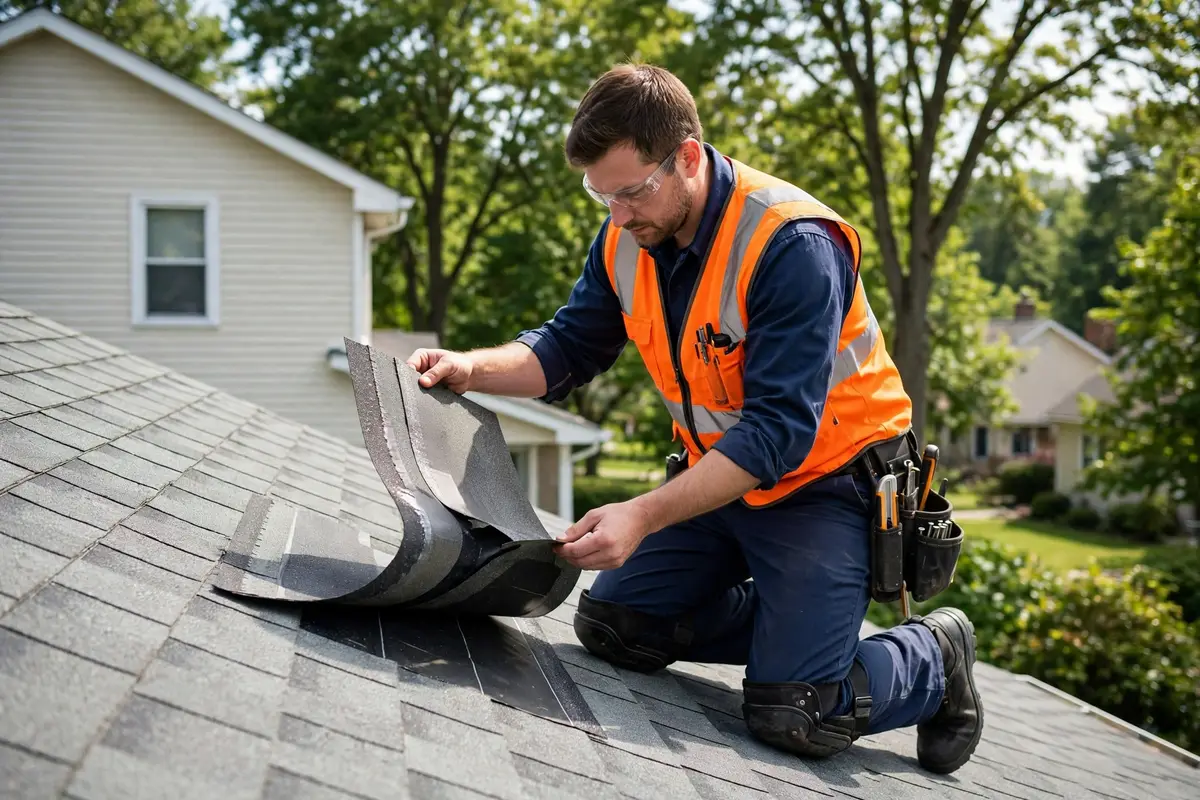
4. Examine the underlayment
Under the shingles, the roof underlayment is the backup layer that keeps water out if a shingle fails. We lift the damaged shingles and check the underlayment for tears, brittleness and damp, and look at the roof decking underneath for soft spots or staining. If the underlayment is torn or wet, we replace it in the repair area before the new shingles go on, because new shingles over damaged underlayment will leak again.
5. Check flashing and ventilation
Most leaks start at a transition, not in the middle of a shingle field. We check the flashing around chimneys, valleys, skylights and walls, the ridge caps along the peak, and the pipe boots where vent pipes pass through the roof. We also check ventilation, because poor attic ventilation traps heat and moisture that curls shingles and shortens their life. Cracked, rusted or lifting flashing is included in the written quote rather than left for later.
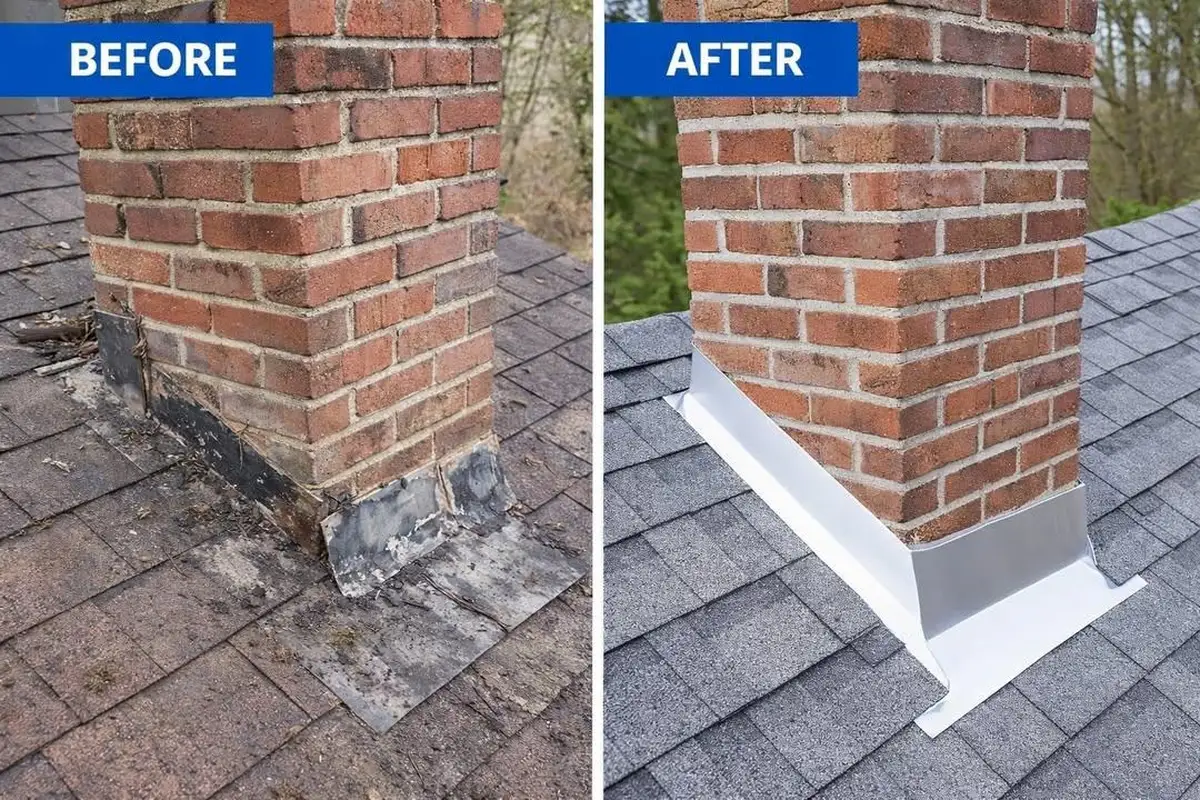
6. Replace or reseal damaged shingles
Cracked roof shingles and torn tabs are replaced with matching asphalt shingles, nailed on the nail strip and sealed to the course below. Loose roof shingles whose seal has failed but whose body is sound can be resealed by hand where that will hold. We work from the course above down, so the new shingles sit flat and shed water like the rest of the roof, and we check the repair from the ground to make sure it blends in.
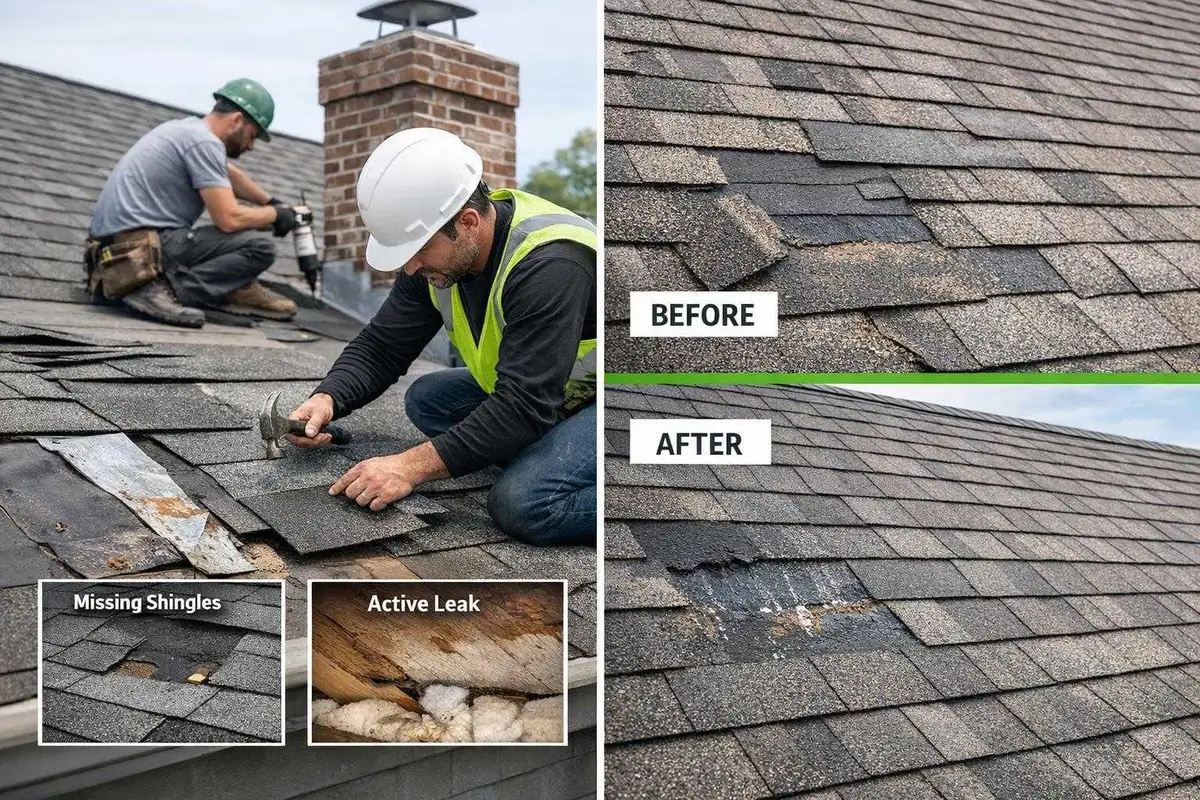
7. Photograph the completed work
When the repair is done, we photograph the completed work from the roof and from the ground, so you can see what was replaced and how it sits. You receive the photos with a written summary of the work, including what was replaced, what was resealed, and anything we found that may need attention later. That record is yours to keep, and it is useful if a leak appears again or if you sell the home.
Shingle Roof Repair FAQs
What does a shingle roof repair include in Bellevue, WA?
A shingle roof repair starts with an inspection of the damaged area and the roof around it. We replace the damaged shingles, reseal lifted edges, and check the flashing, valleys and vents nearby. We photograph what we find and give you a written quote before any work starts, then clean up when the repair is done.
How is a damaged shingle replaced?
We loosen the seal on the shingle above, lift the course, and pull the nails from the damaged shingle without tearing the ones around it. The new shingle slides into place, is nailed on the nail strip, and the course above is pressed back down to reseal. We check the underlayment underneath before the new shingle goes on.
Is repairing architectural shingles different from repairing three-tab shingles?
The steps are the same, but the shingles are not. Architectural shingles are thicker and heavier, with a layered look, so the replacement must match the same profile and weight. Three-tab shingles are flat and lighter. We match the profile already on your roof, so the repair blends in rather than standing out.
What is the seal strip on a shingle, and why does it matter?
The seal strip is the band of adhesive on each shingle that bonds it to the course below once the sun warms it. A good seal holds the shingle flat and keeps wind and wind-driven rain from getting underneath. When the seal fails, the tab lifts, flaps in the wind, and can crease or tear off.
Do you replace the underlayment when you repair shingles?
We check it and replace it in the repair area if it is torn, brittle or wet. Underlayment is the backup layer under the shingles, and a repair that leaves damaged underlayment in place will leak again. If the underlayment around the repair is sound, we leave it alone and only replace the shingles above it.
How long will a shingle repair last?
On a sound roof, a proper repair lasts for years, because the new shingles seal in and shed water like the rest of the roof. On an old roof with brittle shingles and failing seals, a repair is a stopgap that buys time rather than a lasting fix. We tell you honestly which one your roof is before we start.
Do you re-check the flashing when you repair shingles?
Yes. Most leaks start at a transition, not in the middle of a shingle field, so we check the flashing, valleys and vents around every repair area. If the flashing is cracked, rusted or lifting, we say so and include it in the written quote, because new shingles over failed flashing will leak again.
Can shingle repairs be done in wet or cold weather?
Light rain and cold slow the work down. Shingles seal with warmth from the sun, so on a cold day the seal takes longer to set, and we may need to hand-seal the repair. We do not work on a wet or icy roof, and we schedule around the weather so the repair is done safely and seals properly.
What should I check after a shingle repair is finished?
Check that the repaired shingles sit flat and match the rest of the roof, that the area is clean, and that gutters and the ground below are free of debris. We walk you through the repair, show you photos of what was done, and leave you a written record of the work, so you know exactly what was fixed.
Do I need to be home during a shingle repair?
No. Most repairs are done from outside, so you do not need to be home while we work, as long as we can reach the roof and the driveway. We photograph the repair and call you with the result. You do need to be reachable by phone, so we can confirm the written quote before any work starts.