
Roof Valley Repair in Bellevue, WA
Roof valley repair in Bellevue, WA — leaking valleys where two roof slopes meet, repaired with new flashing and shingles. Serving Lake Hills and Somerset (98008, 98006). Call (425) 738-3670.
A valley is where two roof slopes meet, and it carries more water than any other part of the roof. When a valley fails — through worn flashing, damaged shingles, or debris that holds water against the surface — the leak is often large and persistent. A leaking roof valley repair replaces the failed parts with new flashing and shingles, rather than sealing over the problem.
The Problem: Leaking Valleys, Debris and Worn Shingles
Valleys fail when valley metal corrodes or lifts, when shingles in the valley crack or wear, when valley underlayment deteriorates, or when valley debris dams water in the valley. The result is usually a roof valley water leak that shows up as a stain below the valley, or as damp decking found during an inspection. In Bellevue’s rain and tree cover, debris in valleys is a common cause.
Signs You Need Roof Valley Repair
- Water leaking where roof slopes meet
- Staining below a valley inside
- Debris piled in a valley
- Cracked or worn shingles in the valley
- Visible rust or gaps in valley metal
Valley leaking? Call (425) 738-3670.
Our Inspection and Repair Approach
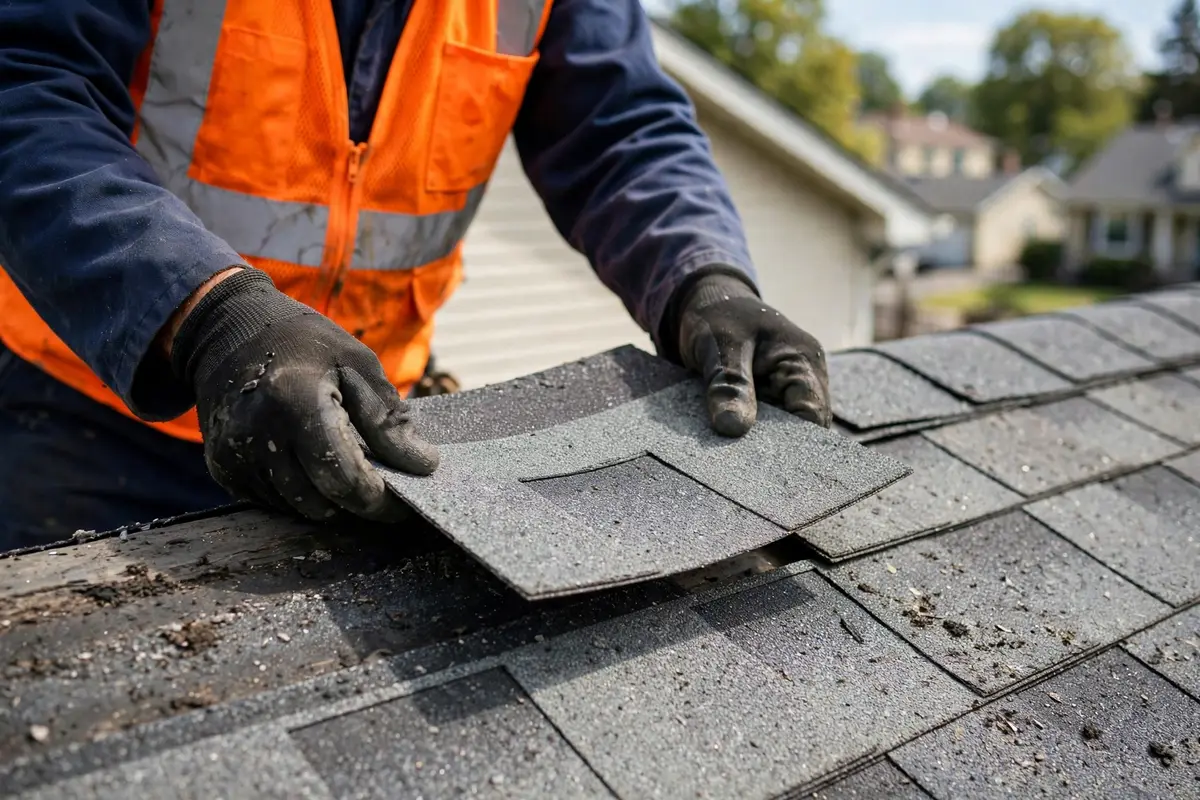
An asphalt shingle valley repair starts the same way: we clear the valley, lift the shingles on both sides, and inspect the valley metal and underlayment beneath. The failed component is replaced — metal, underlayment, shingles, or all three — and the valley is re-laid so valley drainage runs freely to the gutter. Valley underlayment damage is common where water has been sitting, so a torn or rotted underlayment is replaced before the valley is re-laid.
Roof Valley Repair Methods
A shingle valley repair Bellevue homeowners book with us uses new valley flashing, new underlayment where needed, and matching shingles cut and laid to shed water into the valley. We do not rely on sealant alone in a valley.
Water pooling in a valley? Call (425) 738-3670.
Roof Valley Types, Materials and Common Failures
Most valley leaks come down to three things: the valley type, the materials underneath it, and how it was installed. Understanding those three things explains why a valley fails, what a repair has to replace, and why sealing over the top rarely works.
Open Valley vs Closed-Cut Valley
In an open valley, the metal flashing is left visible as a channel down the middle of the valley, with the shingles cut back on each side so the water runs on the metal. It sheds leaves and water easily, and the metal can be seen and checked from the ground, which makes damage obvious. In a closed-cut valley, the shingles from one slope run across the valley and are cut in a straight line, while the shingles from the other slope are cut to meet that line, so the metal underneath is hidden. A closed-cut valley looks neater, but debris can catch where the shingles meet, and the flashing cannot be inspected without lifting shingles. Repairing an open valley usually means replacing the metal channel and re-cutting the shingles on each side; repairing a closed-cut valley means lifting more shingles to reach the flashing and re-establishing the straight cut line. A third style, the woven valley, interlaces the shingles from both slopes across the valley; it is less common on modern asphalt shingle roofs, and we match whichever style is already on your roof.
Valley Flashing Materials
Valley flashing is the metal channel that carries water down the valley, and it sits under the shingles on both sides so the water runs over it and off the roof. The most common material is galvanised steel: strong and affordable, but it rusts over time, especially where wet leaves hold moisture against it. Aluminium is lighter and resists rust, but it is softer and dents more easily, and it should not sit against a different metal. Copper lasts the longest of the three and is sometimes used on higher-end roofs, but it costs more. Whichever metal is used, it has to be wide enough to catch water from both slopes, and each length has to lap over the one below it so water runs over the joint instead of under it. When the metal rusts through or develops holes, sealant cannot save it — the flashing has to be replaced, along with the shingles that cover it. If you want more detail on flashing generally, see our roof flashing repair page.
Valley Underlayment
Under the flashing, the valley has its own layer of underlayment — a water-resistant sheet that runs down the valley and up each side, wider than the underlayment used on the flat roof. It is the second line of defence: if water gets past the shingles or through a damaged spot in the flashing, the underlayment is what keeps it off the decking. Because a valley carries water from two slopes, the underlayment there works harder than anywhere else on the roof, and it is also the first thing to suffer when water sits in the valley. Once it tears, rots or becomes saturated, water reaches the decking, which softens and rots along the valley line. A failed valley underlayment cannot be repaired from the surface — the shingles and the flashing above it have to come off before it can be replaced.
Debris Accumulation in Valleys
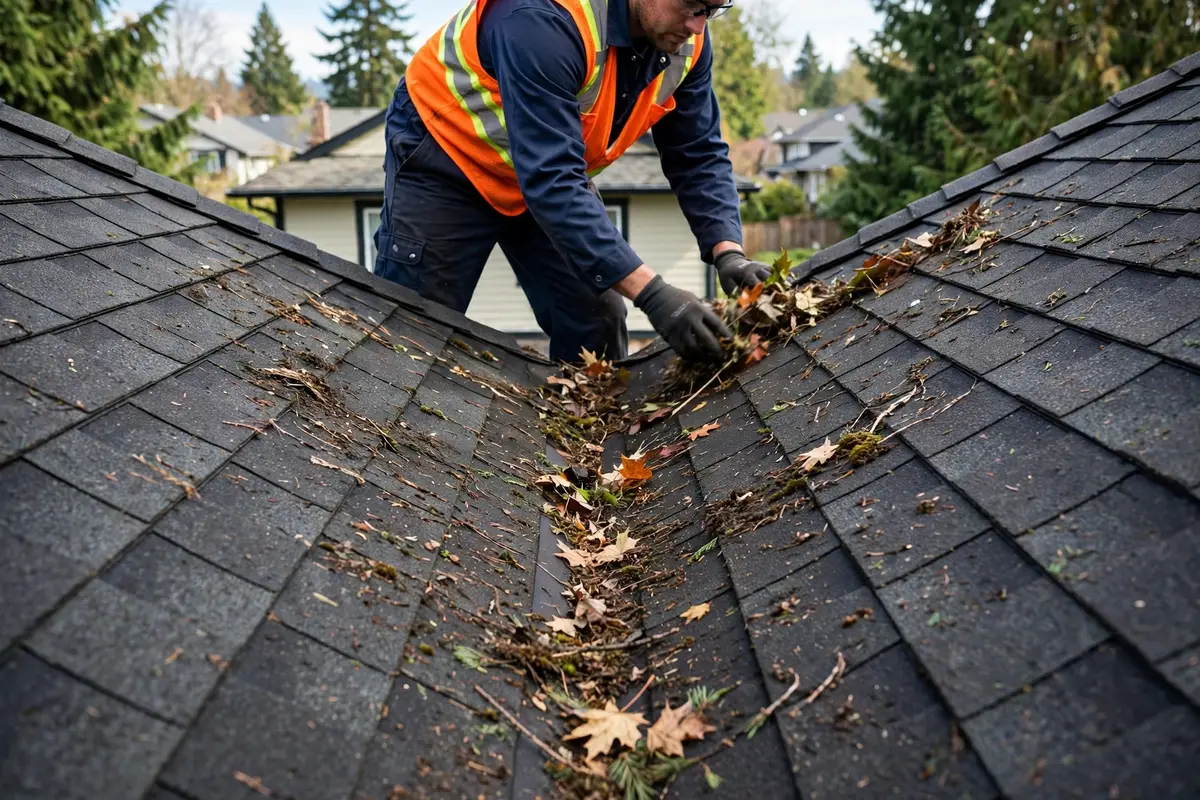
Valleys are natural traps for leaves and pine needles. In Bellevue, where tall conifers overhang many roofs, a valley can fill with debris in a single autumn, and the pile does more than look untidy. A mat of wet leaves dams the water: instead of running down the valley to the gutter, the water backs up and runs sideways under the shingles on each side, where it soaks the underlayment and the decking. Wet debris also holds moisture against the flashing, which speeds up rust, and the damp, shaded valley is where moss takes hold first. Clearing the valley helps — we clear loose debris on every inspection — but if the flashing underneath is already rusted or the shingles along the valley line are lifted, clearing the debris alone will not fix the leak.
Common Valley Installation Failures
Most valley failures we find are installation problems that were there from the start, and they only show up years later when the valley starts leaking. The flashing is too narrow to catch water from both slopes, so water overshoots it and runs under the shingles. The lengths of flashing are lapped the wrong way, so water runs under each joint instead of over it. Nails are driven too close to the centre of the valley, putting holes directly in the path of the water. Shingles are cut too close to the valley centre, leaving their cut ends sitting in the running water, or the cut line wanders and leaves gaps. And sometimes the valley is laid with no underlayment underneath, or with a strip too narrow to protect the decking if the flashing fails. None of these can be fixed with sealant, because sealant is not a substitute for flashing laid in the right order. A proper valley repair corrects the installation fault, not just the symptom.
Signs of Valley Leakage
A valley leak usually shows up inside the house first. Look for a water stain on the ceiling directly below where two roof slopes meet, or damp patches along the line under the valley, and pay attention to dripping that starts during heavy rain and stops when the rain eases. From outside, the signs are rust or gaps in the valley metal, shingles along the valley line that are cracked, curled or lifted, a pile of debris sitting in the valley, and moss growing along the valley line. On an inspection we also check the decking along the valley, which can be soft even when the shingles above it still look sound. One thing to keep in mind is that the stain is not always directly under the leak — water can travel along the decking and rafters before it shows inside, so the entry point may be further up the valley than the stain. If you notice any of these, our roof leak repair page explains how we trace a leak back to its source.
When Valley Repair Requires Shingle Removal
Valley flashing and underlayment sit underneath the shingles, so there is no way to reach them without taking shingles off. When the flashing or the underlayment has failed, we lift and remove the shingles on both sides of the valley for several courses, replace the failed layer, and then lay new matching shingles along the valley line. Shingles that come off are not usually put back — they are cut, nailed and often brittle, so new shingles are fitted instead, matched as closely as possible to the ones already on the roof. If only the top courses of shingles are damaged and the flashing underneath is sound, the repair can be limited to those shingles and no deeper work is needed. If the decking under the valley is soft or rotten, that section of decking is replaced as well, and we show you photographs before you agree to the work.
What to Expect During Roof Valley Repair
A roof valley leak repair Bellevue homeowners book with us usually takes a day, depending on length and access. We also repair damaged valley shingles on both slopes where they have cracked or worn, so the new valley metal is not laid against old, failing shingles. You receive photos of the valley before and after, and advice on keeping it clear of debris.
Why Homeowners Choose Us
Complex, multi-slope roofs in Somerset, Cougar Mountain and West Bellevue have the most valleys, and tree cover in Bridle Trails and Lake Hills fills them with debris. Keeping up with roof valley debris and drainage matters most on those homes, and valley condition is checked on every inspection we do in Bellevue.
Cost: Replacing a few damaged asphalt shingles usually costs about $100 to $700 throughout Bellevue, WA. Our small repairs usually run $300-800. You get an exact price in writing after the inspection.
Related Shingle Repair Services
- Roof Leak Repair in Bellevue, WA
- Roof Flashing & Ridge Cap Repair in Bellevue, WA
- Roof Vent Repair in Bellevue, WA
- Roof Inspection in Bellevue, WA
Roof Valley Repair FAQs
What is a roof valley?
A valley is where two roof slopes meet and form an inside corner. Rain from both slopes runs into the valley, so it carries far more water than the flat shingle field — which is why valleys are one of the most common places for a roof to leak. A valley has metal flashing underneath and shingles cut or woven over it to shed the water.
Why do roof valleys leak?
Valleys carry the most water on the roof, so any weakness there shows up fast. The usual causes are debris damming the water, valley flashing that has rusted or lifted, and shingles along the valley line that have cracked or come loose. In Bellevue, leaves and needles from tall conifers collect in valleys and hold water against the flashing. An inspection finds which of these is causing your valley leak.
What is the difference between an open valley and a closed valley?
In an open valley, the metal flashing is left visible as a channel down the middle, with the shingles cut back on each side. In a closed valley, the shingles are woven or cut over the valley so the metal is hidden. Open valleys shed debris and water more easily, while closed valleys look neater but can trap leaves. We repair both types and match the style already on your roof.
Can leaves and debris in a valley cause a leak?
Yes. Leaves and pine needles collect in the valley and dam the water, so it backs up under the shingles on each side instead of running off the roof. In Bellevue's tree-heavy neighbourhoods this is a common cause of valley leaks, especially in autumn. Keeping valleys clear helps, but if the flashing underneath is already rusted or the shingles are lifted, clearing the debris alone will not fix the leak.
Can a valley be repaired without replacing the whole roof?
Yes, if the damage is local. We lift the shingles on both sides of the valley, replace the valley flashing, and fit new shingles along the valley line so the water sheds correctly. The rest of the roof is left alone. If the decking under the valley is soft or rotten, we replace that section of decking too, and we show you photos before you agree to anything.
What is valley flashing made of?
Valley flashing is usually galvanised steel or aluminium — a wide metal channel that runs down the valley and carries water off the roof. The metal has to be wide enough to catch water from both slopes, and it sits under the shingles on each side. When the metal rusts through or develops holes, it cannot be sealed and has to be replaced, along with the shingles that cover it.
How do you know if a valley needs repair or replacement?
We look for rust or holes in the valley flashing, shingles along the valley line that are cracked, curled or lifted, and water stains on the ceiling below the valley. If the flashing is sound and only a few shingles are damaged, a repair is enough. If the flashing is rusted through or the decking underneath is soft, the valley needs to be rebuilt — and we show you the photos so you can see why.
Do valleys need more maintenance than the rest of the roof?
Yes. Valleys collect leaves, needles and water, so they wear faster than the flat shingle field and need to be checked and cleared more often. In Bellevue, where tall conifers overhang many roofs, a valley can fill with debris in a single autumn. We check every valley on an inspection and clear loose debris so the water can run off freely.
Can moss grow in a roof valley?
Yes. Valleys stay damp and shaded, which is exactly where moss and algae grow. Moss in a valley holds water against the flashing and lifts the shingles along the valley line, so a valley leak often starts with moss. A low-pressure soft wash removes it; never pressure wash a shingle roof. We check valleys for moss on every inspection and tell you whether a soft wash is needed.
What happens if a valley leak is left alone?
It gets worse. Water running down a leaking valley rots the decking along the valley line, soaks the insulation, and eventually stains the ceiling below. Because a valley carries water from two slopes, a small valley leak lets in more water than a leak in the flat field. A valley repair is a small job when it is caught early and a much bigger one once the decking is rotten.