
Why Roofs Leak During Heavy Rain
A roof that is dry in light rain and leaks in heavy rain is telling you something specific. The leak is real, the cause is usually small, and it will get worse. Here is why heavy rain finds weaknesses that light rain never reaches.
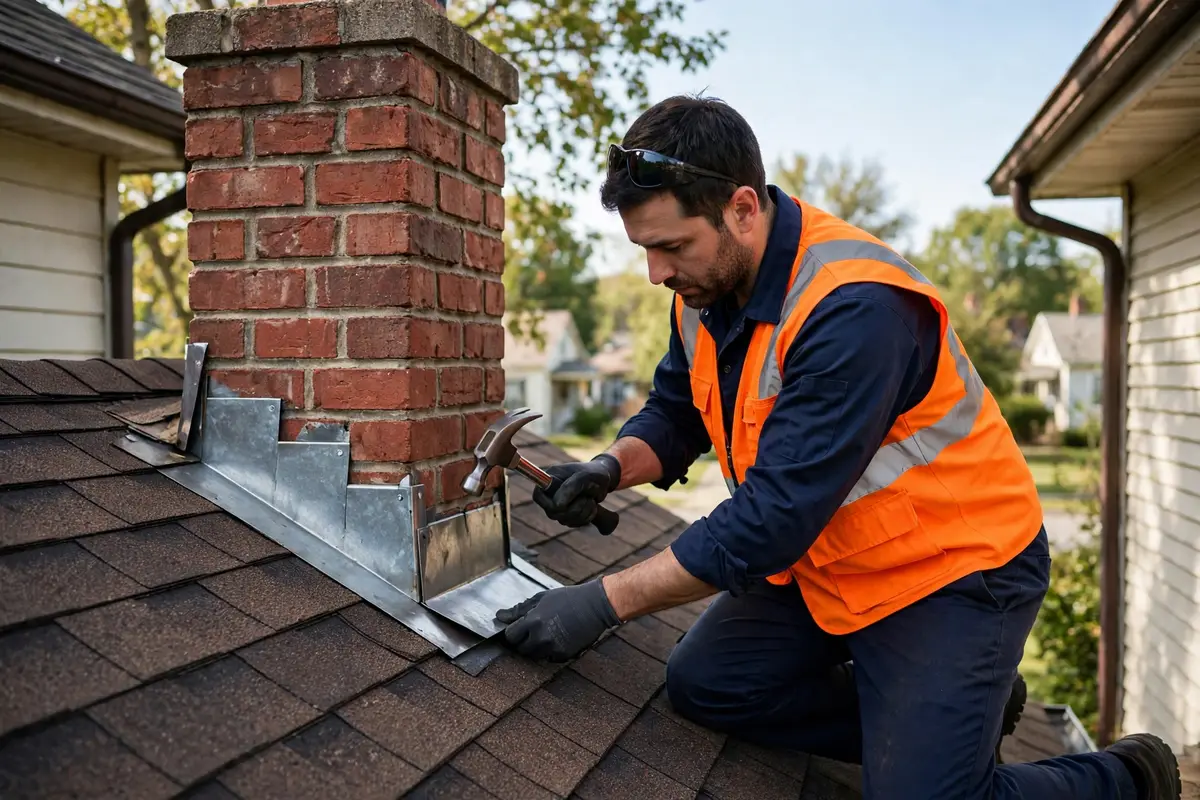
A roof that is dry in light rain and leaks in heavy rain is telling you something specific. The leak is real, the cause is usually small, and it will get worse. Here is why heavy rain finds weaknesses that light rain never reaches.
Why Roof Leaks During Heavy Rain
Of all the roof leak causes we see in Bellevue, failed flashing is the most common. Heavy rain here usually comes with wind, which pushes water sideways, under lifted shingles and past flashing that sheds water fine in calm rain. A shingle that looks sealed in dry weather can let water in when wind lifts its edge.
Heavy Rain Volume Overwhelms a Small Roof Weakness
A small gap in flashing, a cracked pipe boot, or a worn valley can handle a little water. In heavy rain, the volume is too great, and water finds the gap — that is how a flashing leak or a pipe boot leak starts. Good roof drainage matters too: clear gutters and downspouts let water get away instead of backing up at the eaves and finding the same gaps. That is why a leak that only appears in heavy rain is still a leak that needs a repair.
Roof leaking in heavy rain? Call (425) 738-3670.
Roof Valleys and Low Spots — Where Heavy Rain Finds a Leak
Valleys carry water from two slopes at once. In heavy rain, a valley with debris, worn metal or damaged shingles can overflow — a valley leak — and soak the decking below, where decking rot can follow if it stays wet. Low spots and flat areas around penetrations are the next most likely places for water intrusion.
What to Do When Your Roof Leaks in Heavy Rain
Note when the leak appears — which storms, which wind direction — and photograph any stain. An attic stain on the underside of the decking, or attic moisture you can feel on the insulation, tells the roofer the leak has been there a while. Then book an inspection. Tell the roofer that the leak only appears in heavy rain; that detail helps trace the source.
Need professional help? If this describes your roof, our roof leak repair in Bellevue, WA service covers it. Call (425) 738-3670 or request an estimate.
Key takeaways
- Wind-driven rain finds small weaknesses that light rain never reaches.
- Volume matters: heavy rain overwhelms a weak valley or gutter.
- If a leak only appears in heavy rain, the source is usually a joint.
Leak only when it rains? Call (425) 738-3670.
Frequently Asked Questions
What is wind-driven rain and why does it leak through roofs?
Wind-driven rain is rain pushed sideways by wind, so it hits the roof at an angle and gets under lifted shingles, past worn flashing, and into valleys that would shed vertical rain easily. A roof that is watertight in calm rain can leak in a windstorm. The fix is to repair the lifted shingles and flashing that let the angled rain in, not just to wait for calm weather.
Can clogged gutters cause a roof leak?
Yes. Clogged gutters back water up under the eaves and the first course of shingles, where it can soak the decking and fascia. The leak often appears as a stain near an outside wall or a damp soffit, not on the ceiling. Cleaning the gutters and checking the eaves usually stops it, but any decking that has rotted still needs repair.
Why do valleys leak more in heavy rain?
A valley carries water from two slopes at once, so in heavy rain the volume doubles and any weakness — a cracked shingle, rusted flashing, or debris dam — lets water through. In light rain the valley handles the flow easily. A valley that only leaks in heavy rain usually has a small defect that needs repair before it grows.
Can a roof leak during heavy rain even if the shingles look fine?
Yes. The shingles can look fine from the ground while the seal strips have failed, the flashing has a small gap, or a pipe boot has cracked. Heavy rain finds these hidden weaknesses. An inspection walks the roof and lifts shingles at suspect spots, because a leak that only appears in heavy rain is rarely visible from the street.
What is an ice dam and does it affect Bellevue roofs?
An ice dam is a ridge of ice at the eaves that holds meltwater back on the roof, and the pooled water can get under the shingles. Ice dams form in cold snaps and are uncommon in Bellevue’s mild winters, but the same principle applies in heavy rain: any water that pools or backs up can get under shingles. The fix is to repair the shingles and flashing that let pooled water in.
How do I stop my roof leaking in the next storm?
Book an inspection before the next storm, not after it. The inspection finds the lifted shingles, failed flashing, or cracked pipe boot that let heavy rain in, and the repair is usually a small job. Covering the leak from inside or waiting for dry weather does not fix it — the same weakness will leak again in the next heavy rain, and the decking will be wetter by then.
Can heavy rain damage a roof that is only a few years old?
It can, if the roof was installed badly or a storm was severe enough. A young roof should shed heavy rain easily, so a leak on a new roof usually means a flashing detail was missed, nails were misplaced, or the seal strips never bonded. That is an installation problem, not wear, and it should be checked promptly rather than patched over.
Why does water come through the ceiling during a storm?
Because water has got past the shingles and the underlayment and is running along the decking and rafters until it finds a gap to drip through. The drip rarely sits below the damaged shingle, because water travels before it falls. A ceiling drip during a storm means the roof covering has already failed somewhere, and the entry point needs to be found and repaired.
Do I need a new roof if it leaks in heavy rain?
Not necessarily. A leak in heavy rain often comes from one weak spot — a lifted shingle, a failed pipe boot, or a valley defect — and a targeted repair fixes it. A new roof is only needed when the damage is widespread, the roof is 15 to 20 years old with heavy wear, or leaks keep coming back in different places. An inspection gives you the honest answer for your roof.
What should I check on my roof after a heavy rainstorm?
Walk around the house and look for missing or lifted shingles, granules washed into the gutters or onto the ground, and debris piled in valleys. Inside, check ceilings and the attic for new stains or damp insulation. If you find anything, photograph it and book an inspection — damage found early is usually a small repair, and the same check after every major storm is good practice.