
3-Tab vs Architectural Shingles in Bellevue, WA
Three-tab and architectural shingles are both asphalt shingles, but they are built differently, age differently, and repair differently. This guide compares the two types for Bellevue homes in 98004 and 98005, around Somerset and Bridle Trails, and explains how to tell which type is on your roof.
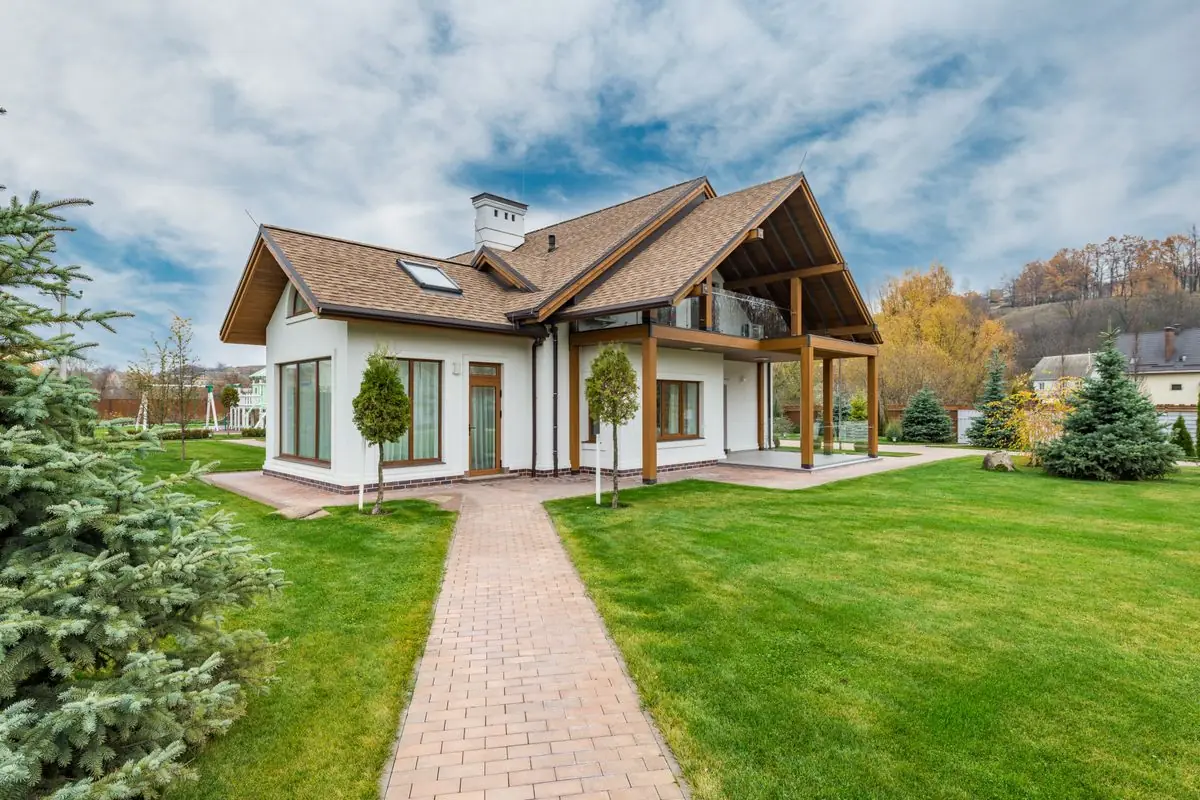
Architectural shingles are thicker, laminated asphalt shingles that usually last longer and hold their seal better in wind than flat, single-layer 3-tab shingles — and they usually cost more upfront. In Bellevue, architectural shingles are on most newer roofs, while 3-tab shingles are common on older homes. A repair has to match what is already on your roof.
Not sure which shingles you have? Call (425) 738-3670.
What 3-Tab Shingles Are
A 3-tab shingle is a single layer of asphalt, cut into three uniform tabs along its exposed edge. Laid in courses across a roof, the tabs line up into a flat, regular pattern — the look most people picture when they think of an asphalt roof. The shingle is lighter than an architectural shingle because there is only one layer of material in it, and the seal strip that holds it to the course below is a single line.
Three-tab shingles were the standard asphalt shingle for decades, so they are common on older Bellevue homes. If your roof has a flat, even pattern with identical tabs repeating across every course, it is almost certainly 3-tab. The type is not a quality judgement on its own: a well-installed 3-tab roof that has been looked after can still be doing its job, and the question that matters for a repair is how much life it has left, not what it is called.
What Architectural Shingles Are
Architectural shingles, also called dimensional or laminate shingles, are made from two or more layers of asphalt laminated together. The layers are cut to different widths, so the finished shingle has a thicker edge and a varied pattern that casts small shadows across the roof — the dimensional look that gives the type its name. The extra material makes the shingle thicker and heavier than a 3-tab shingle, and gives it a larger bonded area where the layers meet.
Most asphalt roofs fitted in recent years use architectural shingles, and the common product lines in Bellevue are architectural: GAF Timberline, Owens Corning Duration and CertainTeed Landmark are all architectural lines, and Malarkey's lines are architectural too. If your roof was replaced in recent years, the chances are it has architectural shingles on it, and the varied, shadowed pattern is the giveaway.
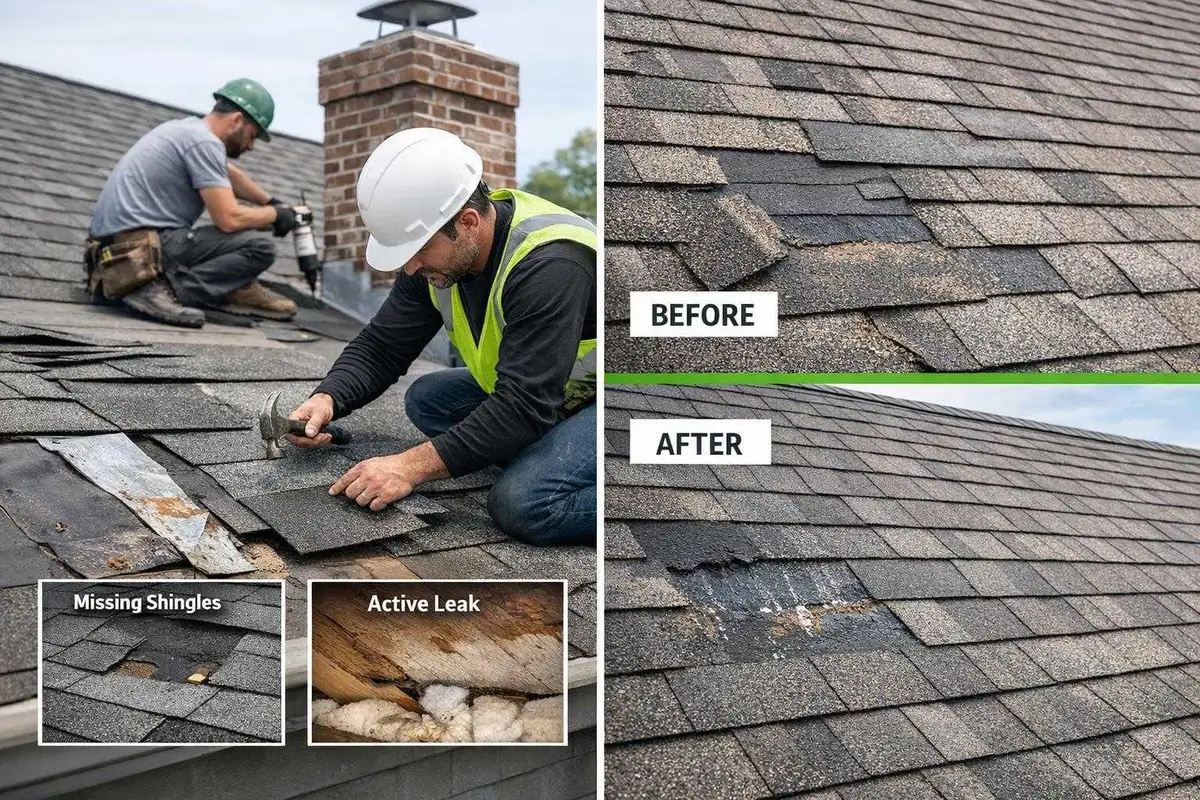
3-Tab vs Architectural Shingles: The Differences That Matter
The two types differ in five ways that matter to a homeowner, and the differences are about construction, not marketing. First, construction: a 3-tab shingle is one flat layer; an architectural shingle is two or more layers laminated together. Second, appearance: 3-tab shingles give a flat, uniform pattern, while architectural shingles give a thicker, dimensional look with varied tab sizes and shadow lines. Third, weight: architectural shingles are heavier, because there is more material in each piece.
Fourth, lifespan. In Bellevue, three-tab shingles usually last 15 to 20 years, while architectural shingles often last longer because they are thicker and heavier, with more asphalt and a larger bonded area. That is the pattern our guide to how long asphalt shingles last sets out, and it holds for the same reason in both cases: Bellevue's wet climate, shade from tall conifers, and moss shorten the life of any asphalt shingle, and installation quality and ventilation matter more than the difference between the two types. Fifth, wind: the laminated build and larger bonded area of an architectural shingle generally hold the seal better in a windstorm than a single-layer 3-tab shingle, which is one reason wind damage shows up first on older 3-tab roofs.
Cost runs the other way. Architectural shingles usually cost more upfront than 3-tab shingles, both for the material and for the labour of fitting a heavier shingle. Whether that extra cost is worth it depends on how long you plan to keep the home and how much life the rest of the roof has left. Our asphalt shingle roof repair cost guide explains how the size and type of the job affect what you pay, without inventing a price for a roof we have not seen. Makers also usually offer longer warranty terms on their architectural lines than on their 3-tab lines — but a warranty is only as good as the installation behind it, and the terms depend on the exact product, so read them for your own line rather than taking a general claim at face value.
Which Type Is on Bellevue Homes?
The type on a Bellevue roof usually follows the age of the roof. Three-tab shingles were common on older Bellevue homes, while architectural shingles are more recent, so a roof that has not been replaced in a long time is likely 3-tab and a roof replaced in recent years is likely architectural. That is a pattern, not a rule: a roof's age is judged by its condition, and an inspection is the honest way to tell how much life it has left, whatever the type.
Somerset is one example of how the pattern plays out. Much of Somerset's housing stock dates from the 1960s to the 1980s, an era when 3-tab shingles were the standard, so many Somerset roofs that have not been replaced still carry 3-tab shingles. In Bridle Trails and other wooded areas, the same age pattern applies, with shade and tree cover adding moss and damp to the wear. Across Bellevue, the practical point is the same: knowing which type you have tells you what a repair has to match, and what your options are when a match is no longer made.
How the Type Changes a Repair
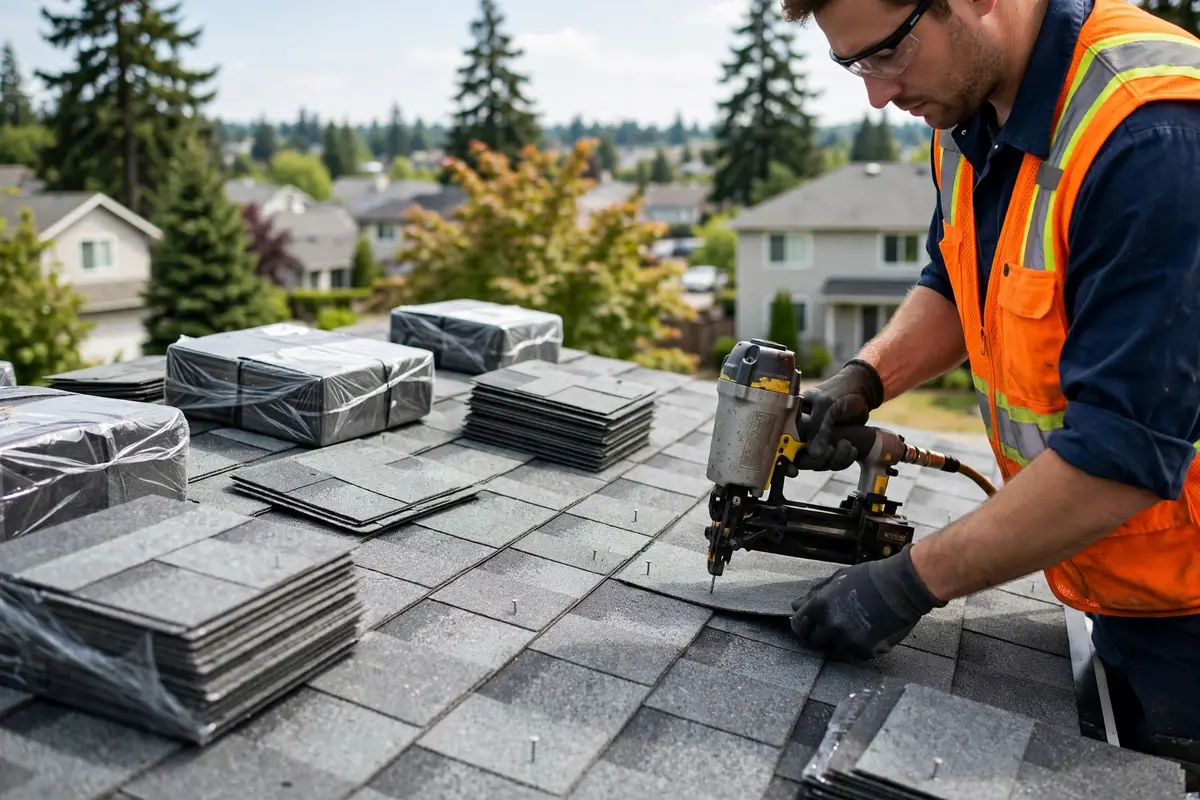
A repair has to match the shingle that is already on the roof. A 3-tab patch on an architectural roof, or the other way round, does not sit the same way: the profile is different, the thickness is different, and the patch will stand out from the ground. That is why the first step in any repair is identifying the type, the brand and the line — not just the colour.
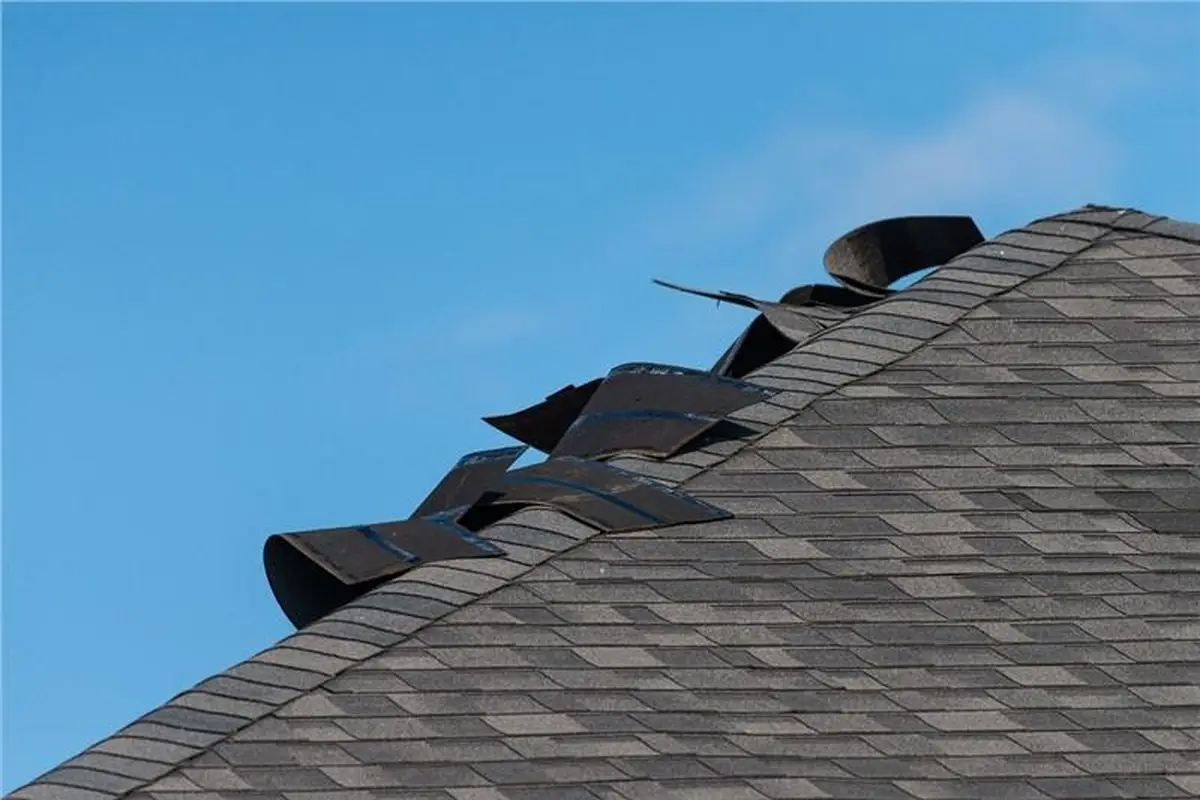
With 3-tab shingles, the profile itself is simple to match, because the shape is uniform. The problem is usually supply: many 3-tab lines have been discontinued, so the exact colour may no longer be made. Our guide to matching discontinued shingles sets out the options in order — remaining stock of the original line first, then the closest current colour and profile, then blending the new pieces across a wider area, then replacing a larger section up to a ridge or a valley where the eye expects a change. The same thinking applies to architectural shingles, with one extra difficulty: the dimensional profile means a wrong-colour or wrong-profile patch is easier to spot, so the match has to be closer, or the section replaced has to be larger.
There is also a third type on some older Bellevue roofs: T-lock shingles, interlocking asphalt shingles that have been out of production for years. No new T-lock pieces exist, so a repair has to use a different shingle that will not lock or match in the same way. Our guide to T-lock shingles in Bellevue explains what to check on an older roof and how to decide between repair and replacement for that type. Whatever the type, if shingles have gone missing altogether, missing shingle repair covers that, and the same matching questions apply there too.
Need help matching your shingles? Call (425) 738-3670.
How to Tell Which Type You Have
You can usually tell from the ground, without climbing on the roof. Stand back and look at the pattern: 3-tab shingles show a flat, repeating pattern of three identical tabs in every course, like a brick wall. Architectural shingles show varied tab sizes, uneven edges and shadow lines, and the edge of the shingle at the eaves looks thicker. If the pattern is flat and regular, it is 3-tab; if it looks layered and varied, it is architectural.
A spare bundle left over from the original installation settles it: the label on the wrapper names the manufacturer, the product line and the colour. Without that, the manufacturer name and product line are often printed on the backing of the shingle itself, which a roofer can read from a loose piece. Do not climb on the roof to check this yourself — old shingles are brittle, and the underside can only be read by lifting a piece. An inspection identifies the type, the brand and the line properly, and photographs the damage slope by slope so the matching options are based on what is actually there.
Repair or Replace: How the Type Affects the Decision
The type does not decide the question on its own; the condition of the roof does. If the damage is local — a few lifted or missing shingles on one slope — and the rest of the roof still has life in it, a repair with matching shingles is the sensible answer, whatever the type. If the shingles around the damage are brittle and crack when they are gently lifted, the roof is near the end of its working life, and patching it means fitting more and more mismatched pieces into a roof that will need replacing soon anyway.
When a whole slope has to be replaced, many homeowners choose architectural shingles for the new slope, because they last longer and hold their seal better — but that is a choice to make with the roofer, not a rule, and it depends on the condition of the decking underneath and on what the rest of the roof is. Our guide to roof repair vs roof replacement sets out the questions that decide it, and our asphalt shingle repair service covers inspection, patching, and honest advice on replacement, so you get the photographs and a written estimate before any work starts.
What Happens During an Inspection
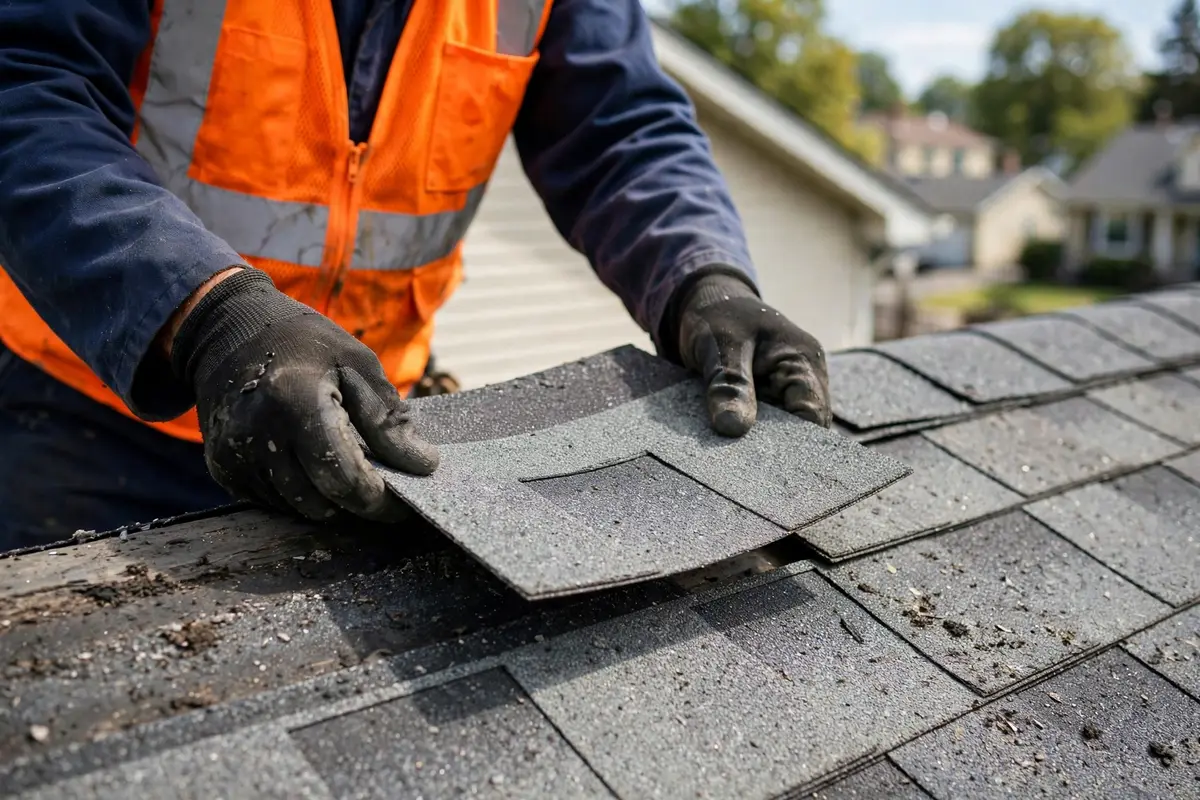
An inspection starts with identifying the shingle: the type, the brand, the line and the colour, and how much of the roof is affected. We photograph the damage slope by slope, check whether the shingles around it are still flexible or have gone brittle, and look at the places where water is most likely to get in — the valleys, the edges, and any previous patch.
After the inspection, you get the photographs and a written estimate before any work starts, so you can see the extent of the damage and the matching options that fit it. If the answer is a patch, we will say which pieces need replacing and how close the match will be; if it is a slope or a replacement, we will show you the photos that support it. Call (425) 738-3670 or request an estimate to book one.
Need professional help? If you are comparing 3-tab and architectural shingles for a repair in Bellevue, our asphalt shingle repair in Bellevue, WA service covers inspection, identification, patching, and honest advice on replacement. Call (425) 738-3670.
Key takeaways
- 3-tab shingles are a single flat layer; architectural shingles are two or more layers laminated together, thicker, heavier and dimensional in appearance.
- In Bellevue, 3-tab shingles usually last 15 to 20 years and architectural shingles often last longer — but installation quality and ventilation matter more than the type.
- A repair must match the type already on the roof: identify it first, then match, blend, or replace a section up to a ridge or a valley.
3-tab or architectural — which is on your roof? Call (425) 738-3670.
Frequently Asked Questions
What is the difference between 3-tab and architectural shingles?
A 3-tab shingle is a single layer of asphalt cut into three uniform tabs, giving a flat, regular pattern across the roof. An architectural shingle is two or more layers laminated together, with varied tab sizes that create a thicker, dimensional look with shadow lines. Architectural shingles are heavier, because there is more material in each piece, and they usually cost more upfront than 3-tab shingles.
Which lasts longer in Bellevue, 3-tab or architectural shingles?
In Bellevue, three-tab shingles usually last 15 to 20 years, while architectural shingles often last longer because they are thicker and heavier, with more asphalt and a larger bonded area. The exact life depends on ventilation, installation and maintenance, and on Bellevue's wet climate and shade. An inspection is the honest way to judge how much life your specific shingles have left, whatever the type.
Are architectural shingles worth the extra cost?
Often, yes — if you plan to keep the home for a long time. Architectural shingles usually last longer and hold their seal better in wind, and their dimensional look suits most Bellevue homes. But the extra cost only pays off if the rest of the roof is sound and the installation is done well. If the roof is old and the decking is tired, spending more on the shingle type alone does not fix the roof underneath it.
Can you mix 3-tab and architectural shingles on the same roof?
No — not on the same slope. The two types differ in thickness and profile, so a patch of one type on a roof of the other will not sit flat, will not seal the same way, and will stand out from the ground. A repair must use the same type as the shingles around it. If that type is no longer made, use the closest current match, blending, or a larger section replaced up to a ridge.
How do I tell which type of shingle is on my roof?
Look at the pattern from the ground: 3-tab shingles show a flat, repeating pattern of three identical tabs in every course, while architectural shingles show varied tab sizes, uneven edges and shadow lines, with a thicker edge at the eaves. A spare bundle label names the line for certain. If you are still unsure, an inspection identifies the type, the brand and the line, and photographs the roof so the answer is based on what is actually there.
Can a roofer repair just a few architectural shingles?
Yes, when a matching shingle is available. The damaged pieces are lifted out, the new ones are fitted in the same profile and colour, and the seal strip is checked around them. In cold weather the new shingles are hand-sealed so they hold until the sun warms them. The repair only works if the shingles around it are still flexible — if they are brittle and crack when lifted, a larger section is the better answer.
What if my 3-tab shingles are discontinued?
Check remaining stock of the original line first, then the closest current colour and profile from the same manufacturer. The new pieces will be a little brighter than the weathered ones around them, so the match is judged from the ground. Blending spreads the new pieces across a wider area, and replacing a larger section up to a ridge or a valley hides the change. Our guide to matching discontinued shingles sets out each option and when it makes sense.
Call Now to Speak to a Specialist
Last updated: November 22, 2026. Author: Bellevue Shingle Masters.