
How to Find a Roof Leak
Finding a roof leak is detective work. The stain on your ceiling is rarely directly below the hole in your roof. This guide explains how leaks are traced, what a homeowner can safely check, and when to call a professional.
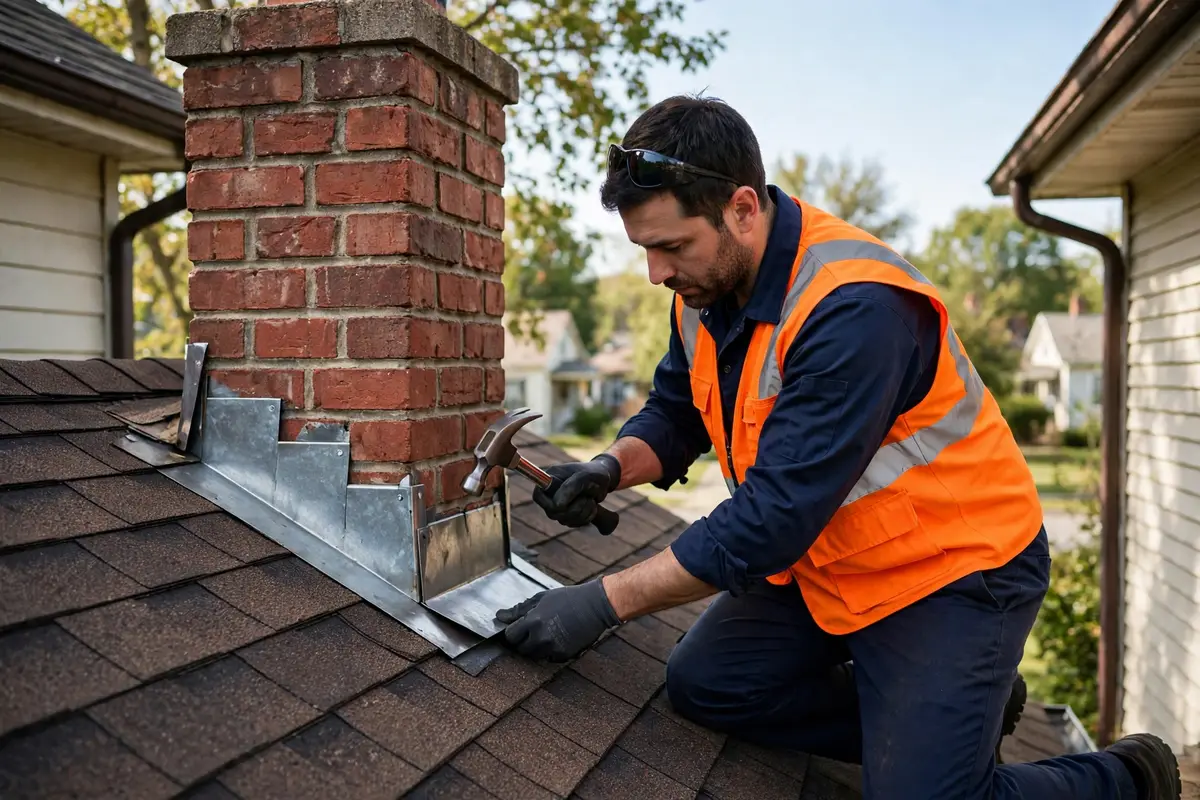
Roof leak detection is detective work. The stain on your ceiling is rarely directly below the hole in your roof. This guide explains how leaks are traced, what a homeowner can safely check, and when to call a professional.
How to Find a Roof Leak — Start Inside, Not on the Roof
Note when the leak appears — a roof leak during rain, one that shows only in wind, or one that is there all the time — and where the stain is. An attic leak leaves signs you can see from inside: darkened decking, wet insulation, and staining on rafters. Attic moisture shows up as wet insulation and darkened decking before it ever reaches a ceiling, and an attic stain on a rafter or on the decking tells you which way the water travelled. The water path often runs downhill along a rafter before it drips.
Roof Leak Sources to Check from the Ground
Most leaks start at a transition. A flashing leak is the most common kind: flashing at a chimney, valley or skylight that has lifted or corroded. A pipe boot leak is the rubber collar around a plumbing vent cracking with age and sun. Or it can be a valley leak, where the metal in the valley has corroded or lifted and the shingles there wear faster. Use binoculars to look for missing or lifted shingles, loose flashing, and debris in valleys. Do not climb on a wet or steep roof.
Can't find the leak? Call (425) 738-3670.
Why the Ceiling Stain Is Not the Leak Source
Water intrusion follows the path of least resistance: along the underside of decking and insulation before it finds a place to drip. A ceiling water stain can appear several feet from the entry point, and sometimes on a different slope. Patching the stain, or sealing the shingle above it, does not fix the leak.
When to Call a Professional for Roof Leak Repair
Call a roofer when the source is not obvious, when the leak is active, when decking looks soft or darkened, or when the roof is steep. Soft, darkened decking can mean decking rot, and rotted decking has to be replaced, not dried out. A professional inspection walks the roof, lifts tabs to check seals, and traces the leak in the attic — and gives you a written report with photos.
Need professional help? If this describes your roof, our roof leak repair in Bellevue, WA service covers it. Call (425) 738-3670 or request an estimate.
Key takeaways
- Start inside: the stain is rarely directly under the leak.
- Check flashing, valleys and pipe boots first — that is where most leaks start.
- If the source is not clear from the ground, book a roof inspection.
Roof leaking? Call (425) 738-3670.
Frequently Asked Questions
Where do I start looking for a roof leak?
Start inside, at the stain, then work upward and outward. Note where the stain is, when it appears, and whether it grows after rain. Then check the attic above it for damp insulation, stained decking, or daylight through the roof. The entry point is usually uphill from the stain, often at a flashing, valley, or vent, not directly above it.
What should I look for in the attic when tracing a leak?
Look for damp or stained insulation, dark water marks on the underside of the decking, mould, and daylight showing through gaps. Follow any stain uphill to its highest point — that is usually near the entry. Check around chimneys, vents, and valleys from below. Do not step on the ceiling; walk only on the joists, and call us if the attic is hard to reach.
Can a hose test find a roof leak?
Sometimes. A hose test runs water over one small section at a time, starting low and moving up, while someone watches inside for drips. It can narrow down a leak, but it can also force water into places rain would never reach, and it is easy to misread. It is a diagnostic aid, not a repair, and on a steep or high roof it should be left to a roofer.
Why do leaks show up long after it rains?
Because water can sit in insulation or decking and travel slowly before it drips through a ceiling. A small leak may only show after several wet days, when the insulation is saturated. The delay makes the leak harder to trace, because the stain appears far from the entry point and long after the rain that caused it.
What is the most common leak source on a shingle roof?
Flashing, not the shingles themselves. Most leaks start where the roof changes direction or meets something: step flashing at a chimney or wall, a valley, a pipe boot, or a skylight. The shingle field in the middle of a slope rarely leaks unless shingles are missing or badly damaged. An inspection checks these transitions first.
Can a leak come from a skylight even if the glass is fine?
Yes. Most skylight leaks come from the flashing around the skylight, not the glass. The step flashing and the seal where the skylight meets the roof can crack or pull away with age and movement. Water then runs down the skylight frame and appears inside as a leak. The fix is usually new flashing and resealing, not a new skylight.
How do I tell a roof leak from a condensation problem?
A roof leak usually appears after rain and leaves a stain that grows, while condensation appears in cold weather as damp patches or drips with no rain, often in a bathroom or a poorly ventilated attic. Condensation also leaves no stain trail from above. If the dampness follows rain, it is probably a leak; if it follows cold, still air, it may be condensation, and an inspection can tell the difference.
Should I put a bucket under a leak and wait?
A bucket limits the damage, but waiting lets the leak get worse. Water keeps wetting the decking and insulation, and mould can start within days. Put a bucket under the drip, photograph the stain, and call us for an inspection. A small leak found early is usually a small repair; the same leak left for months can mean decking replacement.
Can a leak be traced from inside the attic without going on the roof?
Yes, the attic is often the best place to start tracing a leak. Water stains on the rafters, damp insulation and daylight through the roof deck show where water is getting in, and the stain is usually uphill from where it drips. The roofer still needs to go on the roof to find the exact entry point and fix it, because the leak in the attic is rarely directly below the hole.
What does a roofer do differently when tracing a leak?
A roofer checks the roof systematically, not just the stain. They walk every slope, lift shingles at suspect spots, check flashing, valleys, pipe boots, and skylights, and look in the attic to follow the water path. They also check whether the leak is really a roof leak or a plumbing or condensation problem. The result is a written assessment with photos, not a guess.