
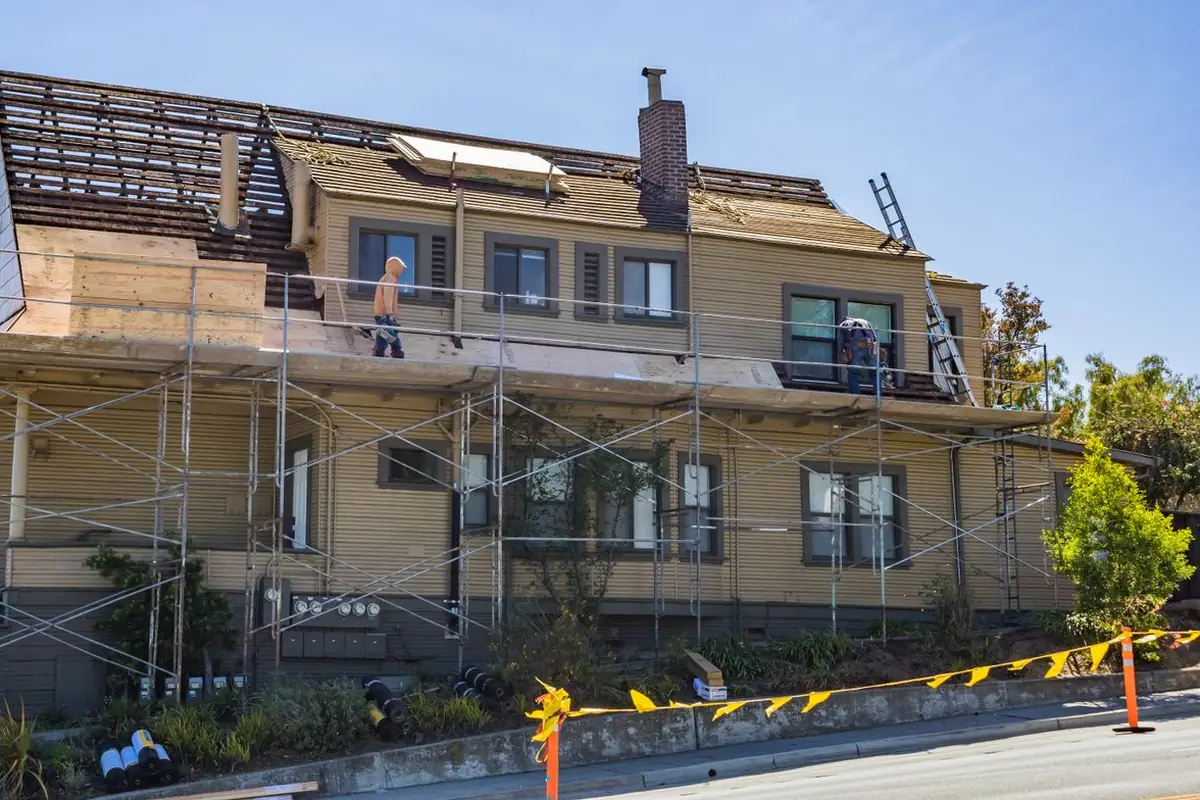
Missing Shingle Repair in Bellevue, WA
Missing shingle repair in Bellevue, WA — replace blown-off, lost and wind-lifted shingles before rain gets in. Serving West Bellevue and Somerset (98004, 98006). Call (425) 738-3670.
A missing shingle is not cosmetic. It leaves underlayment exposed, and underlayment is not a roof. In Bellevue’s wind-driven rain, water can get under the surrounding shingles within a single storm. We do blown-off shingle repair in Bellevue quickly, matching the existing roof as closely as possible, and we check the area around the gap for damage you cannot see from the ground.
The Problem: Missing and Blown-Off Shingles
Most of our work here is wind-lifted shingle repair. Shingles go missing when wind lifts a tab and breaks the seal strip, when sealant ages and fails, when a branch strikes the roof, or when nails loosen on an older roof. After a windstorm, missing roof shingles in Bellevue are often only the visible part of the damage — neighbouring shingles may be creased or have failed seals too.
Signs You Need Missing Shingle Repair
- A visible gap or dark patch on the roof
- Roof shingles blown off by wind, found on the ground or in the gutter
- A lifted tab flapping in wind
- Shingles lifted from the roof after a storm
- Underlayment showing through a gap
- A new ceiling stain after a storm
Missing shingles? Call (425) 738-3670.
Our Inspection and Repair Approach
We inspect the whole slope, not just the gap, because wind damage is rarely limited to one shingle. A wind-lifted shingle that is still sound can be re-sealed; a creased or brittle one is replaced. Loose roof shingle repair follows the same check — if the tab is sound we re-seal it; if it is creased or brittle, we replace it. We lift the surrounding shingles carefully, replace the missing ones with matching shingles, re-nail and re-seal them so the sealant strip bonds again, and check the underlayment and flashing underneath. If the underlayment is torn, exposed roof underlayment repair comes first — new shingles over torn underlayment will not keep water out. If the surrounding shingles are brittle, we tell you before we start — a repair on brittle shingles may not hold.
Missing Shingle Repair Methods
For the repair of damaged asphalt shingles, we match three-tab or architectural profiles and the nearest colour blend, use correct nail placement through the nail strip, and re-seal the courses above the repair so the patch sheds water like the original roof. Broken shingle repair in Bellevue usually means replacing the broken shingle outright — a cracked tab rarely seals well a second time. The same visit can repair cracked or broken shingles nearby, so one repair covers the whole damaged area.
Shingles in the yard after wind? Call (425) 738-3670.
Can Rain Damage a Roof After Shingles Blow Off?
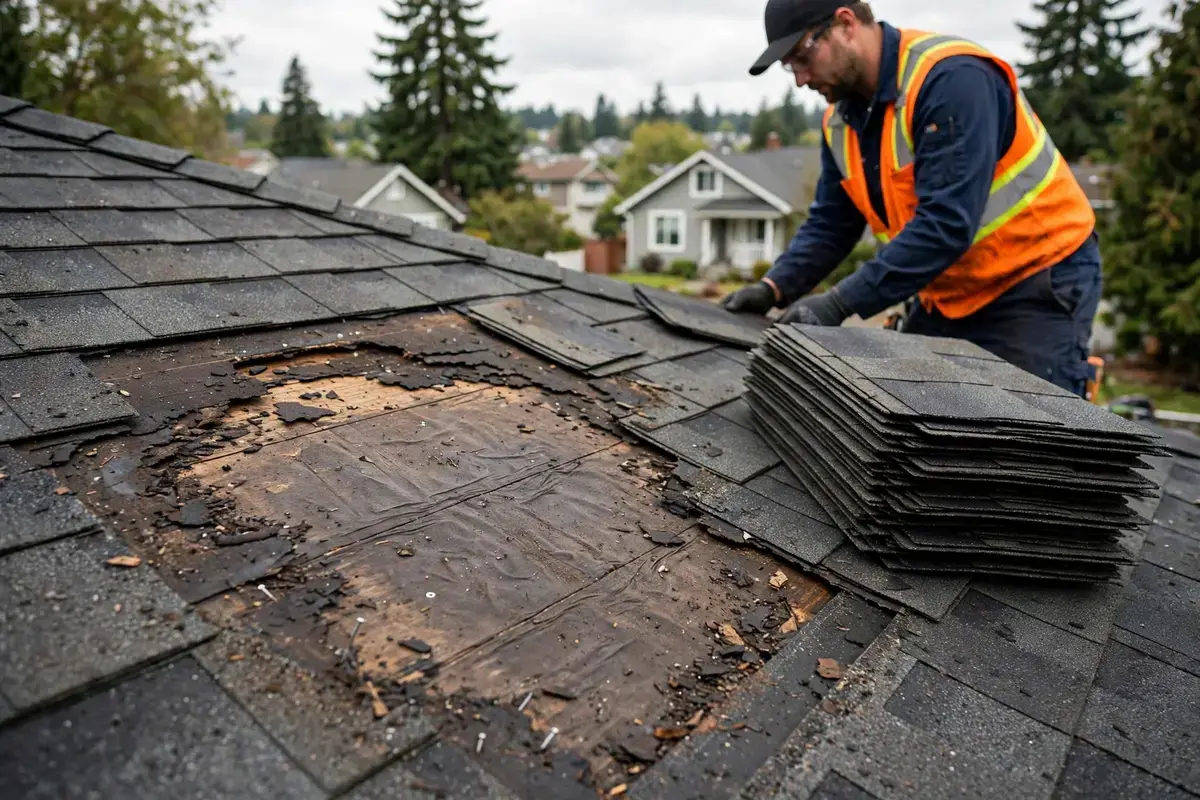
Yes. Asphalt shingles are the roof's first defence against rain, and once shingles are blown off the roof, the layers underneath are exposed to every storm that follows. The damage does not stop at the bare patch — water finds its way under the shingles next to the gap and into the roof structure, so a small gap can become a roof leak some distance from where the shingles went missing.
What happens when underlayment is exposed
When shingles blow off, the exposed roof underlayment is all that stands between rain and the roof decking. Underlayment is a backup layer, not a roof covering: it can shed light rain for a short time, but it is thin, it tears easily, and it breaks down quickly once it is left open to sun and weather. Once it is torn or saturated, water passes straight through it, and the protection it offered is gone.
How wind-driven rain gets under the next shingles
In Bellevue, rain rarely falls straight down — wind drives it sideways, under the edges of the shingles beside the gap. A wind-lifted shingle next to the bare patch may look intact from the ground, but its seal strip is broken, so wind-driven rain can be pushed underneath it and run down the slope beneath the shingle course. Loose roof shingles around the gap let water travel further, which is how a leak can appear several feet from where the shingles actually went missing.
How water reaches the roof decking
Once water gets under the shingles, it runs down over the underlayment until it finds a seam, a nail hole, or a tear — and then it reaches the roof decking. Wet decking swells and softens, and if it stays damp it can rot, weakening the surface the shingles are nailed to. Water that gets through the decking shows up inside as a ceiling stain, often some distance from the original gap, and by the time a stain appears the decking around the leak has usually been wet for a while.
Temporary protection until the repair
Until the shingles can be replaced, the bare patch needs a temporary cover that sheds water and stays put in wind. A securely fastened waterproof tarp or sheeting over the gap, held down so wind cannot lift it, is the usual stopgap — but it is not a repair, and it should not be left in place for weeks. The permanent fix is to replace missing roof shingles with matching shingles, nailed and sealed properly, and to check the underlayment underneath before the new shingles go on.
Why homeowners should not climb on a damaged roof
Do not climb on a damaged roof to look at the gap or to try a temporary fix yourself. A roof with missing or broken roof shingles is slippery when wet, the shingles around the gap may be loose, and a fall from a roof can cause serious injury. Call us instead — we inspect the roof with the right safety gear and tell you what needs repair before any work starts.
What to Expect During Missing Shingle Repair
Roof repair after shingles fall off is usually quick — a few missing shingles are replaced in a few hours. You get photos of the repair and a note on the condition of the rest of that slope, so you know whether this was a one-off or the start of wider wear.
Why Homeowners Choose Us
Wind off Lake Washington and winter storms hit West Bellevue and hillside areas such as Somerset hardest, while tree-covered Bridle Trails and Lake Hills see branch damage. We carry common shingle profiles so we can replace missing roof shingles in Bellevue without waiting on a special order.
Cost: Replacing a few damaged asphalt shingles usually costs about $100 to $700 throughout Bellevue, WA. Our small repairs usually run $300-800. You get an exact price in writing after the inspection.
Related Shingle Repair Services
- Wind-Damaged Shingle Repair in Bellevue, WA
- Shingle Roof Repair in Bellevue, WA
- Roof Leak Repair in Bellevue, WA
- Roof Inspection in Bellevue, WA
Missing Shingle Repair FAQs
How many shingles can you replace in a single repair visit?
A few shingles is a small repair. A larger bare patch, or damage spread across a whole slope, is a section repair that takes longer and costs more. There is no fixed number, because it depends on the size of the bare area and the condition of the shingles around it. An inspection shows which one your roof needs.
What happens if my exact shingle is discontinued?
We match the profile first, then the nearest colour blend from a current shingle line. A discontinued shingle cannot be ordered new, so the repair may be slightly visible, and we tell you that before we start. If the colour gap is too wide, we show you the closest options and you decide.
Why do shingles go missing in the first place?
Wind is the usual cause. A gust lifts a tab, breaks the seal strip, and peels the shingle off, often on the windward slope or near ridges and edges. Old, brittle shingles and weak seals make it worse, because the shingle cannot flex and reseal. A single missing shingle is usually a repair, not a sign the whole roof has failed.
Can missing shingles be replaced on a steep roof?
Yes. A steep roof takes longer and needs safety gear, so the work is slower than on a low-slope roof. The replacement itself is the same: lift the course above, remove the damaged shingle, slide the new one in, and nail it on the nail strip. We confirm the timing in writing before work starts.
How do you nail a replacement shingle so it stays put?
Each shingle is nailed on the nail strip, the reinforced band across the shingle, with the right number of nails for the slope and exposure. Nails placed too high miss the shingle below, and nails placed too low show through. We also press the course above back down so the seal strip bonds and holds the new shingle flat.
What if shingles keep going missing after a repair?
Shingles that keep going missing point to a wider problem: brittle shingles, failed seal strips across a slope, or nails that no longer hold. We re-inspect the whole slope, not just the new gap, and tell you plainly if the roof is near the end of its life and a repair is no longer the right spend.
Can I replace a missing shingle myself?
A single shingle on a low, dry, walkable roof is sometimes possible with the right tools, if you can lift the course above and nail the new shingle on the strip. A steep, wet, high or fragile roof is not safe to walk on. Most homeowners call a roofer, because a poor repair can leak and cost more to fix later.
How long can underlayment protect a roof after shingles go missing?
Underlayment is a backup layer, not a roof. It can keep light rain out for a short time, but wind-driven rain and standing water will find their way through, and the underlayment itself breaks down when it is left exposed. Treat it as days, not months, and book a repair promptly.
What do you check around a missing shingle?
We check the shingles around the gap for lifting, cracking and failed seals, the underlayment for tears and wet spots, and the flashing and nails nearby. A missing shingle is often not alone, and checking the area around it is how we find the next problem before it becomes a leak.
Do you check the whole roof when only a few shingles are missing?
Yes. We walk the full roof on every missing-shingle call, because a few missing shingles can hide lifted tabs, cracked shingles and weak seals elsewhere. The inspection shows whether the damage is local or spread across the roof, and that decides whether a small repair is enough or a bigger job is needed.