
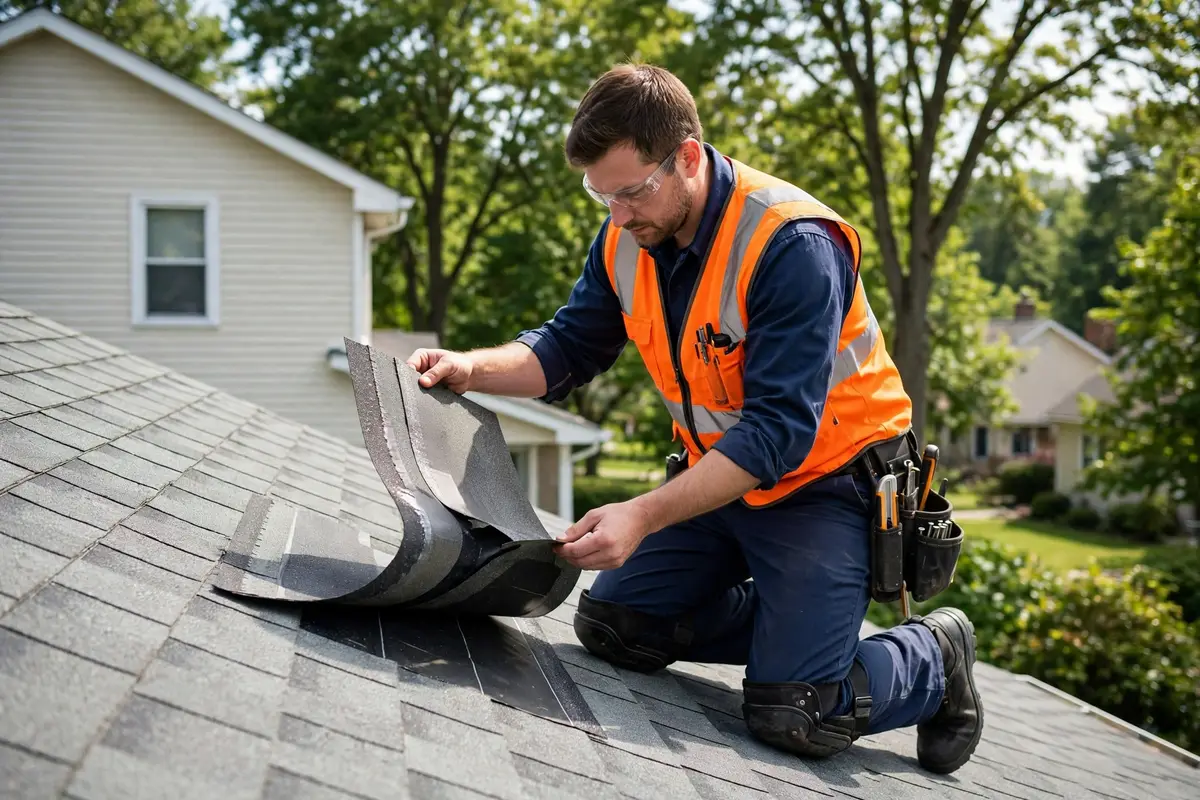
Wind-Damaged Shingle Repair in Bellevue, WA
Wind-damaged shingle repair in Bellevue, WA — lifted, creased and blown-off shingles after Pacific Northwest windstorms. Serving Somerset and West Bellevue (98006, 98004). Call (425) 738-3670.
Wind does not just remove shingles. It lifts tabs, breaks seal strips, creases shingles so they can no longer seal, and drives rain under the courses above — and the wind-driven rain that follows finds every failed seal. A roof can look intact from the street after a windstorm while many seals have failed. We inspect the full slope and repair the damage wind actually caused, not just the shingles you can see are missing. Our work is to repair shingles lifted by strong wind — and the ones creased or torn beside them — before the next storm drives rain under them.
The Problem: Wind-Lifted, Creased and Torn Shingles
Strong wind generates lift under a shingle’s edge that can overpower the sealant strip beneath it. When the lift beats the seal, the result is a blow-off — the shingle tears away and leaves a bare patch. A lifted shingle may settle back and look fine, but a wind crease — a sharp bend across the shingle — means it is permanently weakened. Repeated wind events on an ageing roof make this worse, and hillside and lakeside homes take the strongest gusts. On a windy night you may even hear roof shingles flapping in wind — a tab that has lost its seal and moves with every gust.
Signs You Need Wind-Damaged Shingle Repair
- A lifted tab that flaps in wind, or creased shingle tabs
- Missing shingles after a storm
- Granules in gutters or on the ground
- Shingles that lift easily by hand at the edge
- A leak that started after a windstorm
Wind damage on your roof? Call (425) 738-3670.
Our Inspection and Repair Approach
A roof wind damage inspection starts after the storm, slope by slope, lifting tabs gently to check seals and looking for creases, tears and nail pull-through. We photograph everything, then replace wind-blown shingles and creased tabs, re-seal lifted tabs that are still sound, and check ridge caps, which take the highest wind exposure. Lifted shingle repair in Bellevue starts with that inspection — we never quote a repair from the ground alone.
Wind-Damaged Shingle Repair Methods
Loose asphalt shingle repair follows the same rule: damaged shingles are replaced with matching profiles, sound lifted tabs are re-sealed, and ridge caps are checked and replaced where needed. We do not re-nail a creased shingle and call it repaired.
Shingles lifted by wind? Call (425) 738-3670.
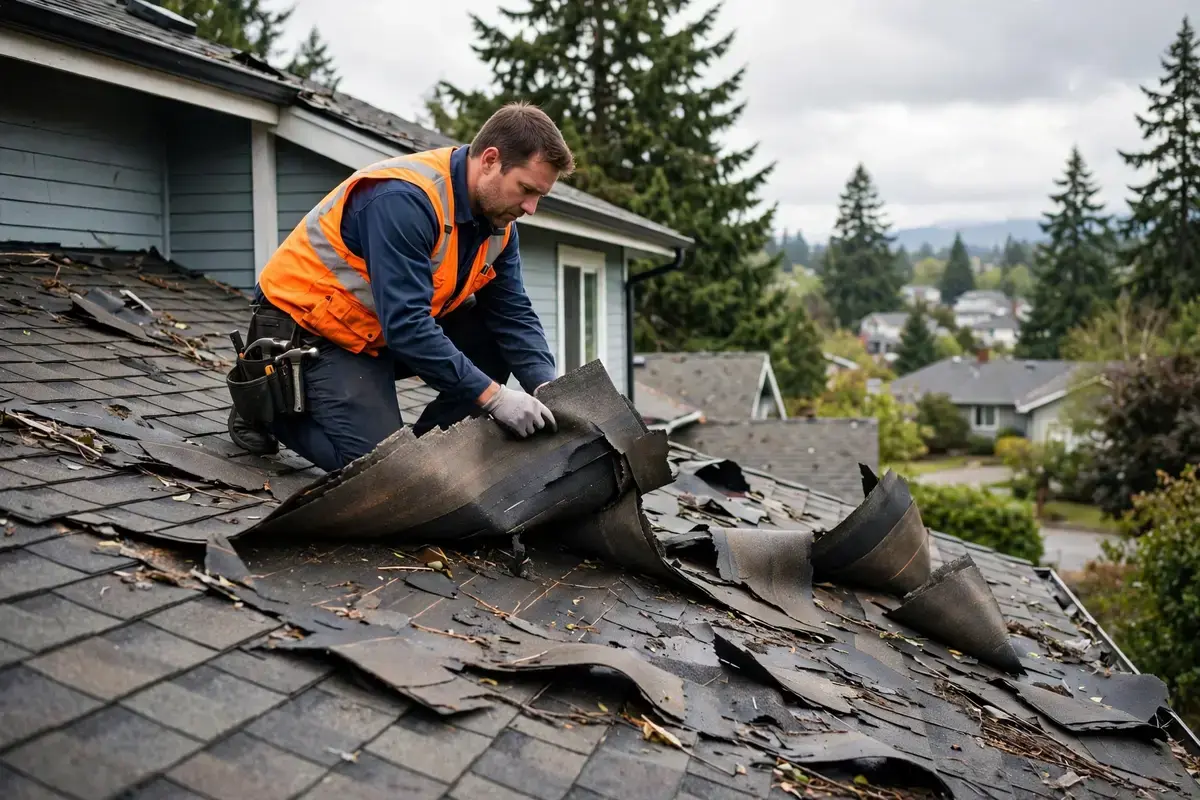
How to Identify Wind Damage Without Climbing on Your Roof
You do not need to get on the roof to spot wind damage. Most of the signs are visible from the ground or the yard after a windstorm — walk around the house, look up at each slope, and check the gutters and the ground. If you see any of the signs below, call for an inspection rather than climbing up yourself.
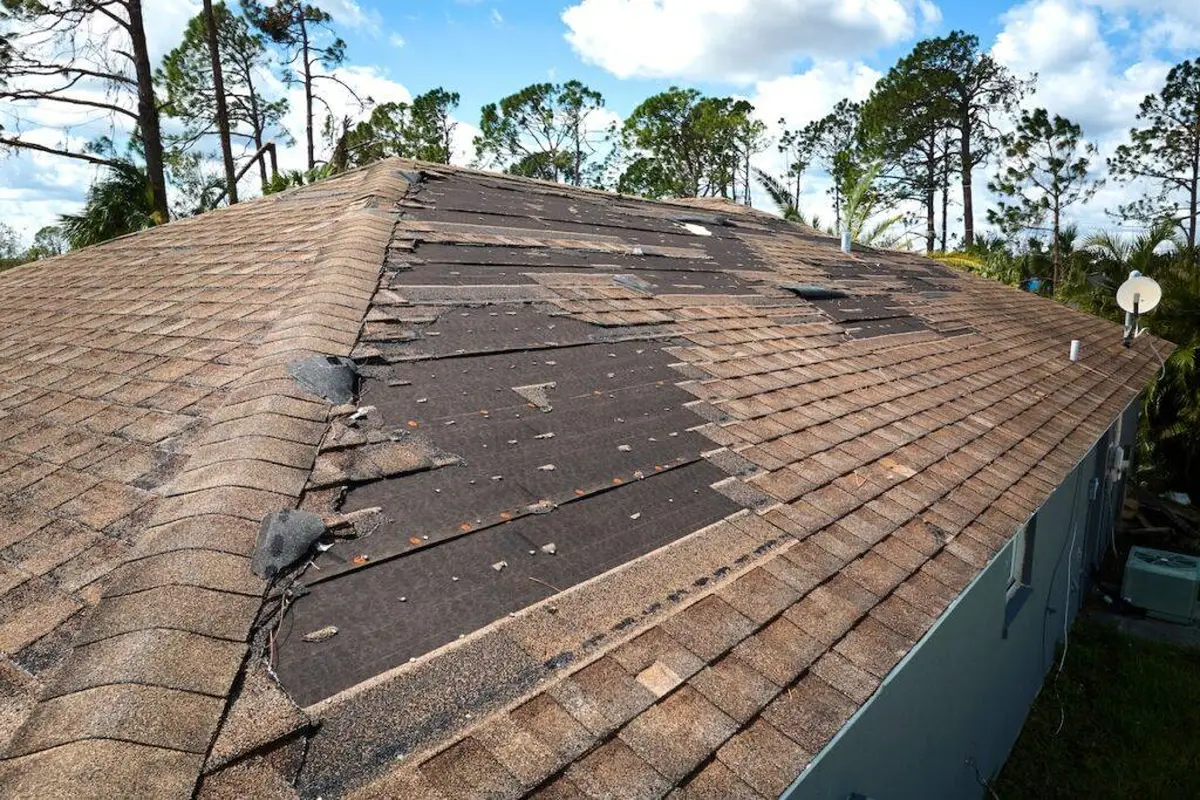
Shingles lying in the yard
If you find shingle tabs in the yard, on the driveway or in the garden after a windstorm, they came off a roof — yours or a neighbour’s. Check the colour and profile against your roof: a match means your roof has a bare patch. A single missing tab leaves underlayment exposed, and more may follow in the next wind. Keep one if you can, so the repair can be matched to it.
Lifted shingle edges
Stand back from the house and look along each slope for shingle edges that stick up or cast a shadow where the rest lie flat. A lifted edge means the seal strip underneath has failed, even if the shingle has not come off yet. Lifted tabs let wind-driven rain in at the next storm, so they are worth fixing before it arrives. Note which slope the lifted edges are on and roughly how many there are before you call.
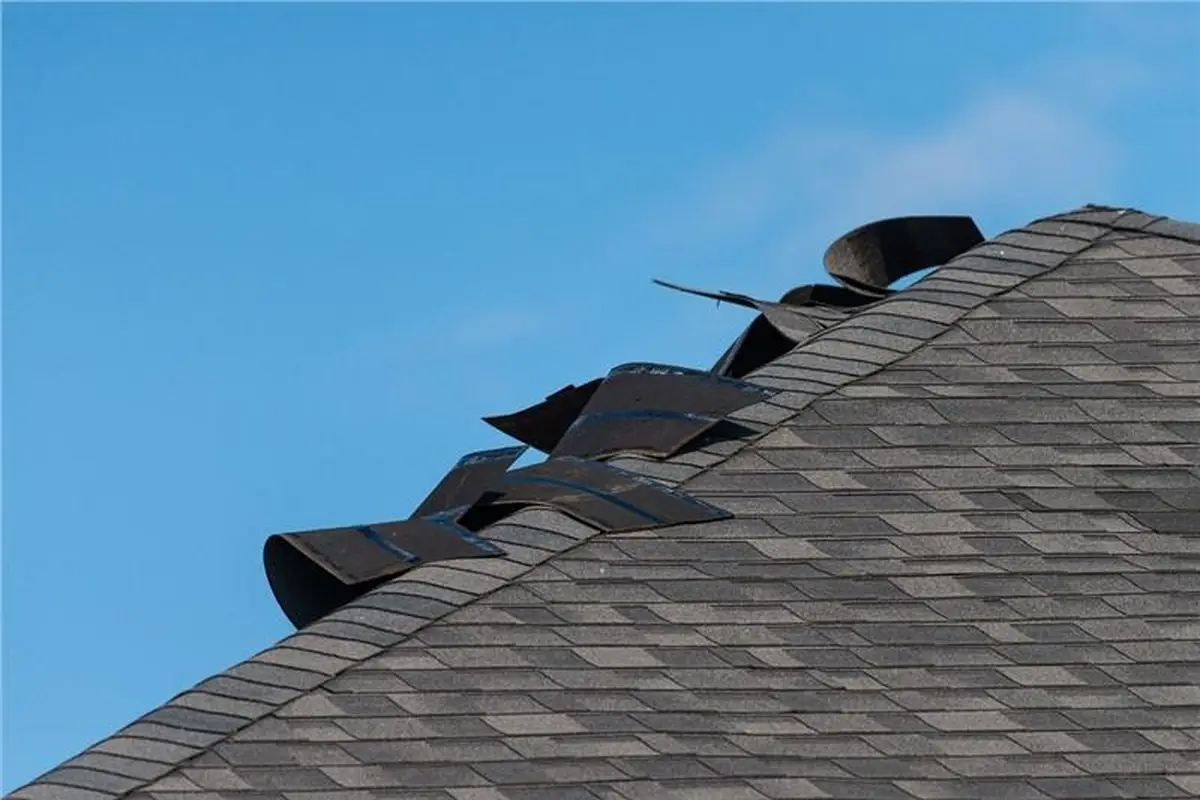
Missing ridge caps
Ridge caps run along the very top of the roof, so they catch the most wind and are the first to go. Look along the ridge line from the ground: a gap, a crooked cap or a bare stretch means caps are missing. A missing ridge cap lets water straight into the ridge, so it should be fixed promptly. If you are unsure whether a dark patch is a missing cap or a shadow, look from a second angle — a gap stays a gap, a shadow moves.
Granules in gutters
After a windstorm, check the gutters and downspouts for a heavy load of loose granules, the sand-like coating from asphalt shingles. A few granules are normal, especially on a newer roof, but a thick layer after a storm means wind stripped the surface off shingles. Stripped shingles lose their weather protection and wear out faster. Scoop some out and note how much there is — it tells the inspector how much of the roof was affected.
Visible creases
A creased shingle has a sharp fold across the tab where wind bent it back and it could not lie flat again. From the ground, a crease shows as a dark line or a tab sitting at an angle to its neighbours. A creased shingle cannot reseal and will keep lifting, so it needs replacing rather than resealing. Creases are easy to miss from the street — look at the windward slope in flat light, when the fold casts a shadow.
Branch impact
Fallen branches can crack, puncture or dislodge shingles where they land, and the damage is not always where the branch ends up. Look for branches on the roof or in the yard, then check the slope below where they fell for cracked or missing tabs. Even a small branch can break the seal on several shingles. Do not pull a branch off the roof yourself — it may be holding a loose shingle in place, and a wet roof is slippery.
Flashing displacement
Flashing is the metal that seals the joints where the roof meets a chimney, wall or skylight, and wind can lift or shift it. From the ground, look for metal edges that stick up, gaps where flashing meets brick or siding, or flashing that has slid out of place. Displaced flashing lets water in at the joint even when the shingles around it look fine. If you can see a gap, note which joint it is — chimney, wall or skylight — so the inspection can start there.
If you spot any of these signs, call Bellevue Shingle Masters for a wind-damaged shingle repair inspection in Bellevue, WA — we photograph the damage and give a written estimate before any work starts.
What to Expect During Wind-Damaged Shingle Repair
Wind-damage roof repair in Bellevue usually takes one to three days, depending on how much of the roof is affected and on the weather. You receive a written estimate and photos before and after the repair.
Why Homeowners Choose Us
Somerset’s hillside homes, West Bellevue’s lakeside exposure and Cougar Mountain’s elevated slopes take the strongest wind in Bellevue. After a Pacific Northwest windstorm, wind-damaged roof repair in Bellevue starts with inspections in those areas first.
Cost: Replacing a few damaged asphalt shingles usually costs about $100 to $700 throughout Bellevue, WA. Our small repairs usually run $300-800. You get an exact price in writing after the inspection.
Related Shingle Repair Services
- Missing Shingle Repair in Bellevue, WA
- Storm Damage Roof Repair in Bellevue, WA
- Emergency Roof Repair in Bellevue, WA
- Roof Inspection in Bellevue, WA
Wind-Damaged Shingle Repair FAQs
What does wind do to a shingle roof?
Wind lifts the edges of shingles, breaks the seal strip that bonds them down, and can crease or tear tabs clean off. The windward slope and the ridges and edges take the worst of it. Even a roof that looks fine from the street can have broken seals underneath, which is why we check the roof after a major windstorm.
What is a creased shingle, and why does it matter?
A creased shingle is one that wind has bent sharply, leaving a fold across the tab. The fold breaks the shingle's strength, so it cannot seal flat again and will keep lifting in the next wind. A creased shingle should be replaced, not re-sealed, because re-sealing a bent shingle does not restore it.
Can wind damage a roof without removing any shingles?
Yes. Wind can break the seal strips and lift tabs that settle back down, leaving no missing shingles to see from the ground. Granules can also be stripped off, and ridge caps can loosen. A roof can look undamaged from the street while the seals underneath have failed, which is why an inspection after a major windstorm is the reliable check.
Which side of a roof takes the most wind damage?
The windward slope, the side the storm wind hits first, takes the most damage, along with the ridges and the edges where wind gets underneath. Which slope that is depends on the storm's direction and how exposed your home is. A sheltered roof may escape with little damage while an exposed one loses shingles on the same street.
How do you check a roof after a windstorm?
We walk the roof and lift tabs gently to test every seal, then check the ridges, edges, flashing, valleys and vents for lifting, creasing and missing shingles. We look for granules in the gutters and on the ground, which show where shingles have been stripped. You get photos and a written assessment of what needs repair now and what can wait.
Do ridge caps need special attention after high wind?
Yes. Ridge caps sit at the very top of the roof, so they catch the most wind, and they are the first to lift or come off in a storm. A lifted ridge cap lets water straight into the ridge, so we check every cap after high wind and replace any that are creased, torn or missing.
How soon after a windstorm should a roof be checked?
As soon as it is safe to go up. Lifted tabs and broken seals let rain in at the next storm, so waiting gives water time to reach the decking. If you can see missing or flapping shingles from the ground, call us straight away. If the roof looks fine, an inspection after a major windstorm is still worth doing, because seal damage is not visible from the street.
Can regular maintenance reduce wind damage?
It helps. An inspection finds brittle shingles, weak seals and loose ridge caps before a storm, and replacing those weak spots means the wind has less to grab. Keeping the roof clear and the flashing sound also helps. Maintenance cannot stop a severe storm from damaging a roof, but it removes the easy failures that turn a gust into missing shingles.
Why do some shingles lift while others stay put?
It comes down to the seal, the nails and the exposure. A shingle with a failed seal strip, nails placed too high, or a spot on the windward edge lifts easily, while a well-sealed shingle on a sheltered slope stays put. Age matters too: older shingles are brittle and cannot flex and reseal the way newer ones can.
What is wind uplift, and how does it start?
Wind uplift is the force that lifts a shingle tab away from the roof. It starts when wind pressure gets under the edge of a tab whose seal has weakened, then peels the tab up and back. Once the seal is broken, each gust lifts the tab further until it creases or tears off, which is why a lifted shingle should be fixed before the next storm.