
Matching Discontinued Asphalt Shingles in Bellevue, WA
Asphalt shingles are discontinued, so the shingles on your Bellevue roof may no longer be made. This guide explains how to identify them, the matching options — closest match, blending, or replacing a slope — and when replacement is the honest answer, for homes in 98004 and 98005, around Somerset.
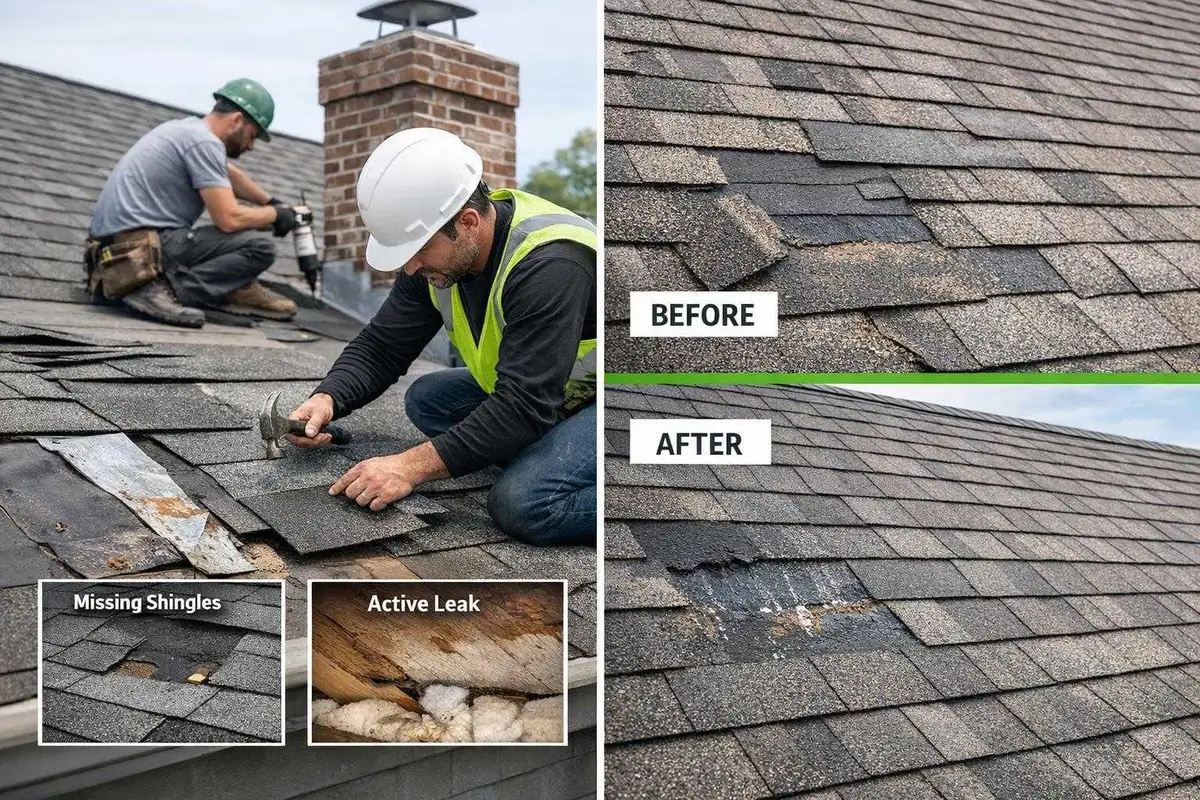
Shingle lines change every few years, so a colour or profile bought a decade ago may no longer exist. A repair can be made watertight, but the new shingles will rarely look identical to the old ones. The work is to identify what is on the roof, find the closest match, and choose the repair that hides the difference best.
Shingles no longer made? Call (425) 738-3670.
Why Shingles Get Discontinued
Shingle manufacturers change their lines the way other makers change theirs: a product line is replaced by a newer one, a colour is dropped because it sells slowly, or a profile is redesigned to suit a new way of making shingles. None of this means the shingles on your roof were poor quality. It means the factory moved on, and the line you have is no longer in production.
Colour runs end as well. Shingles are made in batches, and the granule mix that gives a shingle its colour can shift slightly from one run to the next, even while the line is still current. Once a line is dropped, the colour goes with it, and no later run will reproduce it exactly. That is why two roofs fitted with the same named colour in different years can look slightly different from each other.
Age adds a second gap. Shingles fade and weather in the sun and rain, so the shingles on your roof no longer look the way they did when they were new, even if the same line were still made. A new shingle in the closest current colour will be brighter and sharper than the weathered pieces around it. Matching is therefore a matter of getting close, not of getting an exact copy, and the rest of the job is deciding how to place the new shingles so the difference is hard to see.
How to Identify What Is on Your Roof
Matching starts with knowing what is on the roof. Without that, a supplier can only guess, and a guess is how a repair ends up with the wrong profile or a colour that stands out. There are three places to look, in order of usefulness.
- The spare-bundle label. If you have a spare bundle left over from the original installation, the label on the wrapper names the manufacturer, the product line, and the colour. That is the most useful single piece of information you can have, because a supplier can check it against what is still made. Keep the label even if the bundle itself is gone.
- Markings on the shingle back. The manufacturer name and product line are often printed on the backing of the shingle itself. A roofer can read this from a piece that has already come loose, or from a shingle lifted during inspection. Do not climb on the roof to check this yourself; old shingles are brittle, and the underside can only be read by lifting a piece.
- Photos of the shingle and the roof. Photographs of the shingle pattern and the roof as a whole help narrow it down. Take a clear photo of a single shingle close up, showing the shape of the tabs and the colour blend, and a wider photo of the slope, showing how the courses run. Photos taken in daylight, without flash, are the most useful. Our asphalt shingle repair page explains how the brand is identified and how discontinued lines are matched, and the four manufacturers whose lines are most common on Bellevue roofs are GAF, Owens Corning, CertainTeed and Malarkey.
Sometimes none of these give a firm answer. The markings may have worn away, and no paperwork may survive. In that case the identification happens during an inspection, when the shingle can be handled and compared against current lines, and the closest match is chosen from what the supplier can actually provide.
Matching Options, in Order
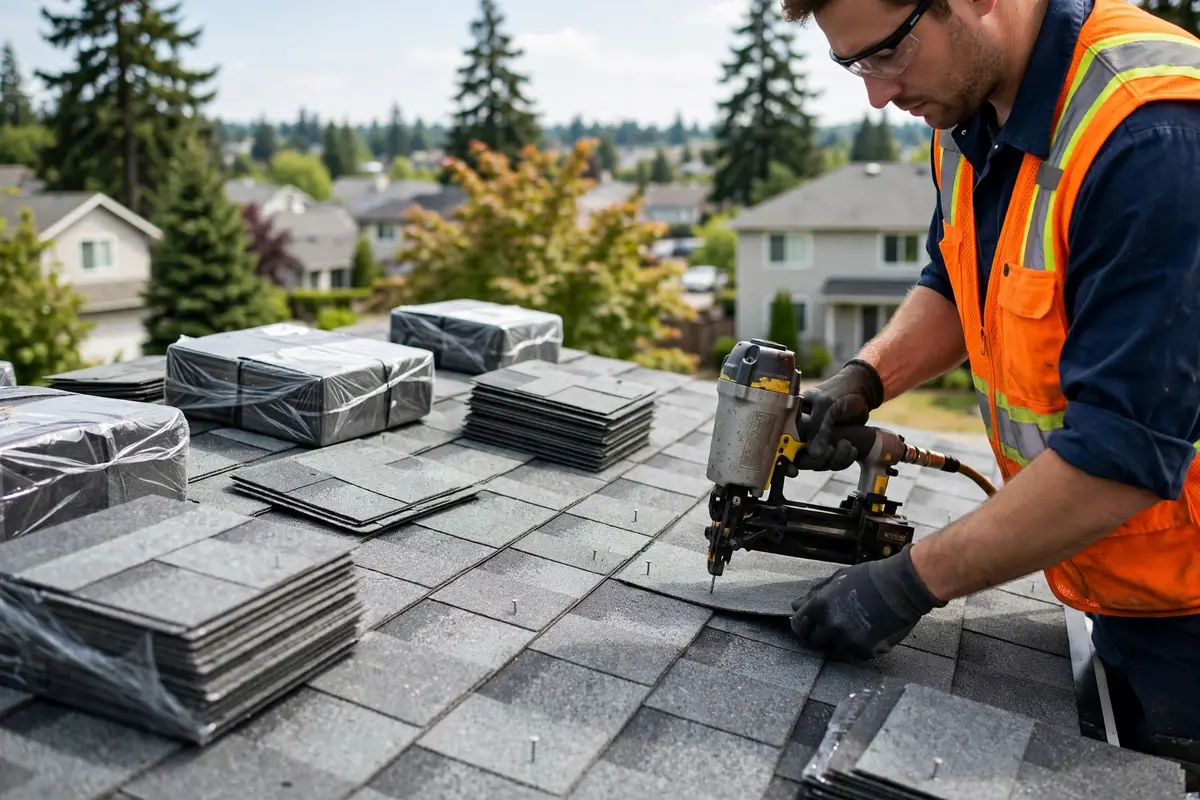
Once the shingle is identified, the repair is matched in order, from the closest option to the broadest. The aim at each step is the same: a watertight repair that is hard to notice from the ground.
1. The Closest Current Match
The first option is the closest current shingle from the same manufacturer, in the nearest colour and the same profile. Suppliers are checked for remaining stock of the original line first, and if any is left, that is used. Failing that, the current line that sits closest in colour and profile is chosen. This works best when the damage is small and the repair sits in a place that is not easy to see from the street. The new pieces will be a little brighter than the weathered ones around them, and up close the difference will show, but from the ground it is often hard to spot.
2. Blending New Shingles In
The second option is blending. Instead of fitting all the new shingles into one patch, the new pieces are spread across a wider area, mixed in with the old ones, so no single block of new colour stands out. This works when several shingles need replacing across a slope and the colour difference is small. It takes more care, because each new shingle has to be fitted among old ones that may be brittle, and it only helps when the match is already close. If the colour difference is large, blending spreads the difference around rather than hiding it.
3. Replacing a Larger Section
The third option is to replace a larger section — a full slope, or a large part of one — so the change happens across one unbroken surface instead of inside a patch. The new slope is all one colour, and the eye reads it as a single surface. This is the usual answer when the colour gap is too wide to hide, or when the damage is spread across much of a slope. It costs more than a patch, because more shingles are replaced, but the result looks like a roof rather than a repair. Our guide to whether you can replace just a few roof shingles explains why a small patch is not always the right answer, and our asphalt shingle roof repair cost guide explains how the size of the job affects what you pay.
4. Ridge and Valley Lines as Break Points
The fourth option is to use the roof's own lines as break points. Ridges, valleys and hips are natural edges in a roof, and the eye expects a change at an edge. If a repair can be run to a ridge or a valley, the new shingles stop at a line the eye already accepts, instead of stopping in the middle of a slope where the change is obvious. The same applies to the edge of a slope. A patch that ends at a ridge looks deliberate; a patch that ends mid-slope looks like a patch. This is often combined with the other options: a larger section replaced up to a ridge, or a blend that runs to a valley.
Need help matching your shingles? Call (425) 738-3670.
When Matching Stops Making Sense
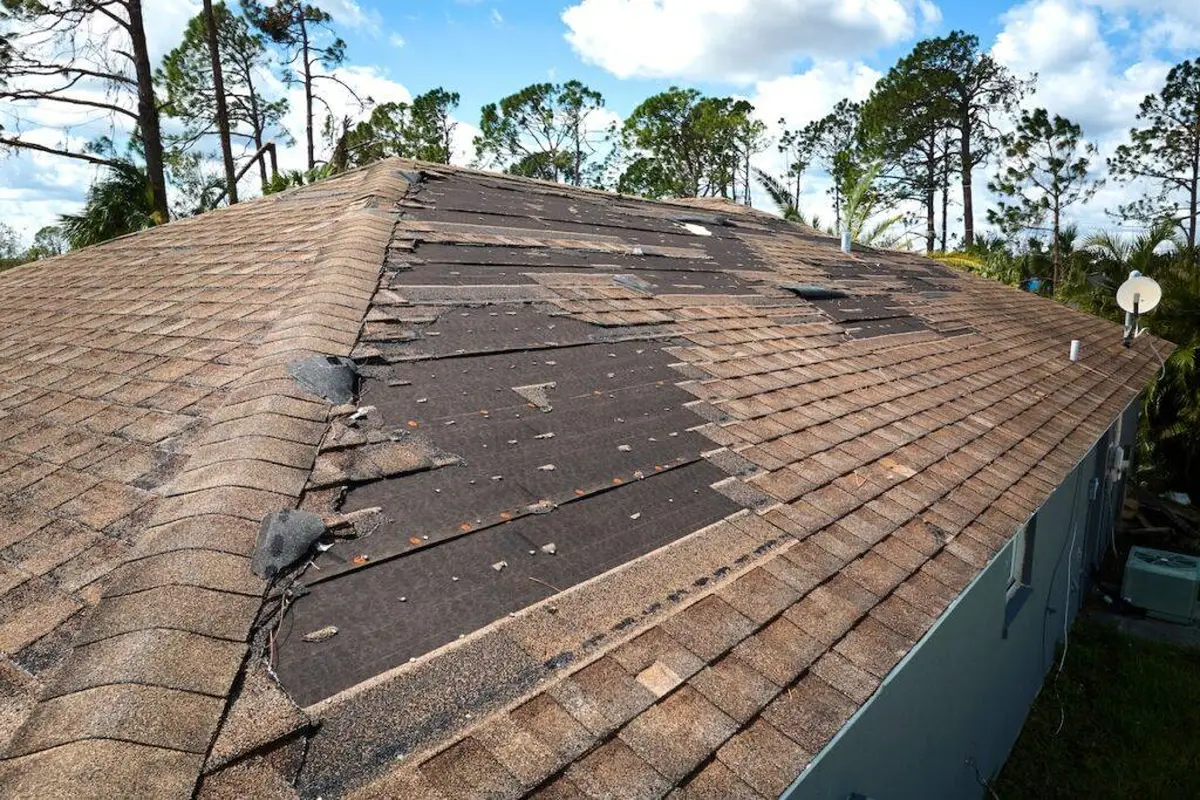
Matching has a limit. When the damage is spread across a slope, or when the shingles are brittle and crack wherever they are touched, patching means fitting more and more mismatched pieces into a roof that is already old. Each patch disturbs the pieces around it, and the patched slope ends up as a mix of old and new that does not sit together.
The honest answer at that point is a slope or a full replacement. A new slope is one colour and one age, and it will weather evenly from there. It also ends the cycle of patching the same slope again next year. The decision turns on the same two questions as any repair: how much of the roof is damaged, and how much life the rest of it has left. If the answer to the first is most of a slope and the answer to the second is not much, replacement is the sensible choice, and a roofer who tells you otherwise is selling you a patch you will pay for twice.
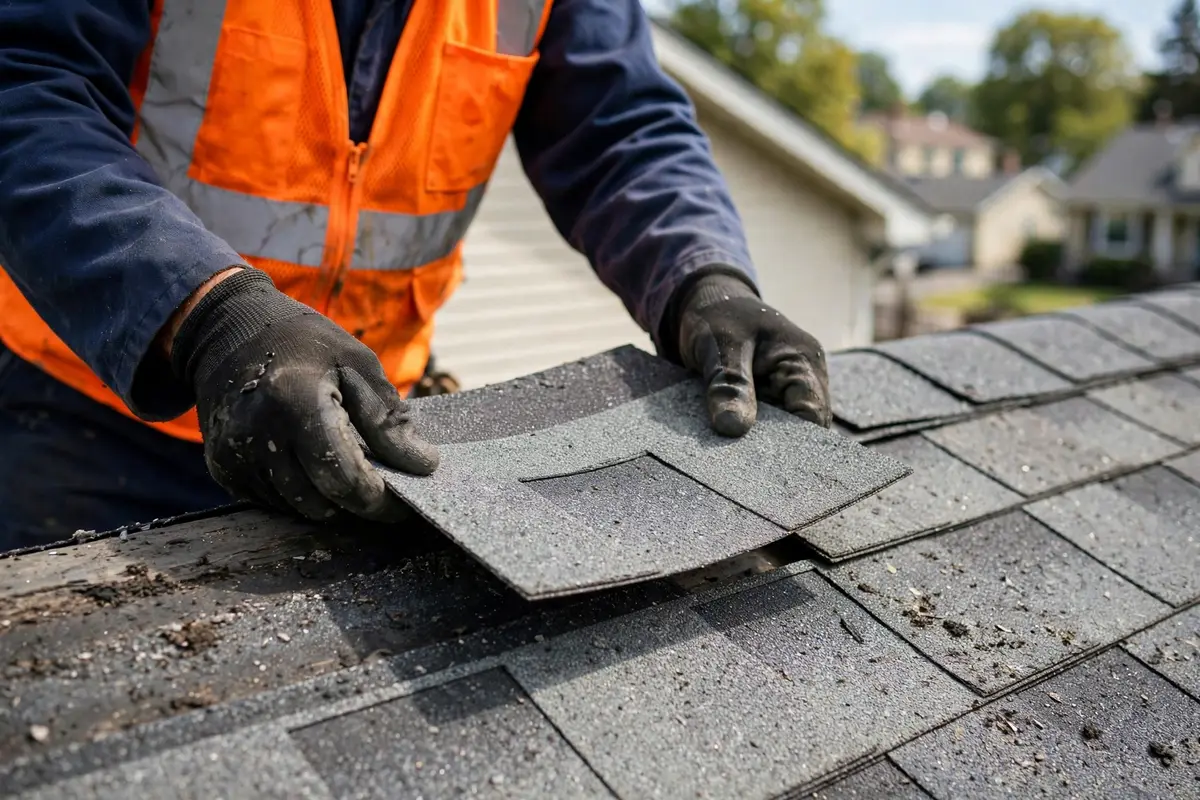
Age matters here as well. Shingles that have weathered for decades are brittle, and a repair that lifts them can crack the pieces it was meant to save. If an inspection finds that the shingles around the damage break when they are gently lifted, that is a sign the roof is near the end of its working life, and matching a few pieces into it is not good value. If shingles have gone missing altogether, our missing shingle repair service covers that, and the same matching questions apply there too.
T-Lock Shingles: One Discontinued Example
T-lock shingles are one example of a discontinued shingle, and a sharp one: they are interlocking asphalt shingles fitted to many older homes, and they have been out of production for years, so no new T-lock pieces exist at all. A repair has to use a different shingle, which will not lock in the same way or match in shape. Our guide to T-lock shingles in Bellevue explains what to check on an older roof and how to decide between repair and replacement for that type. The same thinking applies to any discontinued line: identify what is there, find the closest match, and be honest about when a patch is no longer the right answer.
Insurance and Discontinued Shingles
Coverage questions can come up when a repair involves discontinued shingles, because the question is often whether a policy covers matching, or only the damaged pieces. We cannot say what any particular policy covers, because every policy is different. Check your own policy and talk to your insurer, and have photos and a written description of the roof's condition ready when you do. An inspection gives you exactly that: photographs of the damage and a written account of what the roof is and what condition it is in.
What Happens During an Inspection
An inspection starts with identifying the shingle: the brand, the line, the colour, and how much of the roof is affected. We photograph the damage slope by slope, check whether the shingles around it are still flexible or have gone brittle, and look at the places where water is most likely to get in — the valleys, the edges, and any previous patch.
After the inspection, you get the photographs and a written estimate before any work starts, so you can see the extent of the damage and the matching options that fit it. If the answer is a patch, we will say which pieces need replacing and how close the match will be; if it is a slope or a replacement, we will show you the photos that support it. Our shingle roof repair service in Bellevue covers inspection, patching, and honest advice on replacement.
Need professional help? If the shingles on your Bellevue roof are discontinued and you are unsure how to match them, our asphalt shingle repair in Bellevue, WA service covers inspection, identification, patching, and honest advice on replacement. Call (425) 738-3670.
Key takeaways
- Shingle lines and colours are discontinued regularly, so an exact match is often impossible — the work is to get close and place the new shingles well.
- Identify the shingle first: spare-bundle label, markings on the shingle back, or clear photos of the pattern and the roof.
- Match in order: closest current shingle, blending, a larger section, or a break at a ridge or valley — and replace the slope when patching stops making sense.
Discontinued shingles on your roof? Call (425) 738-3670.
Frequently Asked Questions
Why were my shingles discontinued?
Shingle lines change regularly: a manufacturer replaces a line with a newer one, drops a colour that sells slowly, or redesigns a profile. Colour runs also end, and the granule mix can shift slightly between runs. None of this means your shingles were poor quality. It means the factory moved on, and the line on your roof is no longer in production, so an exact replacement is no longer made.
How do I find out what shingles are on my roof?
Start with any spare bundle left over from the original installation: the label on the wrapper names the manufacturer, the product line and the colour. Without that, the manufacturer name and product line are often printed on the backing of the shingle itself, which a roofer can read from a loose piece. Clear photos of a single shingle and of the whole slope also help narrow it down.
Can a roofer still match a discontinued shingle?
Usually, yes, but closely rather than exactly. The supplier is checked for remaining stock of the original line first, and failing that the closest current colour and profile from the same manufacturer is used. The new pieces will be a little brighter than the weathered ones around them, so the match is judged from the ground, where the difference is often hard to spot.
Will the patch be visible?
Up close, usually yes: new shingles are brighter than weathered ones, and the profile may differ slightly. From the ground, a well-placed patch is often hard to notice, especially if it runs to a ridge or a valley where the eye expects a change. If the repair is on a slope that faces the street, replacing a larger section is often the better way to hide it.
What does blending new shingles in mean?
Blending means spreading the new shingles across a wider area and mixing them in with the old ones, instead of fitting them all into one patch. No single block of new colour stands out, so the repair is harder to see from the ground. It works when the colour difference is small and several shingles need replacing; if the difference is large, blending spreads it around rather than hiding it.
When is replacing a whole slope better than patching?
When the damage is spread across most of a slope, or the shingles around it are brittle and crack when touched. Each patch then disturbs the pieces around it, and the slope ends up as a mix of old and new that does not sit together. A new slope is one colour and one age, it weathers evenly, and it ends the cycle of patching the same slope again next year.
What are T-lock shingles, and why can't they be matched?
T-lock shingles are interlocking asphalt shingles fitted to many older homes, and they have been out of production for years, so no new T-lock pieces exist. A repair has to use a different shingle, which will not lock in the same way or match in shape. Our guide to T-lock shingles in Bellevue explains what to check on an older roof and how to decide between repair and replacement.
Will my insurance cover matching discontinued shingles?
Coverage questions can come up when a repair involves discontinued shingles, because the question is often whether a policy covers matching, or only the damaged pieces. We cannot say what any particular policy covers, because every policy is different. Check your own policy and talk to your insurer, and have photos and a written description of the roof's condition ready.
Call Now to Speak to a Specialist
Last updated: November 19, 2026. Author: Bellevue Shingle Masters.