
Roof Repair vs Roof Replacement
Repair or replace? It is the question every homeowner with a damaged roof asks, and the honest answer depends on three things: how much of the roof is damaged, how old it is, and what is underneath it. This guide explains how we assess thos
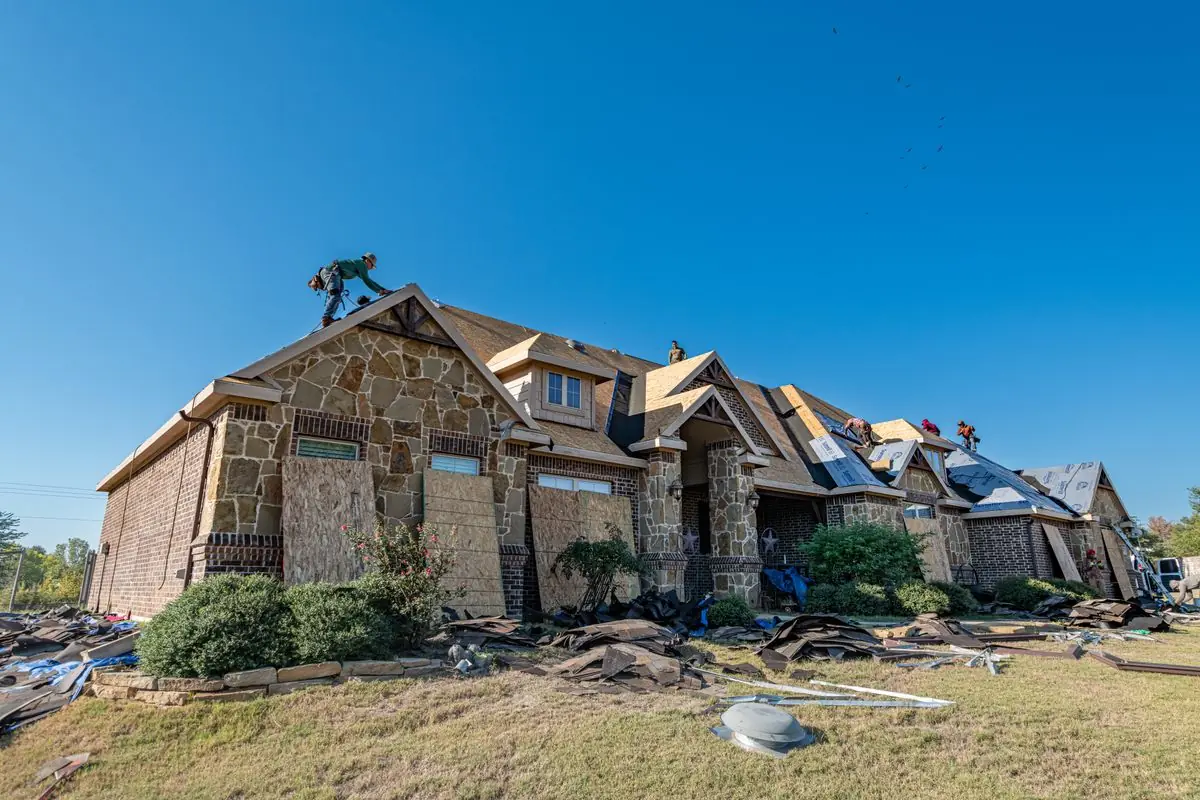
Repair or replace? It is the question every homeowner with a damaged roof asks, and the honest answer depends on three things: how much of the roof is damaged, how old it is, and what is underneath it. This guide explains how we assess those three things.
Roof Repair vs Roof Replacement — The 30% Rule
A widely used guide is that if more than about 30% of the roof surface is damaged, repair costs approach replacement costs, and replacement is usually better value. Below that is when to repair a roof — a localised repair is usually the right call, provided the rest of the roof is sound and there is no widespread damage.
GAF, the shingle manufacturer, puts the same idea in cost terms: if the estimated cost of repairs exceeds 30% of the price of a new roof, replacement usually makes more sense. GAF lists it as one of several rules of thumb for replacement, alongside the roof being more than 15 years old, repeated repairs, and repeated leaks. Read GAF’s full guide on when to repair versus replace your roof.
Roof Repair vs Replacement — Age Matters
Roof age is the second factor. A roof under 15 years old with a single leak is usually a repair candidate. A roof over 20 years old with widespread curling, granule loss and repeated leaks is usually near the end of its life, and patching it is money spent on a roof that will need replacing soon anyway. That combination is when to replace asphalt shingles rather than keep patching them.
Repair or replace? Call (425) 738-3670.
Roof Repair vs Replacement — What Is Underneath Matters Most
Soft or rotted decking changes the decision, so decking condition is part of every inspection. If the wood under the shingles is wet or soft, the repair must include decking replacement, and the cost rises. We check decking during inspection and show you what we find before you decide.
How We Help You Decide
The roof replacement signs we weigh are damage over about 30% of the roof, leaks in several places, soft decking, and a roof near the end of its life. We give you both options in writing — repair and replacement — with a repair estimate for each, and explain which we recommend and why. You decide. We do not push replacement when a repair will do, and we do not patch a roof that needs replacing.
Need professional help? If this describes your roof, our asphalt shingle repair in Bellevue, WA service covers it. Call (425) 738-3670 or request an estimate.
Key takeaways
- Damage under about 30% of the roof usually favours repair.
- Age matters: asphalt shingles in Bellevue usually last 15 to 20 years.
- Soft or rotted wood underneath must be fixed before either choice.
Not sure which one? Call (425) 738-3670.
Frequently Asked Questions
Is it worth repairing a roof that is 15 to 25 years old?
It depends on the roof's condition, not just its age. If the damage is isolated and the rest of the roof is still sound, a repair can buy several more years and stop a small problem from becoming a replacement. If the roof is 15 to 20 years old with widespread damage, granule loss, curling shingles or leaks in several places, replacement usually makes more sense. An inspection gives you the honest answer.
When does the 30% cost rule point to replacement instead of repair?
GAF's 30% rule is about cost: if the estimated cost of repairs exceeds 30% of the price of a new roof, replacement is usually better value. For example, if repairs would cost more than a third of a new roof, you are spending a large sum on a roof that may still need replacing soon. We give you both prices in writing so you can compare them.
How many leaks are too many to keep repairing a roof?
Two or more leaks in different places, or a new leak every season, usually means the roof is failing across its surface rather than in one spot. Each repair then only buys a short time before the next leak appears. When leaks keep recurring in different areas, replacement is usually the better call, and an inspection can confirm whether the damage is widespread.
Can you replace only one slope of a roof instead of the whole roof?
Sometimes. If the damage is limited to one slope and the other slopes are sound, that slope can be re-shingled on its own. The new shingles may not match the older slopes exactly, and the roof's age matters, because if the whole roof is near the end of its life, replacing only one slope may not be good value. An inspection shows whether a single slope is a sensible option.
Does a roof's age matter more than its condition when deciding?
Condition matters more than age on its own. A 15-year-old roof with isolated damage and sound decking can often be repaired, while a 10-year-old roof with widespread curling, granule loss, and repeated leaks may need replacement. In Bellevue, asphalt shingles typically last 15–20 years. An inspection looks at the roof's condition, not just its age, before recommending repair or replacement.
How do repeated repairs affect the cost of keeping an old roof?
Repeated repairs add up. Three repairs at a typical small-repair price can cost as much as a significant share of a new roof, without adding years to its life. Each patch also leaves the roof a little weaker around the repair. When a roof needs a patch every season, it is usually cheaper in the long run to replace it once than to keep repairing it.
What are the signs that a repair will not last?
Shingles that crumble when handled, widespread curling or cupping, heavy granule loss that leaves black asphalt showing, soft or spongy decking, and leaks that return in the same place after a repair. These signs mean the roofing material itself is at the end of its life, and a patch will only hold for a short time before the next problem appears.
Is it cheaper in the long run to replace a roof that keeps leaking?
Often, yes. A roof that leaks in a new place every season can cost more in repeated repairs than a single replacement, and each leak risks water damage to the decking, insulation, and ceilings inside. Replacement also removes the uncertainty of the next leak. We give you the repair and replacement prices in writing so you can compare the total cost of each option.
Can a roof be repaired if the decking underneath is soft?
A small area of soft decking can be cut out and replaced as part of a repair, but the damaged shingles above it must come off first. If the decking is soft across a large area, the roof has been leaking for some time, and replacement is usually the better option. An inspection finds soft decking by walking the roof and checking for spongy spots.
How do I decide between repairing a roof and replacing it before selling a home?
A repair is usually enough if the damage is isolated and the roof still has years of life left. Replacement may be worth considering if the roof is old or the damage is widespread, because buyers and their inspectors will flag a failing roof. Get a written inspection with photos and both prices, so you can weigh the repair cost against what a buyer is likely to ask for.