
T-Lock Shingles in Bellevue, WA: What Older-Home Owners Should Know
T-lock shingles are interlocking asphalt shingles fitted to many older homes, and they have been out of production for years, so a damaged piece cannot be matched. This guide explains what T-lock shingles are, what Bellevue owners of older homes should check, and how to decide between repair and replacement.
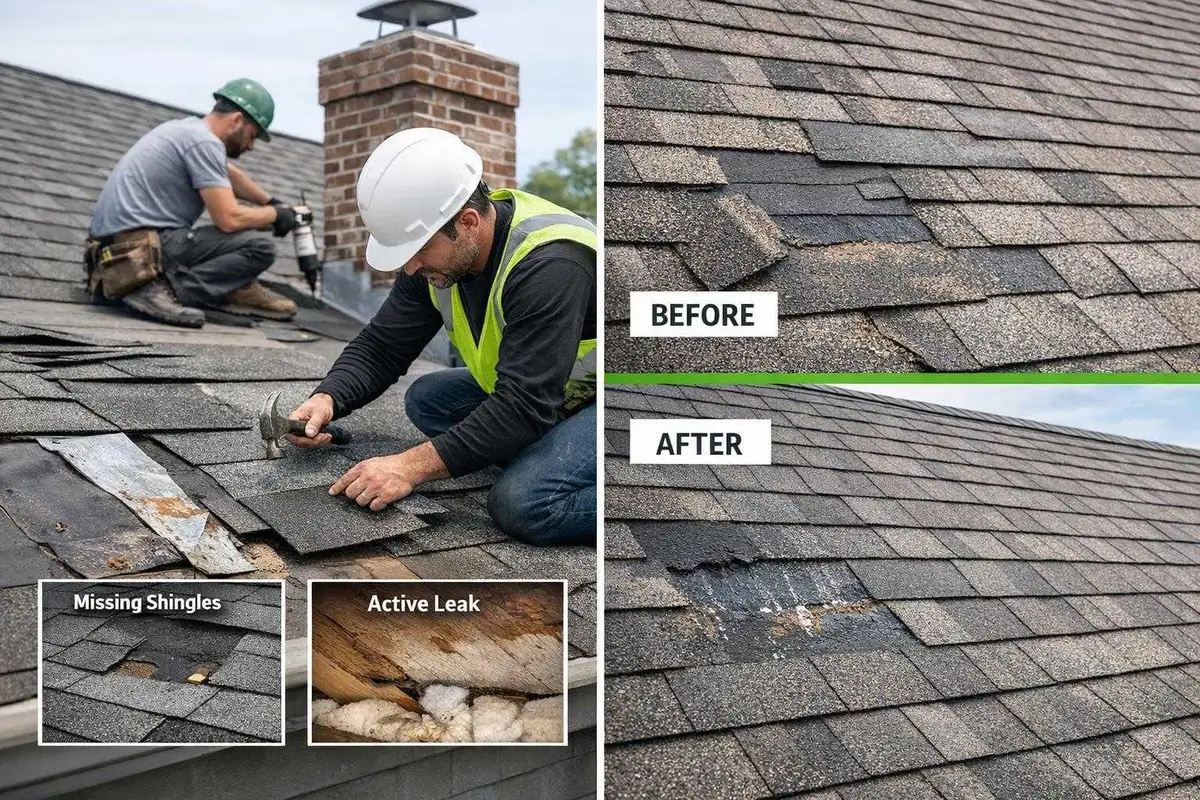
T-lock shingles are interlocking asphalt shingles used on many homes built from the 1930s through the 1980s, and they are no longer made. That matters because a repair often cannot match the original piece, so the choice is usually between a close-match patch and replacing the slope or roof.
Older roof with damaged shingles? Call (425) 738-3670.
What Are T-Lock Shingles?
T-lock shingles are asphalt shingles made in an interlocking pattern. Each shingle is shaped with tabs and slots that fit together like a puzzle, so that when they are laid, each piece locks into the pieces beside it and the pieces in the course above and below. The name comes from the shape of that lock: the interlocking tabs form a T shape where they meet. Laid across a roof, they make a continuous surface with a distinctive interlocking pattern.
The interlocking design was the point of them. Because each shingle is locked to its neighbours, the roof holds together as a single surface rather than as separate overlapping pieces, and wind has a harder time lifting a single tab on its own. That same interlocking is also what makes them awkward to repair today. A modern shingle can be slipped out and replaced on its own. A T-lock shingle cannot be removed on its own without disturbing the pieces locked into it on all sides.
When Were T-Lock Shingles Used?
T-lock shingles were used widely over a long period, generally from the 1930s through the 1980s. They were a common choice for houses built in the middle decades of the last century, Many homes built in that era still have their original T-lock roof, or a T-lock roof fitted as a replacement during the same period.
They fell out of use as roofing changed. Three-tab shingles and then architectural shingles became the standard, because they are simpler to make, simpler to lay, and simpler to repair one piece at a time. Production of T-lock shingles stopped, and once the remaining stocks were used up, there were no new T-lock pieces to buy. That is the situation today: the shingles are still on a large number of older roofs, but nobody makes them any more. If your Bellevue home dates from that era and the roof has never been replaced, the shingles on it may well be T-lock.
Why They Are Hard to Repair Today
The first problem is the simplest: the shingles are out of production, so a damaged piece cannot be replaced with a matching new one. There is no current product in the same interlocking shape, and no stock of new T-lock shingles to order. A repair has to use something else, and anything else will look different and fit differently. The colour will not match, because the original shingles have weathered for decades, and the shape will not match, because no modern shingle locks in the same way.
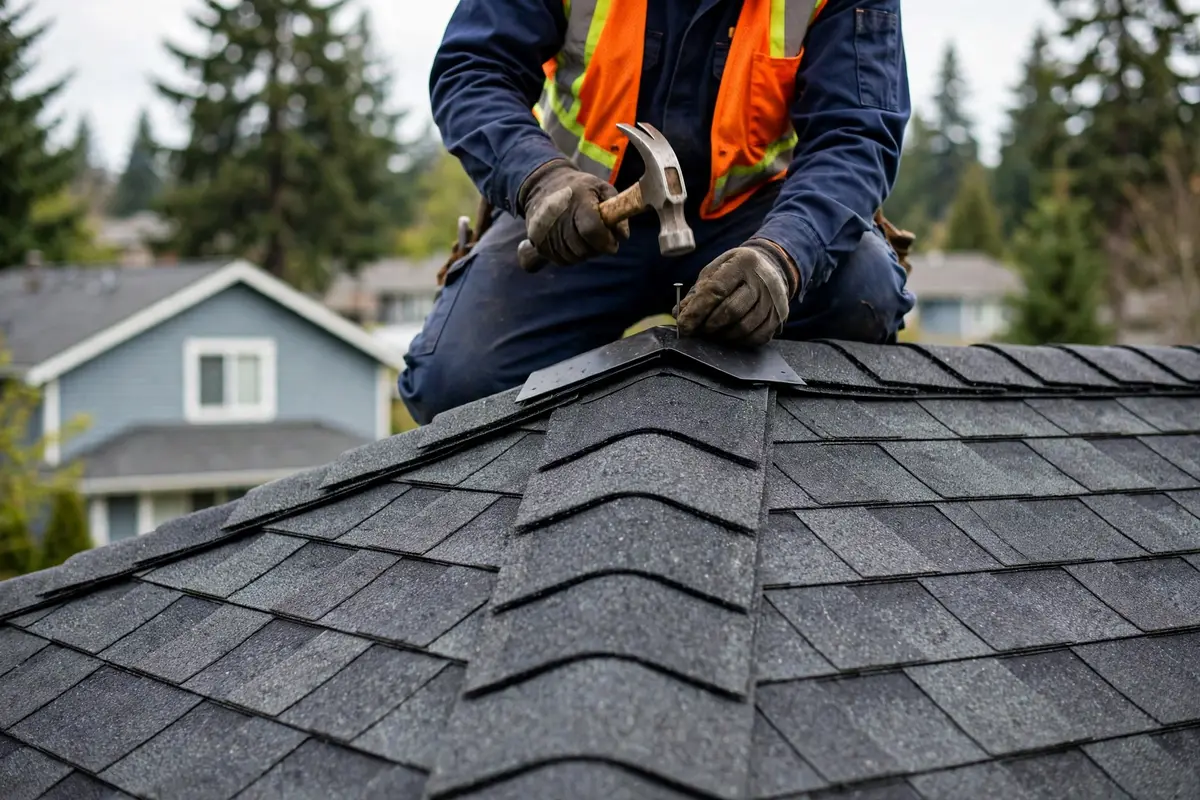
The second problem is the interlocking itself. To replace one damaged T-lock shingle, a roofer has to unlock it from the pieces around it, and those neighbouring pieces are old as well. Old asphalt shingles are brittle: they crack and snap when they are lifted instead of bending. Lifting the neighbours to free one damaged piece can crack them too, so a small repair can grow as each piece touched breaks. That is not a matter of poor workmanship — it is what happens to old shingles when they are handled. Our guide to whether you can replace just a few roof shingles explains the same problem in general terms, and it is sharper still with T-lock, because every piece is locked to four neighbours.
The third problem is that a patch never quite works as a T-lock. A modern shingle fitted into a T-lock roof does not lock into the surrounding pieces, so it is held by its nails and its seal alone, in a roof where every other piece is held by the interlock as well. It can be made watertight, but it is a compromise rather than a true match. For one or two damaged pieces on an otherwise sound roof, that compromise is often fine. For damage spread across a slope, patching means a growing number of mismatched pieces in a roof that is already old.
What Bellevue Owners of Older Homes Should Check
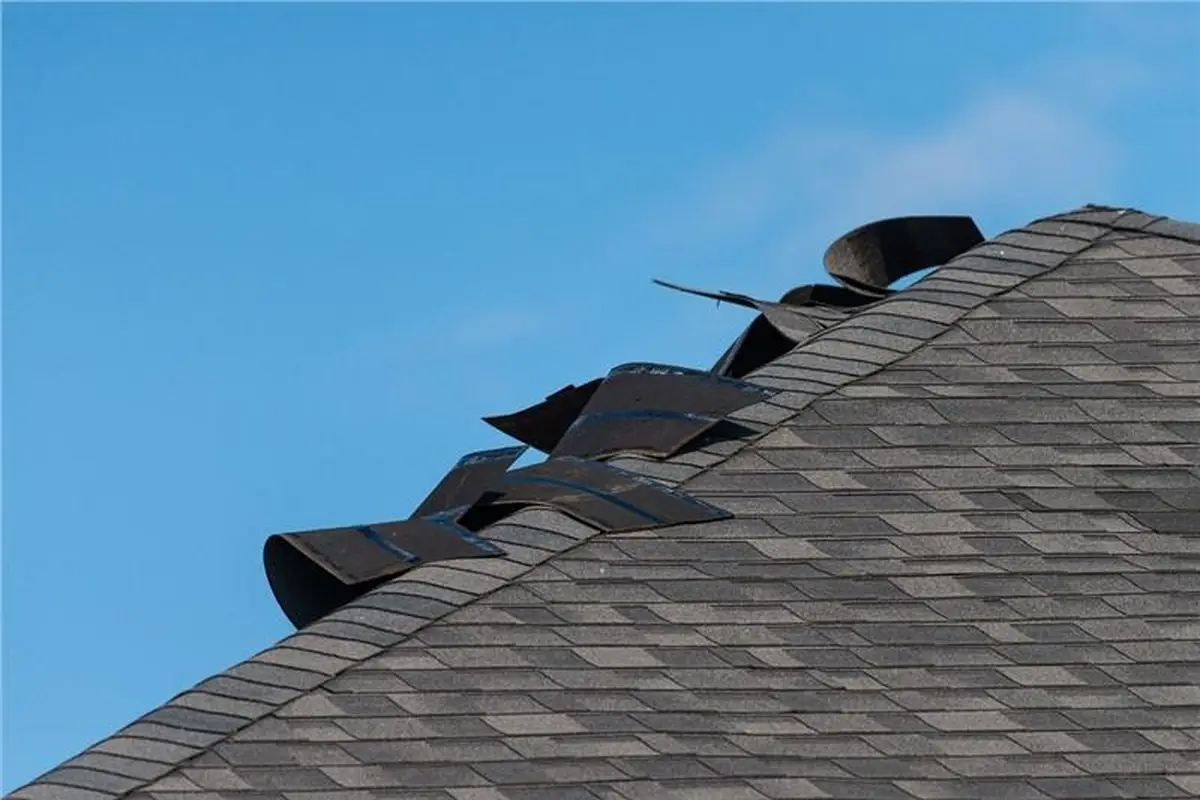
If your home dates from the era when T-lock shingles were used, start by working out what is actually on the roof. From the ground, look at the pattern of the shingles: T-lock roofs show a clear interlocking pattern of rectangles rather than straight horizontal rows, and the pattern is usually visible with binoculars. Look for tabs that have lifted, cracked, or gone missing, for pieces that have slipped out of line, and for patches where a previous repair has already fitted a different shingle into the pattern.
- The shingle pattern. Interlocking rectangles rather than straight rows, visible from the ground with binoculars.
- Lifted or missing tabs. Pieces that have come loose from the interlock, or gaps where a piece has gone altogether.
- Cracks and splits. Cracks across the tabs, which show the shingles are getting brittle with age.
- Granule loss. Bare patches where the surface granules have worn away, or granules collecting in the gutters.
- Leaks near the roof edge or valleys. Stains on ceilings or upper walls, especially after wind or heavy rain.
- Previous patches. Areas where a different shingle has already been fitted in, which show the roof has been patched before.
Also check what you know about the roof itself. If you have records from when you bought the house, they may say when the roof was last replaced and what was fitted. If you do not know how old the roof is, say so when you call — an inspection can usually tell from the pattern and condition. Do not climb on the roof to check it. Old shingles are brittle and break underfoot, and a T-lock roof is no place to walk without knowing where the weak pieces are. Our guide to how long asphalt shingles last explains what ageing looks like and how it limits what a repair can do.
Repair vs Replacement: How to Decide
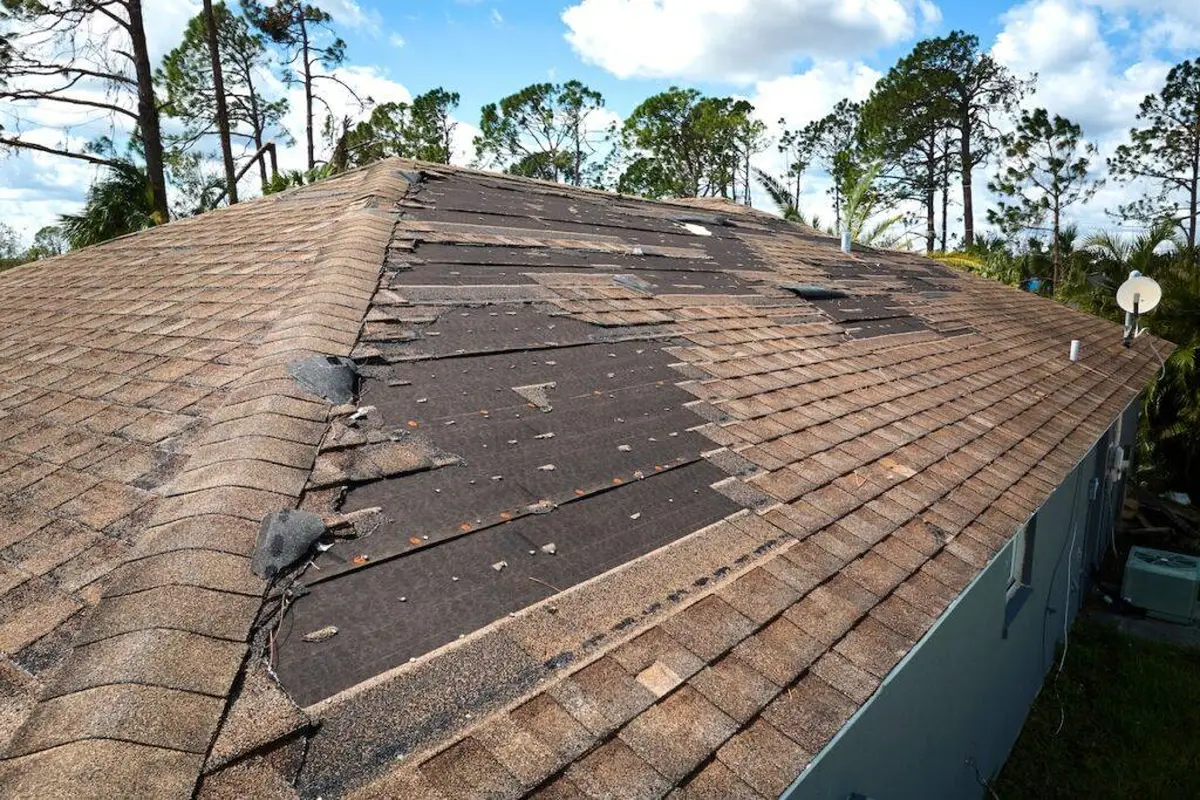
The decision turns on two questions: how much of the roof is damaged, and how much life the rest of the roof has left. If the damage is limited to one or two pieces, and the shingles around them are still flexible and sound, a patch is usually the sensible answer. The replacement piece will not match exactly, and you should expect a visible difference up close, but the roof will be watertight again, and the cost of the job stays small.
If the damage is spread across a slope, or if the shingles are brittle and cracking wherever they are touched, the maths changes. Each patch disturbs the pieces around it, so the repair grows, and the patched slope ends up as a mix of old T-lock pieces and mismatched modern shingles that do not lock together. At that point, replacing the slope or the roof is usually better value than patching a roof that will need patching again next year. Our roof repair vs roof replacement guide works through the same decision in detail, and our repair-or-replace checker asks the same questions we ask on an inspection.
Not sure whether to repair or replace? Call (425) 738-3670.
Insurance and Older Roofing
Coverage questions can come up with older roofing, and T-lock roofs are old roofing by definition. We cannot say what any particular policy covers, because every policy is different and the wording is what decides it. If you are wondering whether a repair or a replacement would be covered, the reliable step is to check your own policy and talk to your insurer, and to have photos and a written description of the roof's condition ready when you do. An inspection gives you exactly that: photographs of the damage and a written account of what the roof is and what condition it is in.
What Happens During a T-Lock Roof Inspection
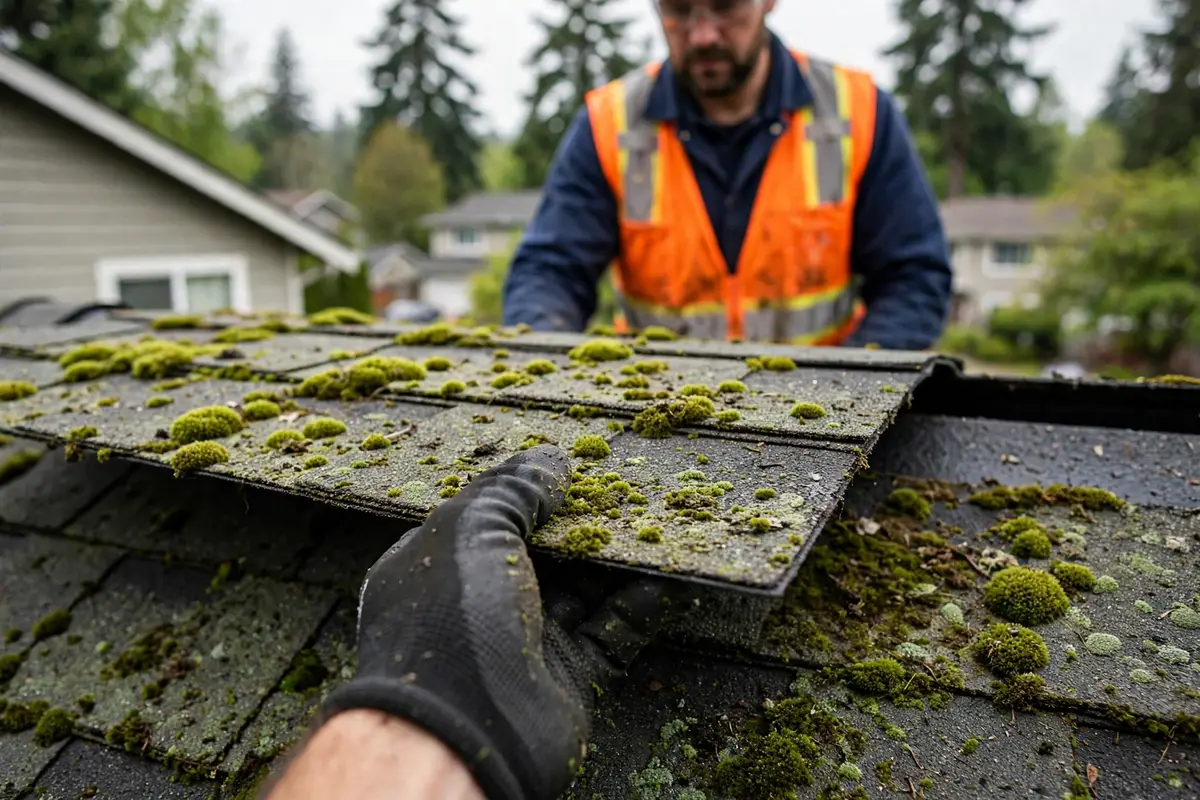
An inspection starts with the pattern and the condition of the shingles, slope by slope, photographed as we go. We look for lifted, cracked, and missing pieces, for granule loss, for brittle shingles that crack when they are gently lifted, and for the places where water is most likely to get in — the valleys, the edges, and anywhere a previous patch has been fitted.
After the inspection, you get the photographs and a written estimate before any work starts, so you can see the extent of the damage and the condition of the rest of the roof. If the answer is a patch, we will say which pieces need replacing; if it is replacement, we will show you the photos that support it. Our asphalt shingle repair service in Bellevue covers the repair of older shingle roofs, including the patching of T-lock roofs where a patch is still the sensible answer.
Need professional help? If your older Bellevue home has a T-lock roof and you are unsure whether to patch it or replace it, our asphalt shingle repair in Bellevue, WA service covers inspection, patching, and honest advice on replacement. Call (425) 738-3670.
Key takeaways
- T-lock shingles interlock with their neighbours, and they have been out of production for years, so a damaged piece cannot be matched.
- One or two damaged pieces on a sound roof can be patched, but the patch will not lock in or match exactly.
- Widespread damage or brittle shingles across a slope usually mean replacement is better value than patching.
T-lock roof needs a look? Call (425) 738-3670.
Frequently Asked Questions
What are T-lock shingles?
T-lock shingles are interlocking asphalt shingles, shaped with tabs and slots that lock each piece into the pieces beside it and in the courses above and below. The name comes from the T shape of the lock where the pieces meet. Laid across a roof, they form a continuous surface with a distinctive pattern of interlocking rectangles, rather than the straight overlapping rows of later shingle types.
How can I tell if my roof has T-lock shingles?
Look at the pattern from the ground with binoculars. A T-lock roof shows interlocking rectangles rather than straight horizontal rows, and the pattern is usually clear once you know what to look for. If you are unsure, a roof inspection can confirm it. Do not climb on the roof to check.
When were T-lock shingles used?
T-lock shingles were used widely over a long period, generally from the 1930s through the 1980s, and they were a common choice for houses built in the middle decades of the last century. They fell out of use as three-tab and then architectural shingles became the standard, and production eventually stopped, so no new T-lock shingles are made today.
Why can't T-lock shingles be matched?
They are out of production, so there are no new T-lock pieces to buy, and no modern shingle locks in the same way. A repair has to use a different shingle, which will not match the original in shape, and will not match in colour either, because the original pieces have weathered for decades. The patch can be made watertight, but it will look different up close.
Can you repair a T-lock roof?
Yes, if the damage is limited and the shingles around it are still sound. We replace the damaged pieces and fit the patch as closely as the colour and profile allow, then seal the courses around it. The repair will not lock in like the original, and the patch will be visible up close. If the damage is widespread or the shingles are brittle, replacement is usually better value than patching.
Should I replace a T-lock roof before it leaks?
Not necessarily. A T-lock roof that is still sound, with no lifted or missing pieces and no leaks, does not need replacing just because of its age. What it does need is regular checking, because the shingles are old and brittle. An inspection will tell you how much life the roof has left and whether a patch or a replacement is the honest answer.
Will my insurance cover a T-lock roof?
Coverage questions can come up with older roofing, but we cannot say what any particular policy covers, because every policy is different. Check your own policy and talk to your insurer, and have photos and a written description of the roof's condition ready. An inspection gives you exactly that: photographs of the damage and a written account of what the roof is and what condition it is in.
How do I decide between repair and replacement?
Ask how much of the roof is damaged and how much life the rest of it has left. A few damaged pieces on an otherwise sound roof point to a patch; damage spread across a slope, or shingles that crack wherever they are touched, point to replacement. Our repair-or-replace checker asks the same questions we ask on an inspection and gives you a starting point for the decision.