
Fishmouthing, Creasing and Delaminated Shingles Explained
Fishmouthing, creasing, delamination, slippage and flipped tabs are the shapes damaged asphalt shingles take — and each one means something different. This guide explains what each shape is, what causes it, and whether it needs repair now, here in Bellevue, WA.
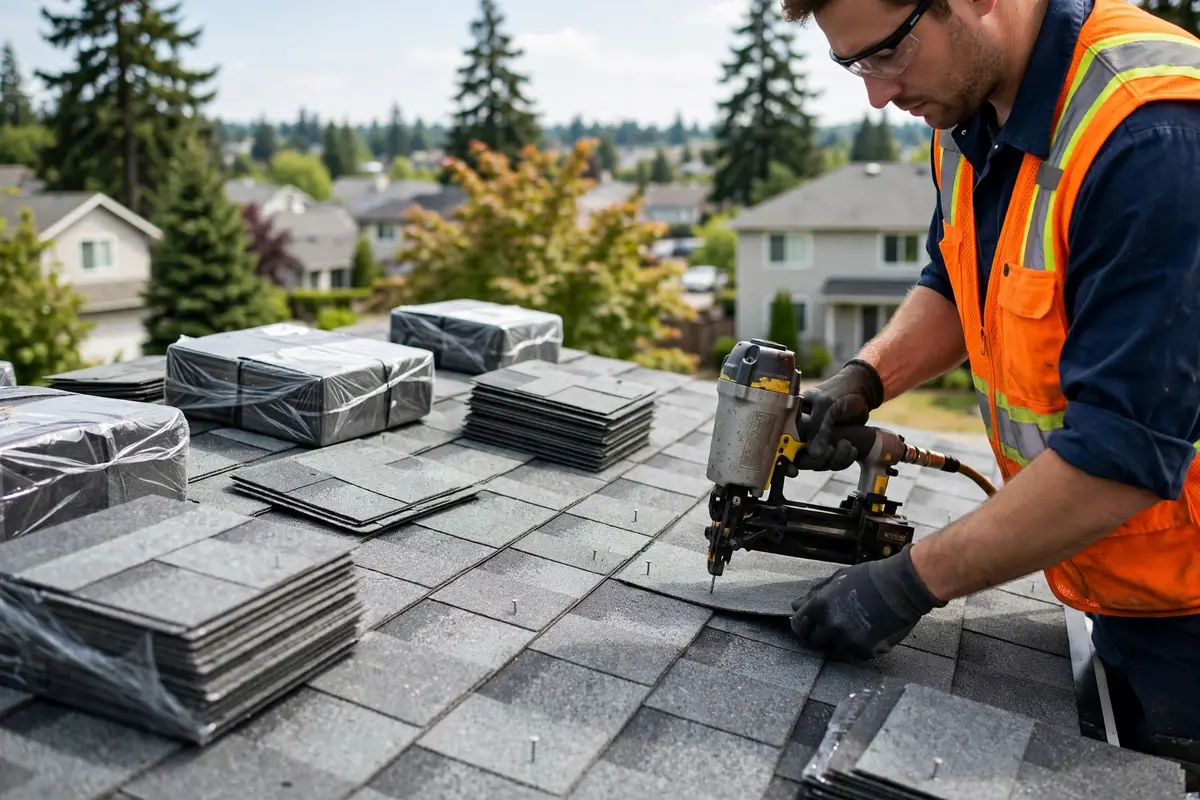
A healthy asphalt shingle lies flat and seals to the shingle below it. When shingles age, lose adhesion or take wind damage, they lift, fold, slip or split apart in recognisable shapes. Learning to read those shapes tells you whether a repair will do — or the roof is near the end of its life.
Fishmouthing Shingles
Fishmouthing is when the corners and edges of a shingle tab lift and curl up while the centre stays stuck down — the open shape looks like a fish's mouth. It happens when the adhesive seal between the shingles fails, usually as the shingle ages and the sealant dries out, or when moisture gets under the tab and the shingle swells and distorts.
A fishmouthed shingle is no longer sealed, which means wind can get under the lifted edge and rain can be driven in behind it. One or two fishmouthed tabs on an otherwise sound roof are a simple repair: the affected shingles are replaced and the courses around them resealed. Fishmouthing across a whole slope is different — it usually means the roof's seals are failing with age, and the repair-or-replace question needs an honest look. Our guide to the signs of damaged roof shingles covers the other shapes to watch for alongside it.
Creased Shingles
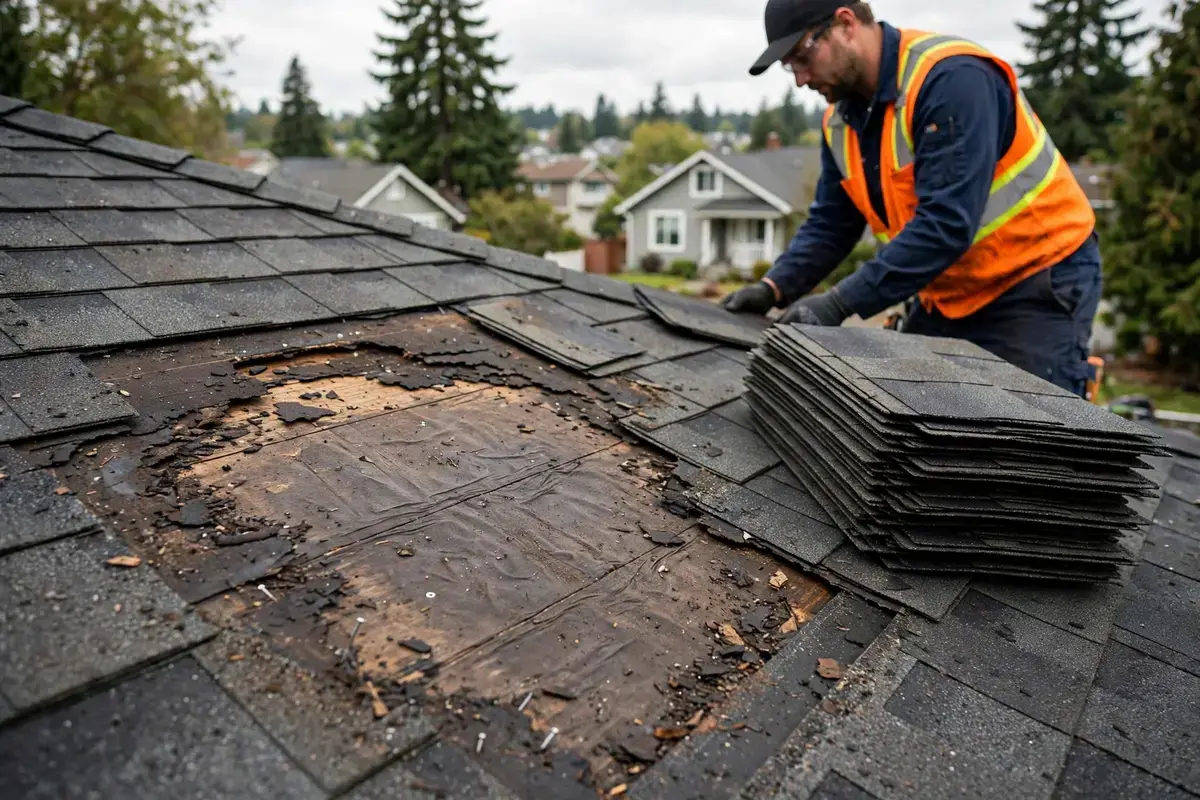
A creased shingle has a horizontal fold across the tab, like a piece of card that has been bent back and forth. Wind does it: a gust lifts the tab, the tab flexes, and repeated flexing weakens the shingle until it folds. The crease is a permanent break in the shingle's strength — it will not flatten out and it will not reseal.
Creased shingles are common after a windstorm, and they are the ones most likely to tear off in the next one, because the fold is where the tab will break. A creased tab always needs replacing, not resealing, and the shingles around it need checking too, because the same gust that creased one tab will have flexed its neighbours. If your roof went through the 7 November 2026 windstorm, creased tabs are one of the first things we look for.
Shingles lifting or folding? Call (425) 738-3670.
Delaminated Shingles
Delamination is when the layers of a laminated — architectural — shingle come apart. An architectural shingle is built from two or more layers bonded together, and as the shingle ages, long exposure to heat and moisture can break that bond. The top layer lifts, bubbles or peels away from the layer beneath it, leaving a shingle that is thinner, weaker and open to water.
Delamination is an ageing problem more than a storm problem, and it usually appears across a slope rather than on a single shingle. A few delaminated shingles can be replaced, but when the layers are separating across the roof, the shingles are telling you the roof is near the end of its life — patching one slope while the next slope delaminates is poor value. An inspection, with photos, shows whether the delamination is localised or widespread.
Shingle Slippage and Flipped Tabs
Slippage is when a shingle slides down the slope out of place, leaving a gap where the shingle above it was meant to overlap. It happens when the nails or the adhesive seal fail — the shingle is no longer held, and gravity does the rest. Flipped tabs are the wind version of the same failure: a gust lifts a tab right over backwards, so it ends up folded back on itself or torn off.
Both leave the roof open. A slipped shingle exposes the nails and underlayment beneath it, and a flipped tab exposes the course below. Neither can be pushed back into place and expected to hold — the seal is gone and the shingle is usually creased or torn. The fix is to replace the slipped or flipped shingles, check the fixings on the shingles around them, and reseal the courses. Slippage on several slopes at once points to a fixing or adhesive problem across the roof, not a single bad shingle.
Brittle Shingles
Brittle shingles are shingles that have lost their flexibility with age. They lose granules, the asphalt dries out, and the shingle cracks or snaps when it is touched instead of bending. You can tell a roof is going brittle when shingles break during a repair that should have been simple, or when tabs crack in a wind that would only have flexed a younger roof.
Brittleness matters because it changes what a repair can do. Replacing a few shingles on a brittle roof is hard — the shingles around the repair break as they are lifted, so a small job grows. That is why an inspection matters before any work starts: if the roof is brittle across the slope, replacement is usually better value than a repair that keeps breaking new ground. Our repair-or-replace checker asks the same questions we ask on an inspection.
What to Do When You Spot One of These Shapes
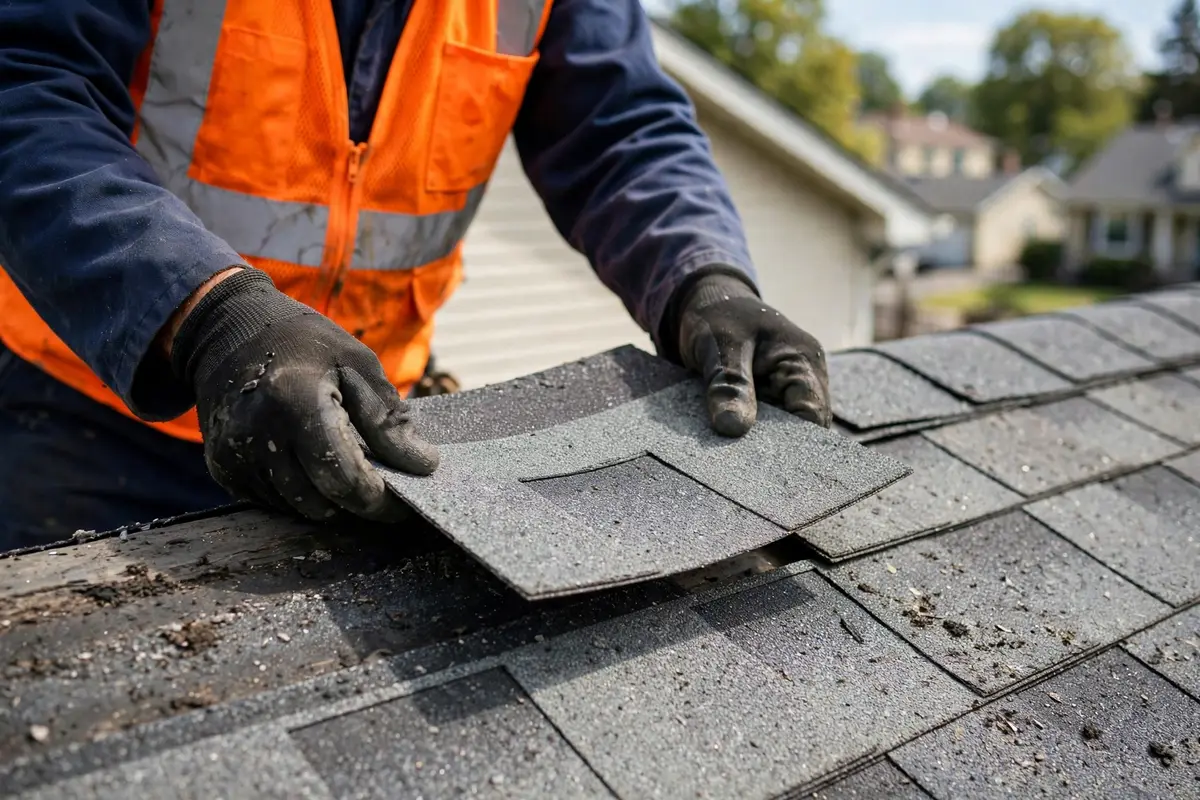
Start from the ground. Stand back and look at the roof with binoculars, or photograph the slope with your phone's zoom — the shapes in this guide are visible from the ground on most two-storey homes, and you do not need to climb a ladder to confirm them. Note which slope they are on, how many shingles are affected, and whether the damage appeared after a storm or has been creeping in over months. Those three facts are what a roofer asks first.
Then call. A lifted, flipped or slipped shingle is open to the next rain, and in Bellevue the next rain is never far away — a shape that looks small in November can be a leak by February. We inspect the whole roof, not just the slope you photographed, because the same wind or the same ageing that damaged one shingle will have touched its neighbours. The inspection produces photos of every damaged shingle and a written estimate, so you can see the extent before you decide anything.
Do not try to push a slipped shingle back, reseal a creased tab yourself, or walk on a brittle roof to check it. A slipped shingle will not reseal, a creased tab will break at the fold, and a brittle roof cracks underfoot — and a fall from a roof is a far bigger problem than a damaged shingle. If water is already coming in, call (425) 738-3670 and tell us: active leaks get priority, and we will tell you honestly how soon we can come.
Which Shapes Need Repair Now?
Anything lifted, flipped or slipped needs attention soon, because the roof is open to the next rain. Creased shingles need replacing, because the fold will break in the next wind. Fishmouthing and delamination depend on how widespread they are: a few affected shingles are a repair, while the same shapes across a whole slope usually mean the roof is ageing out and replacement is the honest conversation to have.
The one rule that covers all five shapes is that a photo from the ground is not enough to decide. The shape tells you what is wrong; the extent tells you what to do about it, and only an inspection shows the extent. We inspect, photograph every damaged shingle, and give you a written estimate before any work starts — and if the answer is replacement rather than repair, we say so and show you why. That is also the approach behind our shingle roof repair and asphalt shingle repair services in Bellevue.
Need professional help? If your roof shows any of these shapes, our asphalt shingle repair in Bellevue, WA service covers replacement and resealing, matched to your roof as closely as the colour and profile allow. Call (425) 738-3670 or request an estimate.
Key takeaways
- Fishmouthing means the seal has failed; creasing means the wind has weakened the tab.
- Delamination and brittleness are ageing problems — localised is a repair, widespread is a replacement conversation.
- Slipped or flipped shingles leave the roof open and cannot be pushed back into place.
Damaged shingles on your roof? Call (425) 738-3670.
Frequently Asked Questions
What is fishmouthing on a shingle?
Fishmouthing is when the corners and edges of a shingle tab lift and curl up while the centre stays stuck down, leaving an open shape like a fish's mouth. It happens when the adhesive seal between shingles fails, usually as the sealant dries out with age or moisture gets under the tab. A fishmouthed shingle is no longer sealed, so wind and driven rain can get behind it.
What causes creased shingles?
Wind causes creased shingles. A gust lifts a tab and flexes it up and down; repeated flexing weakens the shingle until it folds across the tab. The crease is a permanent break in the shingle's strength — it will not flatten out or reseal, and the tab usually tears off in the next strong wind. Creased shingles always need replacing, and the shingles around them need checking too.
What does delaminated mean for a shingle?
Delamination means the layers of a laminated, architectural shingle have come apart. The shingle is built from layers bonded together, and long exposure to heat and moisture can break that bond as the roof ages, so the top layer lifts, bubbles or peels away. A delaminated shingle is thinner and weaker, and it lets water in. A few can be replaced; widespread delamination usually means the roof is near the end of its life.
Can a slipped shingle be pushed back into place?
No. A slipped shingle has lost its nails or its adhesive seal, so pushing it back does not hold it — it will slide again, and the shingle is often creased or torn by then. The fix is to replace the slipped shingles, check the fixings on the shingles around them, and reseal the courses. Slippage on several slopes at once points to a fixing problem across the roof, not a single bad shingle.
Are curled and fishmouthed shingles the same thing?
They are related but not the same. Curling is when the whole shingle edge turns up or the tab cups, usually from age and drying out. Fishmouthing is more specific: the corners lift while the centre stays stuck, because the seal has failed in the middle of the tab. Both mean the shingle no longer seals, and both let wind and rain in — but a roofer reads them differently, because the cause and the fix are not identical.
Will my roof leak if shingles are creased?
Not always straight away, but the risk is high. A creased shingle is weakened along the fold, and the next wind can tear it off or lift it enough for rain to get underneath. Even before it tears, the fold breaks the seal between courses, so wind-driven rain can work its way in. Creased shingles should be replaced promptly rather than watched — they do not get better, and they fail suddenly.
Can you replace just the damaged shingles?
Yes, if the damage is localised and the surrounding shingles are still sound. We replace the damaged shingles and match them to the roof as closely as the colour and profile allow, then reseal the courses around them. If the damage is widespread — fishmouthing, delamination or brittleness across a whole slope — replacement is usually better value than patching, and we tell you so with photos to show why.
How do I know if it is wind damage or age?
Wind damage is usually localised and sudden: creased or missing tabs on the windward slope, damage that appeared after a storm, and shingles that were sound before it. Ageing is gradual and widespread: granule loss, curling, fishmouthing and brittleness across the whole roof, getting worse year by year. Often it is both — an ageing roof fails in the wind first. An inspection with photos is how we tell the two apart.
Do brittle shingles always mean replacement?
No, but they change the maths. A few brittle shingles on an otherwise sound roof can still be replaced, carefully. When the roof is brittle across a slope, though, the shingles around any repair break as they are lifted, so a small job grows with every shingle touched. At that point replacement is usually better value than a repair that keeps breaking new ground. The inspection shows which side of that line your roof is on.
What should I do if I see these shapes on my roof?
Photograph them from the ground, note which slope they are on and whether they appeared after a storm, then call (425) 738-3670 for an inspection. Do not climb on the roof — brittle and creased shingles break underfoot. We inspect the whole roof, photograph every damaged shingle, and give you a written estimate before any work starts, so you can see the extent of the damage before you decide anything.