
Signs of Damaged Roof Shingles
Most roof damage is visible before it becomes a leak — if you know what to look for. This guide explains the signs of damaged shingles on a Bellevue roof, what each sign means, and when it is a repair and when it is a warning that the roof
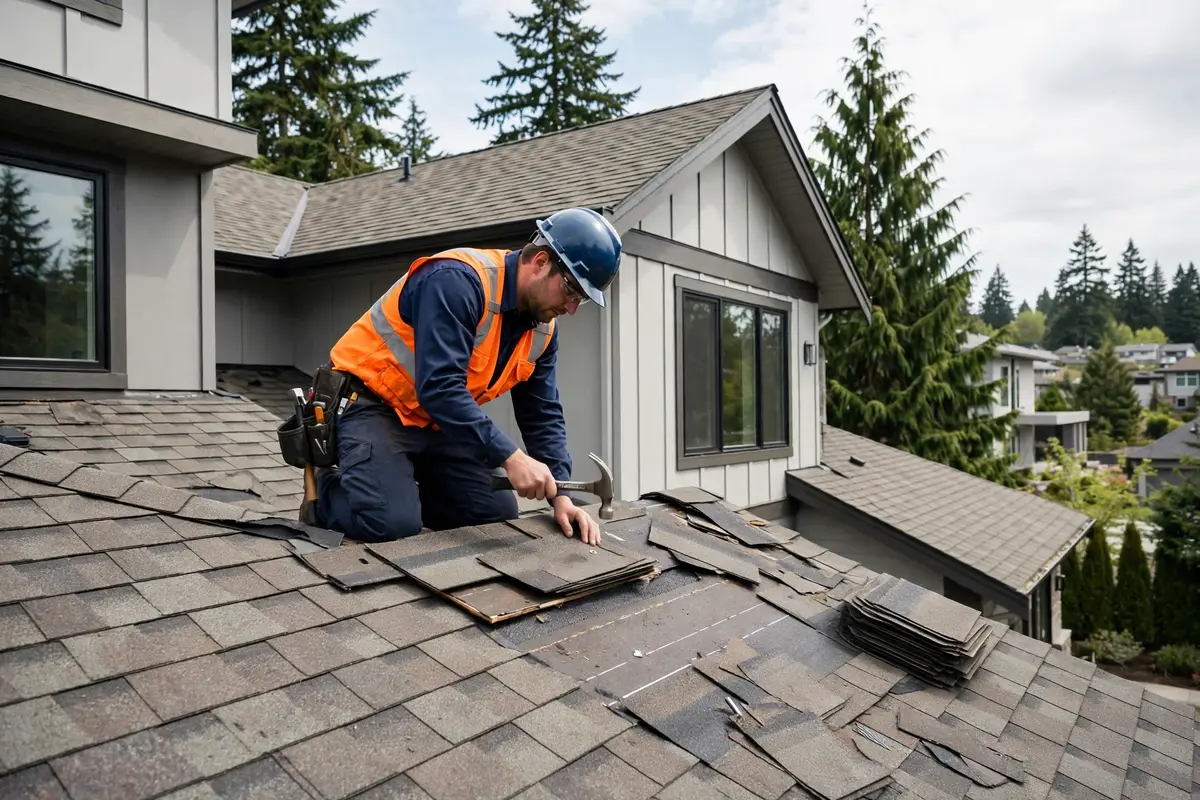
Most roof damage is visible before it becomes a leak — if you know what to look for. This guide explains the signs of damaged shingles on a Bellevue roof, what each sign means, and when it is a repair and when it is a warning that the roof is nearing the end of its life.
Missing, Lifted and Flapping Shingles
Missing shingles are the clearest sign, but a lifted tab is just as important. Wind lifts the edge, breaks the seal strip, and leaves the shingle able to flap. From the ground, look for tabs that do not lie flat, or a patch that looks darker than the rest of the roof.
Cracked, Curled and Cupped Shingles
Cracked roof shingles usually come from thermal movement, impact and ageing. Curling — edges turning up — and cupping — edges turning down — usually mean moisture imbalance or thermal ageing. Curled shingles cannot seal, and they are easy targets for the next windstorm.
Spotted damage? Call (425) 738-3670.
Granule Loss and Bare Patches on Asphalt Shingles
Granules protect shingles from sun and weather. Finding granules in gutters is normal in small amounts, but missing granules across a slope — bare patches where the asphalt shows through — mean the shingles are wearing out. A roof with widespread granule loss is showing shingle wear and losing its protection.
Moss, Algae and Dark Streaks on Roof Shingles
Green moss holds moisture against shingles and lifts their edges. Black streaks are usually Gloeocapsa magma, an algae that feeds on the limestone filler in asphalt shingles. Both are common on shaded Bellevue slopes, and both shorten shingle life if left untreated.
What to Do Next
If you see one or two damaged shingles, book a repair — it is usually a localised fix, and it stops water intrusion before it reaches the decking and ceilings. If you see several signs at once, or they cover most slopes, roof aging may be the cause — book an inspection and ask honestly whether repair or replacement is better value. Do not climb on the roof to check — use binoculars from the ground, or call us.
Need professional help? If this describes your roof, our shingle roof repair in Bellevue, WA service covers it. Call (425) 738-3670 or request an estimate.
Key takeaways
- Missing, lifted or flapping shingles need a repair, not a wait.
- Granule loss and bare patches mean the shingle layer is wearing thin.
- Moss and dark streaks hold water against shingles and speed up wear.
Shingles curling or missing? Call (425) 738-3670.
Frequently Asked Questions
What are bald spots on roof shingles?
Bare patches where granules have worn away and black asphalt shows through. They mean the shingle’s protective layer is gone in that spot, so sun and rain attack the asphalt directly. A few small bald spots on an old roof are wear; bald patches across a slope mean the roof is near the end of its life and an inspection should decide repair or replacement.
How much granule loss is normal on an asphalt roof?
Some granule loss is normal, especially on a new roof shedding loose granules in the first year, and a small amount in gutters each season on an older roof. It becomes a problem when gutters fill with granules, bare patches appear, or the shingles look thin and shiny. That level of loss means the shingles are wearing out and losing weather protection.
What do cracked shingles mean for my roof?
Cracks mean the asphalt has dried out and lost flexibility, usually from age, heat, or impact. A cracked shingle no longer sheds water properly, and wind can lift the cracked tab and tear it off. One or two cracked shingles can be replaced; cracking across a whole slope usually means the roof is ageing out and needs an inspection to judge repair or replacement.
What causes dark streaks on roof shingles?
Black streaks are usually Gloeocapsa magma, an algae that feeds on the limestone filler in asphalt shingles. It is common on shaded, damp Bellevue slopes and spreads slowly across the roof. The streaks themselves rarely cause leaks, but they hold moisture against the shingles and shorten their life, so they are worth cleaning with a low-pressure soft wash.
Can curled shingles be flattened or repaired?
No, curled shingles cannot be flattened back into place. Curling means the shingle has dried, shrunk, or suffered moisture damage, and the seal is broken. The curled shingles must be replaced, and the cause — usually poor ventilation or moisture imbalance — should be fixed too, or the new shingles will curl the same way.
What does a ceiling stain tell you about shingle damage?
A ceiling stain means water has already got past the shingles, the underlayment, and the decking. The stain rarely sits directly below the damaged shingle, because water travels along rafters and insulation before it drips. A stain is a sign to book an inspection promptly, not just to repaint the ceiling.
Are lifted shingles always a sign of damage?
Lifted shingles are a warning, not always a failure. A tab can lift in wind and reseal when the sun warms the adhesive strip. But a shingle that stays lifted, flaps, or has a broken seal strip is damaged and will let wind-driven rain underneath. If you can see daylight under a lifted tab from the ground, it needs attention.
How do I check my shingles without climbing on the roof?
Use binoculars from the ground and walk around the house to view every slope. Look for missing, cracked, curled, or lifted shingles, bald patches, granules in the gutters, and dark streaks. Check the attic for daylight through the decking or damp insulation. Never climb a steep or wet roof — leave that to an inspector.
Do damaged shingles always leak right away?
No. A cracked or lifted shingle may not leak in light rain, because water runs off before it finds the gap. But wind-driven rain, heavy rain, or snow melt can push water under the damaged shingle and into the decking. Damage that looks dry today can become a leak in the next storm, so it is better to repair it early.
When do several shingle problems at once mean replacement?
When missing, curled, and cracked shingles appear together across most slopes, or when granule loss is heavy and the roof is 15 to 20 years old, the roof is usually ageing out. Patching one spot leaves the rest to fail next. An inspection can confirm whether repair is still good value or replacement makes more sense.