
Moss on Asphalt Shingles
Moss is Bellevue’s most common roof problem after wind. It grows on shaded, damp slopes, holds moisture against shingles, and lifts their edges. This guide explains why moss grows here, why it damages shingles, and how it should — and shoul
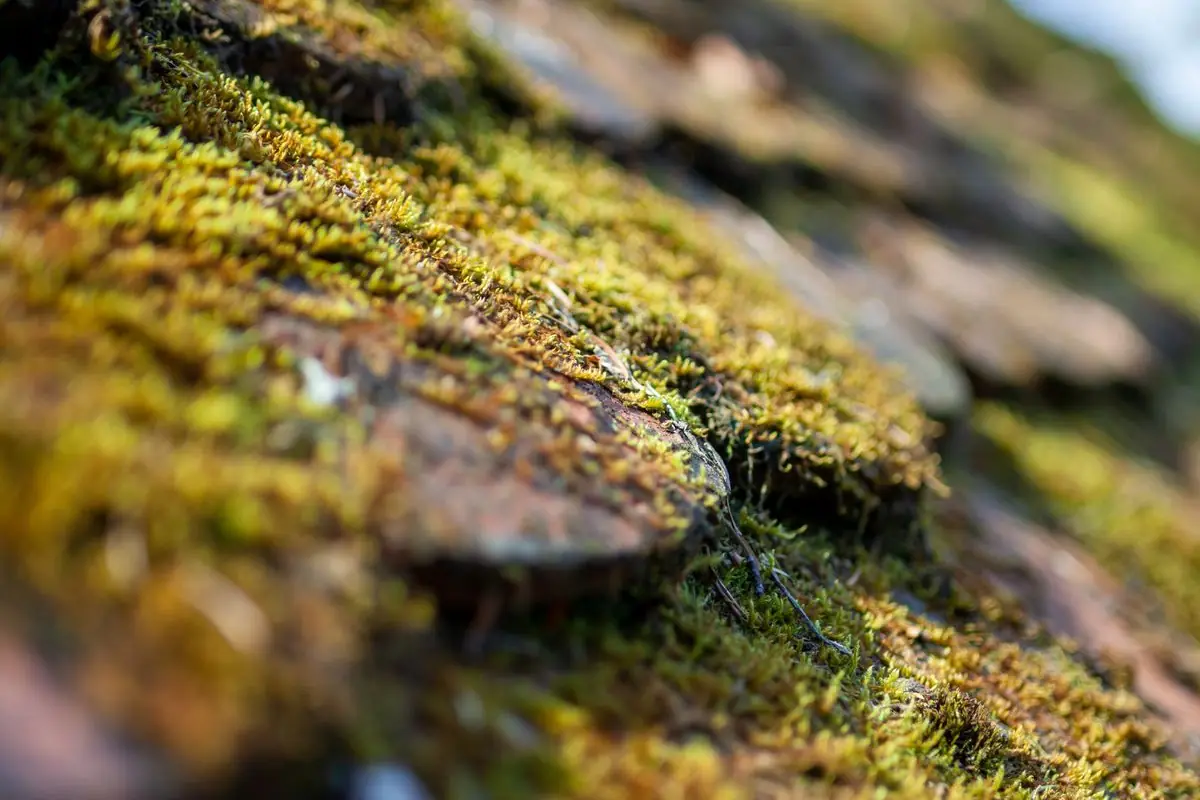
Roof moss is Bellevue’s most common roof problem after wind. It grows on shaded, damp slopes, holds moisture against shingles, and lifts their edges. This guide explains why moss grows here, why it damages shingles, and how it should — and should not — be removed.
Why Moss Grows on Asphalt Shingles in Bellevue
Tree cover is the main reason: Bellevue’s mild, wet winters and shaded tree canopies create ideal conditions for moss. A damp roof is what moss needs, and north-facing slopes, which stay damp longest, grow the most. Moss spores are airborne, so it spreads across whole neighbourhoods, not just one roof.
How Moss Damages Asphalt Shingles
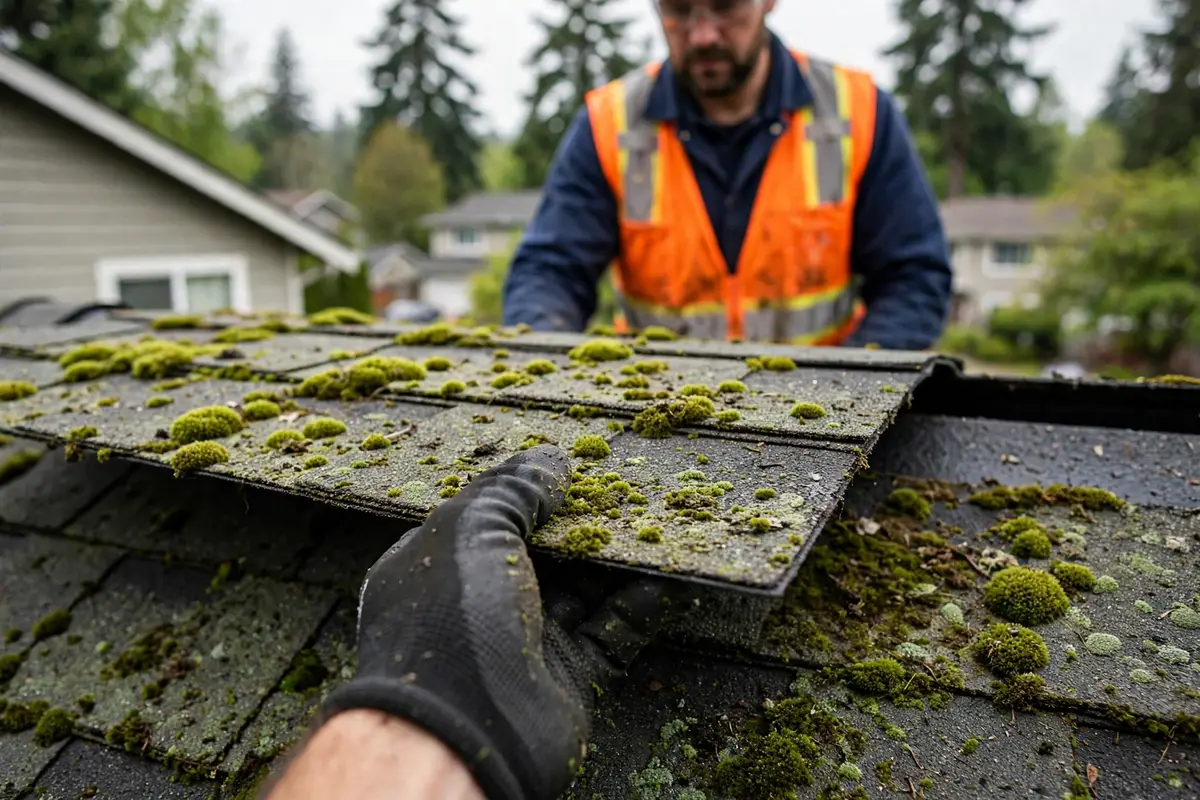
Moss has mass: it holds moisture against the shingle, anchors into the surface, and lifts and curls shingle edges. That lets water in and makes the shingle an easy target for wind. Once moss has lifted the edges, the shingle dries, curls and can crack — cracked asphalt shingles and curled asphalt shingles are the damage we find underneath heavy moss. Black streaks are a related problem: that is algae on shingles — Gloeocapsa magma, an algae that feeds on the limestone filler in asphalt shingles.
Moss on your roof? Call (425) 738-3670.
Moss on Asphalt Shingles — Soft Wash, Not Pressure Washing
The roofing industry is clear: never pressure wash a shingle roof. High pressure strips granules, can crack shingles, and can void a manufacturer warranty. The Asphalt Roofing Manufacturers Association recommends low-pressure chemical cleaning — soft washing — which kills moss and algae at the root. That is safe roof cleaning for asphalt shingles: low pressure, the right chemical, and no scrubbing or pressure washing.
What to Do About Moss on Your Roof
If moss is light, a soft wash and a check of the shingles it has lifted is usually enough. If moss has already lifted or curled shingles, those shingles need replacing as well, and we match replacement asphalt shingles to the roof as closely as the colour and profile allow. Moss does more damage faster on an aging composition roof, because the shingles are already worn and their edges lift more easily. After treatment, shingle maintenance slows moss down: valleys kept clear, overhanging branches trimmed, and a soft wash when moss returns.
Need professional help? If this describes your roof, our asphalt shingle repair in Bellevue, WA service covers it. Call (425) 738-3670 or request an estimate.
Key takeaways
- Moss grows on shaded, north-facing slopes in Bellevue's wet climate.
- Moss lifts shingle edges and holds water against the roof.
- Use a soft wash, never pressure washing, on asphalt shingles.
Shingles lifting from moss? Call (425) 738-3670.
Frequently Asked Questions
Why does moss grow on roofs in Bellevue?
Bellevue’s wet climate, tall conifers, and shaded slopes create the damp, low-light conditions moss loves. Moss spores land on the roof, and moisture and shade let them take hold, especially on north-facing slopes and under overhanging branches. Once moss is established, it holds even more water against the shingles, so it spreads if it is left alone.
Does moss damage asphalt shingles?
Yes. Moss holds water against the shingles, lifts their edges, and keeps the surface damp, which speeds up wear and lets wind-driven rain get underneath. Over time, moss can pry shingles up and expose the underlayment. The damage is slow but steady, and it is worse on shaded slopes where moss grows thickest.
What is the best way to remove moss from a shingle roof?
A low-pressure soft wash with a moss-killing solution, left to work and then rinsed gently, is the safest method. Never pressure wash a shingle roof — the high-pressure jet strips granules and damages the shingles. The moss usually dies and falls off over a few weeks after treatment, and a roofer can check whether any shingles were damaged underneath.
Can I use bleach to kill moss on my roof?
Bleach can kill moss, but it is not the best choice. It can damage plants and gutters, discolour shingles, and harm the surrounding garden if it runs off. A moss treatment made for roofs is safer for the shingles and the garden. Whatever you use, never pressure wash, and keep the solution off plants and out of the gutters as much as possible.
Do zinc strips stop moss growing on shingles?
They help. Zinc strips fixed near the ridge release a small amount of zinc with each rain, and the zinc discourages moss and algae from growing on the slope below. They work best on a clean roof as prevention, not as a cure for thick moss — established moss should be removed first, then the strips help keep it from coming back.
How often should I clean moss off my roof?
When you can see it growing, and at least once a year on a shaded Bellevue slope. Moss grows fastest in the wet months, so a check each spring is good practice. Catching it early means a soft wash is enough; leaving it for years lets it lift shingles and cause damage that needs repair, not just cleaning.
Can moss cause a roof leak?
Yes, over time. Moss lifts shingle edges and holds water against the surface, so wind-driven rain can get under the lifted tabs and into the decking. A mossy roof rarely leaks all at once — it leaks gradually, as the lifted edges let in more water with each storm. Removing the moss and repairing any lifted shingles stops the leak at its source.
Is moss on a roof a problem when selling a house?
It can be. Buyers and inspectors see moss as a sign of a neglected roof, and it can raise questions about the roof’s condition and remaining life. A clean roof with no moss looks better and avoids a last-minute repair request. If you are selling, a soft wash and an inspection before listing is usually money well spent.
What is the difference between moss and algae on a roof?
Moss is the thick green growth that lifts shingles and holds water; algae, usually Gloeocapsa magma, is the black streak that stains shingles but does not lift them. Both are common on shaded Bellevue slopes, and both shorten shingle life by holding moisture. Moss is the more urgent problem because it physically lifts the shingles, while algae is mainly cosmetic at first.
How do I keep moss from coming back after cleaning?
Trim overhanging branches to let sun and air reach the roof, keep gutters clear so water does not sit, and fit zinc strips near the ridge to discourage regrowth. Check the roof each spring and treat any new moss early, before it thickens. Prevention is mostly about light and airflow — a roof that dries out between rains grows far less moss.