
Roof Ventilation in Bellevue, WA
Roof ventilation moves air through your attic, carrying out the moisture that rots wood, grows mould and wears shingles out early. This guide explains ridge, soffit and attic vents, the signs yours is failing, and what to check in Bellevue, WA.
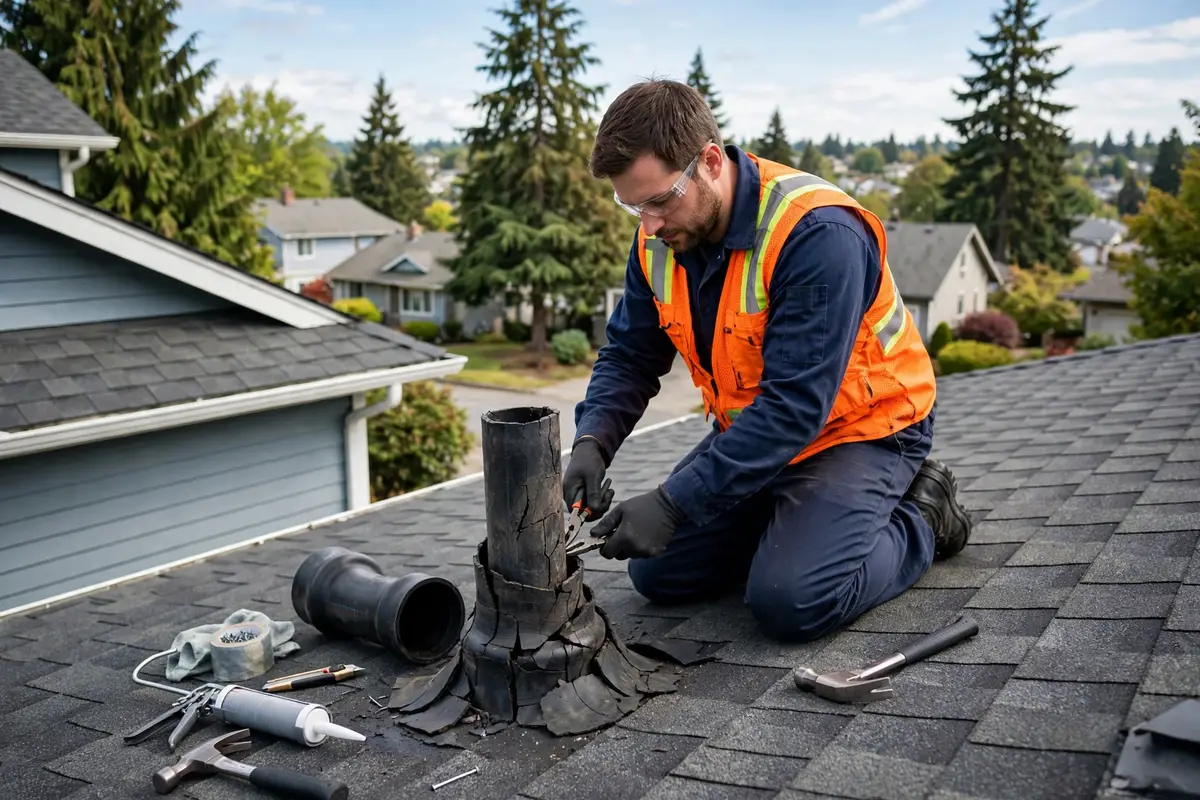
Good roof ventilation means fresh air enters at the eaves through soffit vents and leaves at the ridge, keeping the attic dry and close to the outside temperature. Without that airflow, moisture from the house below condenses on cold roof timbers, and the damage stays hidden until shingles curl or a leak appears. Call (425) 738-3670 for a roof inspection if any of the signs below sound familiar.
Why Roof Ventilation Matters in Bellevue
Bellevue roofs work hard. Mild, wet winters keep roofs damp for months, and the air inside a house is full of moisture from cooking, showers and breathing. That warm, damp air rises into the attic. If it has nowhere to go, it condenses on the cold underside of the roof deck — the same way breath fogs a cold window.
Condensation in an attic is slow damage. It wets the roof timbers, feeds mould, rusts nail heads and can stain ceilings below. Over years it rots the decking that shingles are nailed to, and it ages shingles from underneath: trapped heat in summer and trapped moisture in winter both shorten shingle life. In a cold snap, a warm attic can also melt snow on the roof, which refreezes at the cold eaves and forms an ice dam.
Ventilation is the fix. A steady flow of outside air through the attic carries the moisture away before it can condense, and keeps the attic close to the outside temperature. It does not heat or cool the house — it dries the roof structure out, which is what protects the shingles above it.
How Roof Ventilation Works
Ventilation works on a simple rule: air in low, air out high. Fresh air enters through intake vents low on the roof — usually soffit vents under the eaves — and warm, damp air leaves through exhaust vents high on the roof, usually a ridge vent along the peak. Warm air rises, so the system runs on its own whenever there is a temperature difference between the attic and the outside.
The two sides have to balance. Too little intake and the exhaust vents pull air from inside the house instead, through gaps around lights and hatches. Too little exhaust and damp air sits in the attic. The most common fault we find is blocked soffit vents: insulation pushed tight against the eaves, or soffits painted shut, so no fresh air gets in at all.
A continuous ridge vent is the usual exhaust on a shingle roof, because it vents the whole ridge evenly. Older roofs often have individual box vents or turbine vents instead, which vent only the slope near them. Both can work, but a roof with vents on only one slope, or with the intake blocked, is only half ventilated.
Damp attic? Call (425) 738-3670.
Five Vent Types on Bellevue Roofs
Most Bellevue homes have a mix of these. Knowing which ones your roof has makes it easier to spot what is missing or failing.
Ridge Vents
A continuous vent along the peak of the roof, covered by ridge cap shingles. It lets warm, damp air out along the whole ridge at once, and it is the exhaust half of most modern shingle roofs. A ridge vent only works if the soffit vents below it are open — without intake, it vents almost nothing.
Soffit Vents
Vents in the soffit — the underside of the eaves — that let fresh air into the attic. They are the intake half of the system. They clog with paint, dust and insulation, and on some older Bellevue homes they were never fitted at all, which leaves the attic with exhaust vents and no way for air to get in.
Gable Vents
Vents in the gable-end walls near the peak. They let air through the attic from one end to the other, but they only ventilate the roof near the gables, and they can short-circuit a ridge vent by giving air an easier path out. They are common on mid-century Bellevue homes.
Turbine Vents
The spinning metal vents that turn in the wind and pull air out of the attic. They move a lot of air on a windy day and almost none on a still one. They are checked on every inspection we do, and we tell you honestly whether the fix is one we do or one for a specialist.
Powered Attic Vents
Electric fans that force air out of the attic. They move air on demand, but they can pull conditioned air out of the house if the attic is not sealed from the rooms below, and they need power and maintenance. They are also checked on inspection, not assumed to be working.
Signs Your Roof Ventilation Is Failing
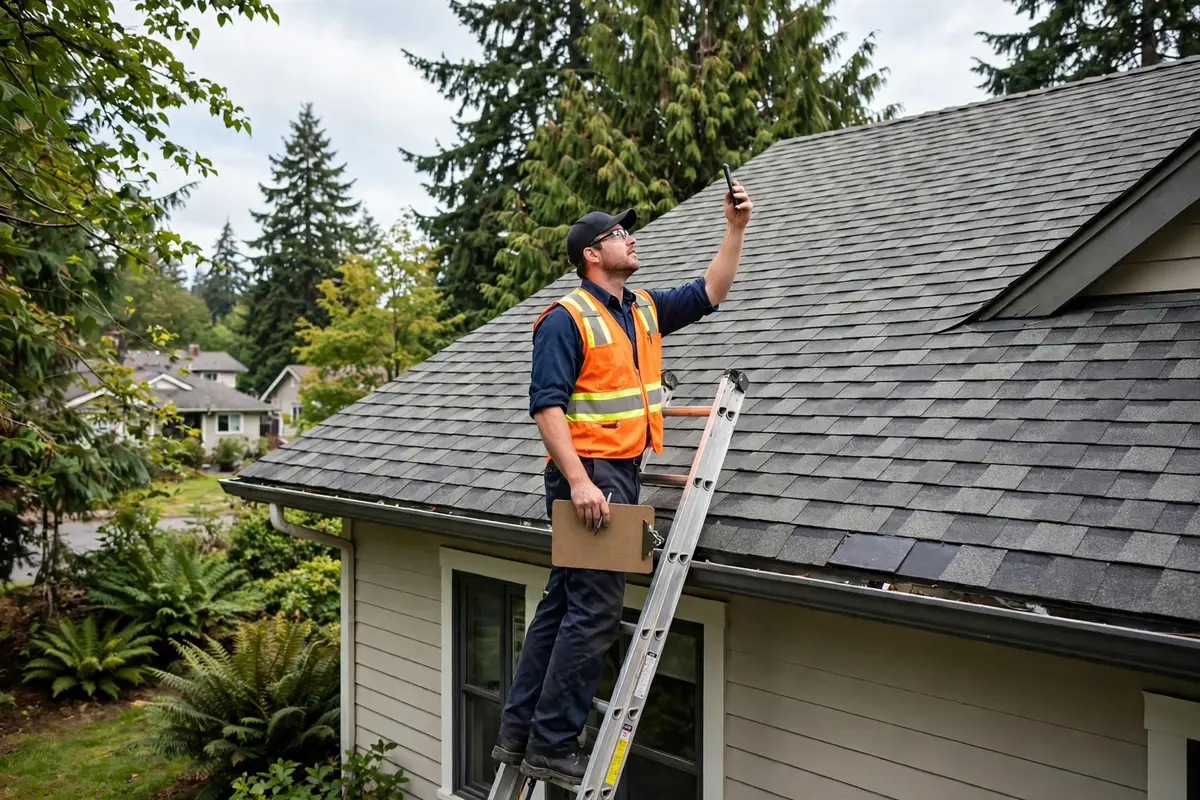
Ventilation problems rarely announce themselves. Look for a musty smell in the attic or upstairs rooms, damp patches or dark staining on the underside of the roof deck, rusted nail heads, and peeling paint on the eaves. Frost on the underside of the deck in a cold snap is a clear sign that damp air is condensing up there.
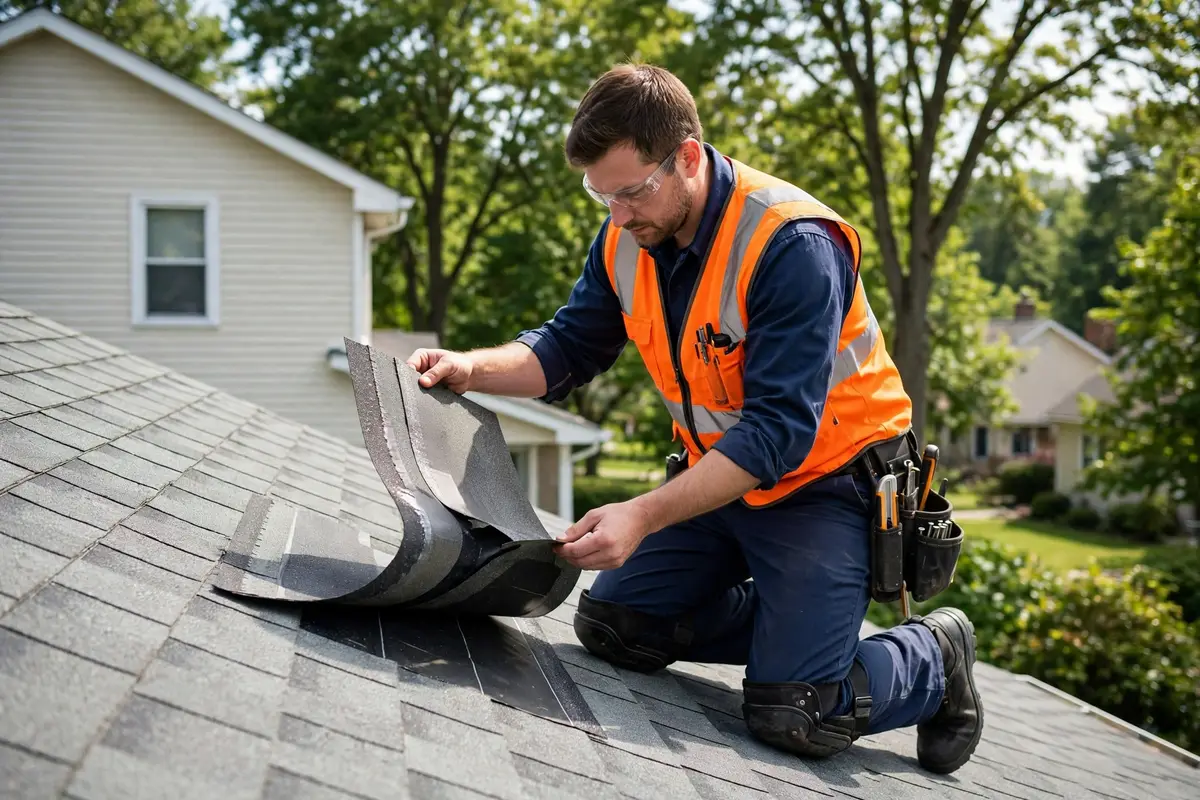
Outside, the signs show in the shingles. Shingles that curl or blister early, granule loss that seems too fast for the roof's age, and moss growing thickly on a slope that should dry out all point to an attic that stays damp. Ice dams at the eaves after a freeze are another sign: the attic is warm enough to melt snow, while the eaves stay cold.
The most common fault we find is also the easiest to miss: bathroom and kitchen fans that vent into the attic instead of outside. Every shower pushes litres of damp air straight onto the cold roof timbers. If your bathroom fan ends in the attic, that is the first thing to fix — it matters more than adding another vent.
Ventilation Problems That Look Like Roof Leaks
Not every drip from a ceiling is a roof leak. Condensation in a badly ventilated attic drips from the deck onto the insulation and ceiling below, often some distance from any penetration — so it looks exactly like a leak, but no shingle is broken and no flashing has failed. The stain appears after cold nights, not after rain, which is the clue.
Telling the two apart matters, because the fixes are different: a leak needs a shingle or flashing repair, while condensation needs airflow. Our roof inspection checks both — the roof surface for damage and the attic for damp, blocked soffits and fans venting into the roof space — and our roof leak diagnostic tool asks the same questions a roofer would ask on the phone. If you are not sure which one you have, read our guide on how to find a roof leak before you book a repair you may not need.
What We Check During a Ventilation Inspection
A ventilation check is part of every roof inspection we do. We check that soffit vents are open and not blocked by insulation, that the ridge vent runs the full peak, that bathroom and kitchen fans vent outside the roof — not into the attic — and that the vent flashing and pipe boots are sound. We also look for the damage poor ventilation leaves behind: damp decking, mould, rusted fixings and shingles ageing faster than they should.
What we repair is the roof side of the problem: cracked pipe boots, failed vent flashing and ridge vent damage, plus the shingles that have suffered underneath. If the fix needs an insulation or fan-ducting specialist, we say so plainly and show you the photos, so you can get the right trade in. Ventilation is a system, and a roofer who only looks at the shingles is only seeing half of it.
Need professional help? If this describes your roof, our roof vent repair in Bellevue, WA service covers pipe boots, vent flashing and ridge vents, and our roof inspection checks the whole ventilation system. Call (425) 738-3670 or request an estimate.
Key takeaways
- Ventilation moves air in low through soffit vents and out high through the ridge vent.
- A damp attic rots wood, grows mould and ages shingles from underneath.
- Bathroom fans venting into the attic are the most common ventilation fault we find.
Attic damp or shingles curling early? Call (425) 738-3670.
Frequently Asked Questions
What is roof ventilation?
Roof ventilation is the flow of outside air through the attic: fresh air enters low through soffit vents at the eaves and warm, damp air leaves high through a ridge vent at the peak. The airflow carries moisture out of the roof space before it can condense on the cold deck, and it keeps the attic close to the outside temperature. Without it, damp air sits in the attic and rots the timbers.
How do I know if my attic is ventilated?
Look for soffit vents under the eaves and a ridge vent or box vents near the peak. From inside, the attic should feel dry, with no musty smell, no damp patches on the deck and no frost on the timbers in cold weather. If you cannot see any intake vents, or the soffits are painted shut or blocked by insulation, the attic is probably not ventilated. An inspection confirms it.
Can poor ventilation damage asphalt shingles?
Yes. Trapped heat and moisture age shingles from underneath: they curl, blister and lose granules faster than they should, and the decking they are nailed to can rot. Poor ventilation does not usually cause a leak on its own, but it shortens the roof's life and makes wind and rain damage more likely. Fixing the airflow protects the shingles you already have.
What is the difference between ridge vents and soffit vents?
Soffit vents are the intake: they sit under the eaves and let fresh air into the attic. Ridge vents are the exhaust: they run along the peak and let warm, damp air out. They work as a pair — a ridge vent without open soffits vents almost nothing, and soffit vents without an exhaust leave damp air sitting in the attic. Both halves have to be open for the system to work.
Should bathroom fans vent into the attic?
No. Bathroom and kitchen fans must vent outside the roof, through a proper vent, not into the attic. Every shower pushes damp air straight onto the cold roof timbers, where it condenses and feeds mould and rot. Venting into the attic is the most common ventilation fault we find in Bellevue homes, and it matters more than adding another roof vent.
Do I need more vents, or better vents?
Usually better balance, not more vents. Most roofs that fail have blocked soffit vents or vents on only one slope, not too few vents in total. Adding exhaust vents without opening the intake just pulls air from inside the house. An inspection shows whether the intake is blocked, whether the exhaust runs the full ridge, and whether the balance — not the count — is the problem.
Can ventilation stop ice dams?
It helps a lot. Ice dams form when a warm attic melts snow on the roof and the water refreezes at the cold eaves. Ventilation keeps the attic close to the outside temperature, so the snow melts evenly instead of from underneath. It will not stop an ice dam on its own if the attic is badly insulated, but a dry, cold attic is the main defence. Bellevue gets occasional freezes, so it matters here too.
Why is there condensation in my attic?
Warm, damp air from the house rises into the attic and condenses on the cold underside of the roof deck, usually on cold nights. The moisture comes from cooking, showers and breathing, and it gets worse when bathroom fans vent into the attic or the soffit vents are blocked. Condensation drips onto insulation and ceilings, so it often looks like a roof leak — but no shingle is broken.
Does ventilation help in summer too?
Yes. In summer, ventilation carries hot air out of the attic, so the roof deck and shingles run cooler and the rooms below stay cooler. Trapped attic heat ages shingles faster and makes the top floor harder to keep comfortable. The same airflow that dries the attic in winter cools it in summer — it works in both seasons, which is why it matters all year in Bellevue.
Who checks roof ventilation in Bellevue?
We do, as part of every roof inspection: soffit vents, ridge vent, fan ducting, vent flashing and the damage poor ventilation leaves behind, with photos and a written report. Call (425) 738-3670 to book one. If the fix needs an insulation or fan-ducting specialist rather than a roofer, we say so plainly and show you the photos first.