
Signs of Wind Damage on a Roof
After a windstorm, a roof can look fine from the street while many shingles have failed. Here is what wind damage actually looks like, how to check safely from the ground, and when an inspection is worth it.
After a Pacific Northwest windstorm, a roof can look fine from the street while many shingles have failed. Here is what wind damage actually looks like, how to check safely from the ground, and when an inspection is worth it.
Lifted and Creased Shingles
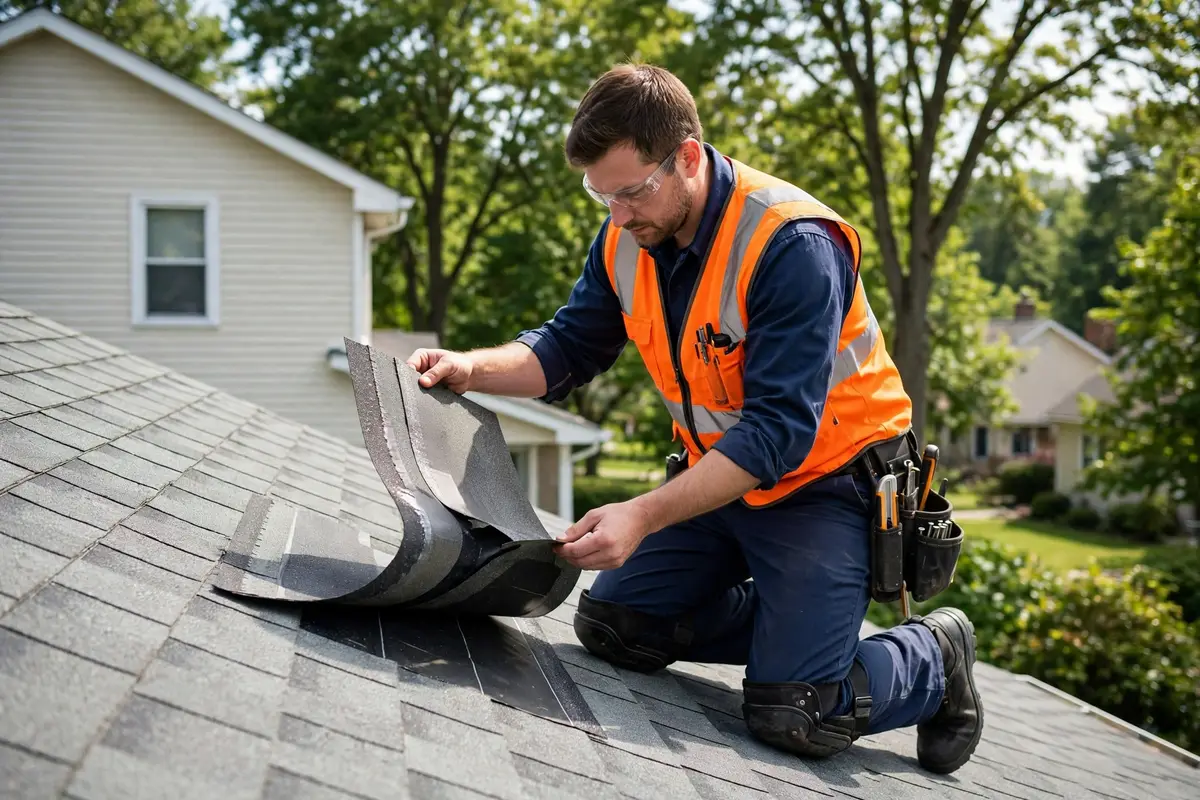
Wind uplift is the force at work: wind lifts a shingle’s edge and breaks the seal strip. A lifted tab may settle back and look normal, but a wind crease — a shingle bent sharply by wind — is permanently weakened and should be replaced. On inspection we also check the roofing nails: nails driven too high, or too few of them, let wind lift a shingle that should have held. Look for tabs that do not lie flat, or edges that curl up.
Missing Shingles and Granule Loss After Wind
missing shingles are obvious. Less obvious is granule loss: wind-driven rain strips granules, which collect in gutters and on the ground. Heavy granule loss after a storm is a sign the shingles took a beating. A full blow-off, where shingles are torn off the roof entirely, leaves bare underlayment and needs a repair before the next rain.
Wind damage? Call (425) 738-3670.
Wind Damage at the Ridge and Roof Edges
Ridge caps take the highest wind exposure and fail first. The roof edge is next — edges and corners catch the wind first, and that is where lifted tabs usually start. Check the ridge line from the ground — missing or damaged caps are visible as gaps along the peak.
What to Do After a Windstorm
Photograph anything you can see from the ground, note the storm date, and book an inspection if you see any of the signs above — or if the storm was severe. A roof inspection after wind damage is the reliable check when the roof looks fine from the street, because it lifts tabs gently to check seals that look fine from below.
Need professional help? If this describes your roof, our wind-damaged shingle repair in Bellevue, WA service covers it. Call (425) 738-3670 or request an estimate.
Key takeaways
- Lifted and creased shingles are the clearest wind-damage signs.
- Check the ridge and roof edges after every windstorm.
- Missing shingles plus granule loss after wind means a repair is due.
Shingles lifted? Call (425) 738-3670.
Frequently Asked Questions
What does a creased shingle look like after wind damage?
A creased shingle has a sharp horizontal bend or fold, usually across the middle of the tab, where the wind has bent it back and broken its strength. The crease may be visible from the ground as a line across the shingle. A creased shingle has usually lost its strength and should be replaced rather than re-sealed.
Can wind damage shingles without removing them?
Yes. Wind can break the seal strip that holds shingles down without tearing them off, leaving them lifted at the edge but still in place. These shingles look normal from the street but let wind-driven rain underneath. An inspection after a major windstorm is the reliable check, because the damage is not always visible from the ground.
What wind speed can damage asphalt shingles?
It depends on the shingle type, the age of the roof, and whether the seal strips are still holding. Newer architectural shingles generally resist wind better than older three-tab shingles, and a roof whose seal strips have weakened with age is more vulnerable. A roofer checks the seal and the condition of the shingles rather than relying on a single wind speed.
Are architectural shingles more wind resistant than three-tab shingles?
Generally, yes. Architectural shingles are heavier and thicker than three-tab shingles, and they usually have a stronger seal. That does not make them windproof, because age, installation, and exposure still matter. If your roof has three-tab shingles and wind damage keeps recurring, an inspection can show whether the shingle type is part of the problem.
Where on a roof does wind damage usually start?
Wind damage usually starts at the edges, the eaves, the rake edges, and the ridge, where the wind can get underneath the shingles. Valleys and the corners of a roof are also vulnerable. A roofer checks these areas first after a windstorm, because damage there is the most common and the easiest to miss from the ground.
What should I look for on the ground after a windstorm?
Look for fallen shingles or shingle pieces, granules scattered on the ground or in the gutters, and debris such as branches on the roof. These are signs that shingles have been lifted or torn off, even if the roof looks fine from the street. Photograph what you find and arrange an inspection to check the roof itself.
Do granules in the gutter mean wind damage?
Not necessarily. Granules wash into gutters as shingles age, so a small amount is normal. A sudden large amount of granules after a windstorm, especially with lifted or missing shingles, can point to wind damage. An inspection can tell whether the granule loss is normal wear or the result of storm damage.
Can wind lift shingles on a new roof?
It can, if the seal strips have not yet bonded, which takes warm weather and time after installation. A new roof is most vulnerable in its first weeks, especially in cold or wet weather. Once the seal strips have bonded, the shingles hold much better. A roofer can check whether the seal has formed and whether any shingles need re-sealing.
What is the difference between a lifted shingle and a torn shingle?
A lifted shingle has come loose at the edge but is still in one piece, and it can sometimes be re-sealed. A torn shingle has been ripped or split by the wind, and it cannot be repaired, so it must be replaced. A roofer checks each damaged shingle to see whether it can be re-sealed or needs replacing.
How soon should wind-damaged shingles be fixed?
Promptly. A lifted or missing shingle leaves the underlayment exposed, and the next rain can push water underneath. Even a small gap can let water in and damage the decking over time. Arrange an inspection as soon as possible after a windstorm, and cover exposed areas temporarily if the repair cannot be done straight away.